US Senate Will Not Adopt And President Trump Will Not Sign “Secret Clauses” In Ukraine Submission. Kyiv Has New EU Ascension Issues. The $800 Billion Question. There Is No Political Version Of Ozempic
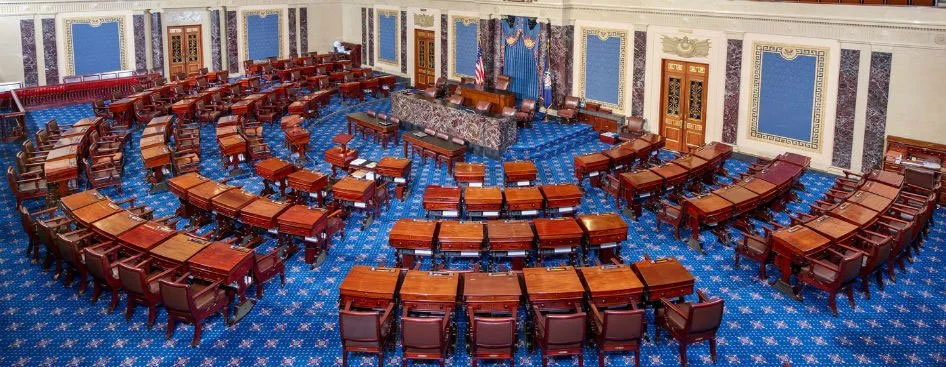
The 100-Member United States Senate Will Not Adopt As Law An Agreement With The Government Of Ukraine Which Contains And Excludes “Secret Clauses” Obligating United States Taxpayers
Strategic Ambiguity And Secrecy Are Not Viable Strategies For The First Quarter Of The Twenty-First Century
The Government Of Ukraine Should Get Ahead Of A Likely Debate Within The United States Congress, Including In 435-Member The House Of Representatives
The Government Of Ukraine Also Has New Serious, Perhaps Insurmountable Issues With EU Membership
US$800 Billion From The Government Of The Russian Federation? That Too Could Delay Or Prevent Ukraine From EU Membership
No Political Version Of Ozempic Impacting Historical And Political Desire
Institute of the Study of War: “Ukrainian President Volodymyr Zelenskyy stated on December 22 that Ukrainian and US delegations have completed 90 percent of the “first developments” in negotiations and have a concrete but unfinalized 20-point plan. Zelensky stated that the plan includes a document on security guarantees with secret clauses and details on postwar military support for the Ukrainian military that the US Senate would have to ratify. Zelensky stated that the parties have also completed a first draft of an agreement on Ukraine’s reconstruction. The November 23 Ukraine-Europe-US talks in Geneva resulted in a 19- and then 20-point plan, which is likely the basis of the 20-point plan that Zelensky referenced.”
“Point 5 of the document [referring to the draft peace agreement – ed.] states that the United States, NATO, and European signatory states will provide Ukraine with ‘Article 5-like’ guarantees,” Volodymyr Zelensky, President of Ukraine
An error in judgement- and misplaced perception of importance and self-importance, would have Volodymyr Zelensky, President of Ukraine (2019-2024; term extended due to imposition of martial law in 2022), believe Donald Trump, President of the United States (2017-2021 and 2025-2029), will include “secret clauses” within or deliberately exclude “secret clauses” from a document subject to debate and votes in sub-committee(s), committee(s), and full chamber in the 100-member United States Senate. Neither too will the EU nor NATO provide secret guarantees.
Strategic Ambiguity, as reflected in United States government policy relating to providing military support to the Republic of China (Taiwan) should there be an invasion by the People’s Liberation Army (PLA) of the government of the People’s Republic of China will not be dissuasive to the government of the Russian Federation. Article Five of the NATO Charter reflects Strategic Ambiguity more than Transparent Messaging. So that too will not be dissuasive to the government of the Russian Federation. Thus far, since 2008, the government of the Russian Federation has demonstrated little inhibition with testing and then barreling through both Strategic Ambiguity and Transparent Messaging so “secret clauses” are unlikely to be a deterrent. The expectation from Moscow will correctly be “secret clauses” exist because governments do not want their taxpayers to know what those governments have committed to do on behalf of the government of Ukraine.
President Trump will be loath to define whatever government of Ukraine-related document submitted to the United States Senate as a “treaty” or “mutual defense agreement” obligating him or his successor absent wording to unilaterally abstain, deny, and object.
An four-word example of a lack of a protection from obligation is contained within the 15 December 2025 statement issued jointly by “Chancellor Merz, Prime Minister Frederiksen, President Stubb, President Macron, Prime Minister Meloni, Prime Minister Schoof, Prime Minister Støre, Prime Minister Tusk, Prime Minister Kristersson, Prime Minister Starmer, as well as President Costa and President von der Leyen on Peace for Ukraine.”
In one clause: “A legally binding commitment, subject to national procedures, to take measures to restore peace and security in the case of a future armed attack. These measures may include [bold added] armed force, intelligence and logistical assistance, economic and diplomatic actions.”
The word “may” was deliberate. This is no “must” or “will” in the clause. That should be a message to the government of Ukraine- the more pressure exerted to obtain security guarantees, the less impactful will be the commitment from those whose commitment is sought.
President Trump is convinced that nothing can dissuade Vladimir Putin, President of the Russian Federation (2000-2008 and 2012-2030), from what he wants. The best outcome is to dissuade him from trying to do what he wants for as long as possible. Ideally, until 12:01 pm on 20 January 2029, when President Trump is former President Trump. That means not a focus upon obtaining for the government of Ukraine an enduring, just, and lasting, peace. A focus upon the minimum requirement to end or suspend the military engagement.
From the perspective of President Trump, the more effort does the EU leadership and members, and NATO members devote to “preventing this from happening again” the result is continuing military engagement- and continuing increase the in numbers of dead, missing, and wounded, which he often cites.
There is no means to remove from President Putin or from Team Putin their desire or intention relating to the internationally-recognized territory of Ukraine, absent a version of Ozempic that impacts historical and political desire.
EU: Austria, Belgium, Bulgaria, Croatia, Cyprus, Czech Republic, Denmark, Estonia, Finland, France, Germany, Greece, Hungary, Ireland, Italy, Latvia, Lithuania, Luxembourg, Malta, Netherlands, Poland, Portugal, Romania, Slovakia, Slovenia, Spain, Sweden.
NATO: United States, United Kingdom, Belgium, Canada, Denmark, Finland, France, Iceland, Italy, Luxembourg, Netherlands, Norway, Portugal, Albania, Lithuania, Bulgaria, Montenegro, Croatia, Czech Republic, Poland, Estonia, Romania, Germany, Slovakia, Greece, Slovenia, Hungary, Spain, Turkiye, Latvia, and North Macedonia, Sweden.
The government of Ukraine will seek designation by the Trump-Vance Administration (2025-2029) as a “Major Non-NATO-Ally” joining Argentina, Australia, Brazil, Colombia, Egypt, Israel, Japan, Jordan, Kenya, Kuwait, Morocco, New Zealand, Pakistan, Philippines, Qatar, Saudi Arabia South Korea, Thailand, Tunisia. Taiwan is considered de facto as one. Given the designation does not obligate a military response, President Trump may consider offering it, providing he believes the government of Ukraine is providing something of value for it.
Whatever is the agreement submitted by President Trump to the United States Senate will be transparent in terms of funding, in terms of commitment, and in terms of the desired impact upon President Putin and the government of the Russian Federation.
Every demand delivered by the government of Ukraine to the EU creates additional distance for membership in the EU for the government of Ukraine. EU membership for Ukraine is not a certainty and cannot and will not be guaranteed.
The demand for EU membership be approved by a certain date- and ahead of other countries (Albania, for example) who have been on a pathway for many years- decades in some instances.
The demand for funding.
The demand for no changes to voting rights and budgetary sharing for new EU members.
The demand for no dilution of representation for new EU members in the EU Parliament.
The demand for the EU to adopt whatever the government of Ukraine wants relating to EU relations with the government of the Russian Federation.
The demand that EU sanctions remain in place until the government of the Russian Federation makes reparation payments to the citizens of Ukraine, government of Ukraine, and companies in Ukraine.
Each demand signals to current EU members the behavior of the government of Ukraine as a member of the EU. The government of Ukraine, whoever leads it, will demand, demand, demand with a political baseline that the EU owes Ukraine due to historical failures to protect the government of Ukraine in 2014 and 2022- and it will use its voting within the European Commission, European Council (particularly when it has the six-month rotating presidency), and European Parliament to stymie any effort by a majority of EU members to commence a reproachment with the government of the Russian Federation- commercially, economically, financially, politically, and socially, until Moscow provides to Kyiv what it believes is owed to it.
For example, how many years will it take for the government of Ukraine to obtain what it believes is US$800 billion in reparations from the government of the Russian Federation? Will the government of Ukraine demand EU sanctions remain in place until judgements issued by The Hague-based International Criminal Court (ICC) have been enforced? What about the arrest warrant for President Putin issued by the ICC? If an issue before the EU requires unanimity or qualified majority, not too difficult to expect the government of Ukraine to weaponize its vote to maintain sanctions or gain sanctions relating to the government of the Russian Federation.
Six EU member heads of state and three EU member heads of government have confirmed privately that if the government of Ukraine becomes a member of the EU, there will likely be no satisfying it on issues relating to the Russian Federation- its citizens, its government, its institutions, and its companies.
Since 2022, the government of Ukraine has encouraged, sponsored, and supported “reconstruction conferences” throughout the European Continent and in Asia. At each, officials of the government of Ukraine converse about the potential opportunities. Specifically, they direct to the host government and host companies that they will be first in line for opportunities because of their support for the government of Ukraine.
Now, President Zelensky suggests those same countries he offered to be first in line to use the US$320 billion in assets of the Central Bank of the Russian Federation frozen since 24 February 2022 for use in the reconstruction of Ukraine, will need to find US$800 billion from among themselves and their taxpayer-funded financial institutions.
President Zelensky wants not only the approaching US$500 billion authorized and provided by EU members, NATO members, and others since 24 February 2022 to be forgiven, but he also wants what could be US$800 billion more from taxpayers in the Canada, EU, Japan, NATO, United States, and other countries. Chutzpah?
Current Public Text Of Draft Framework For Ending The Russian Federation-Ukraine War
Point 7- “Ukraine will become a member of the European Union within a clearly defined timeframe and will receive short-term privileged access to the European market.”
Point 8- “Ukraine will receive a robust global development package, to be defined in a separate agreement on investment and future prosperity, covering a wide range of economic sectors.”
Point 9- “Several funds will be established to address economic recovery, reconstruction of damaged regions, and humanitarian needs. The goal is to raise $800 billion through equity, grants, debt instruments, and private-sector contributions.”
“US$800 billion is our overall estimate of losses from this Russian war. This is what we are discussing with our partners. The goal will be to raise $800 billion through equity capital, grants, debt instruments, and private sector contributions in order to help Ukraine fully realize its potential… For example, in Point 9, Point A. The U.S. and European countries will establish an equity and grants fund with a target size of US$200 billion for transparent and effective investment in Ukraine… We mean real compensation for the damage caused by aggression. For example, we already have a European decision on EUR 90 billion in support for the next two years. The Europeans provided an interest-free loan. We are legally tying it so that we will repay the EUR 90 billion to Europe when Russia pays reparations. That is the linkage. At the same time, they gave us the EUR 90 billion, while EUR 210 billion in frozen assets remained.” Volodymyr Zelensky, President of Ukraine
Not classified is President Zelensky’s belief that leadership and members of the EU and NATO, and particularly successive administrations in the United States, are responsible for creating the foundation for what the government of the Russian Federation has done since 2014 within the internationally-recognized territory of Ukraine. He wants them- their taxpayers, to pay for what happened, pay for what is happening, and pay to prevent anything further from happening.
Taxpayers in countries outside of the EU (and inside) will be loath to provide funding to the government of Ukraine when a) there is approximately US$320 billion in assets of the Central Bank of the Russian Federation frozen primarily within the EU and b) question why contributing to repairing and replacing infrastructure in Ukraine when the government of Ukraine wants to be member of EU and will then have access to even more taxpayer funds- from EU member taxpayers?
15 December 2025: “Statement by Chancellor Merz, Prime Minister Frederiksen, President Stubb, President Macron, Prime Minister Meloni, Prime Minister Schoof, Prime Minister Støre, Prime Minister Tusk, Prime Minister Kristersson, Prime Minister Starmer, as well as President Costa and President von der Leyen on Peace for Ukraine.” The statement includes:
“Invest in the future prosperity of Ukraine, including making major resources available for recovery and reconstruction, mutually beneficial trade agreements, and taking into account the need for Russia to compensate Ukraine for the damage caused. In this vein, Russian sovereign assets in the European Union have been immobilised.”
“Strongly support Ukraine’s accession to the European Union.”
The phrase “making major resources available” does not mean providing taxpayer funds. The phrase can mean authorizing financial institutions to make loans, authorizing financial institutions to provide financing, authorizing a government to provide guarantees for private sector financed projects- but the final decisions are with the management of the institutions and the companies. Availability does not equate with qualified borrowers.
The phrase “Strongly support Ukraine’s accession to the European Union” is not a guarantee of membership in the European Union. The signers of the statement cannot make that commitment.
By the time of a final vote about the government of Ukraine’s accession to the European Union, some, most, or all current heads of state, heads of government, and leadership of the European Union in Brussels will have departed.
There will be a new head of state in Kyiv. There will be a new head of state in Washington DC. There may be a new head of state in Moscow.