
When A Monument For One War Serves As A Monument To Another War
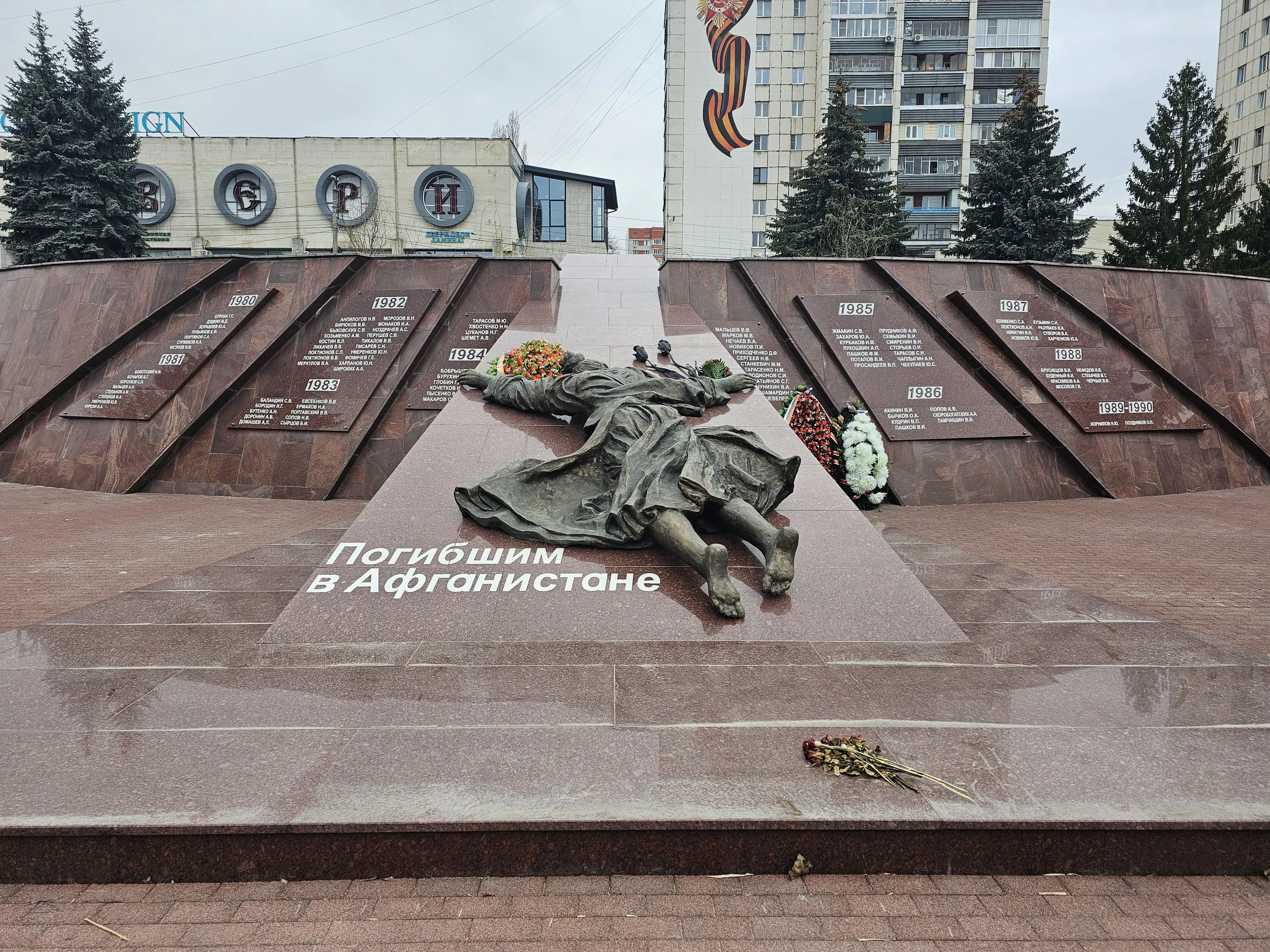
On 24 December 1979, the government of the U.S.S.R. ordered the Soviet Armed Forces (Вооружённые Силы Советского Союза) to invade the Democratic Republic of Afghanistan. The Soviet Armed Forces withdrew on 15 February 1989.
Approximately 26,000 members of the Soviet Armed Forces were reported to have died and approximately 53,000 members of the Soviet Armed Forces were reported injured.
Located in a park in the city of Kursk is a memorial to members of the Soviet Armed Forces who died during or because of the 1979 to 1989 war.
The city of Kursk (2024 population approximately 450,000) is approximately sixty (60) miles from the border with Ukraine.
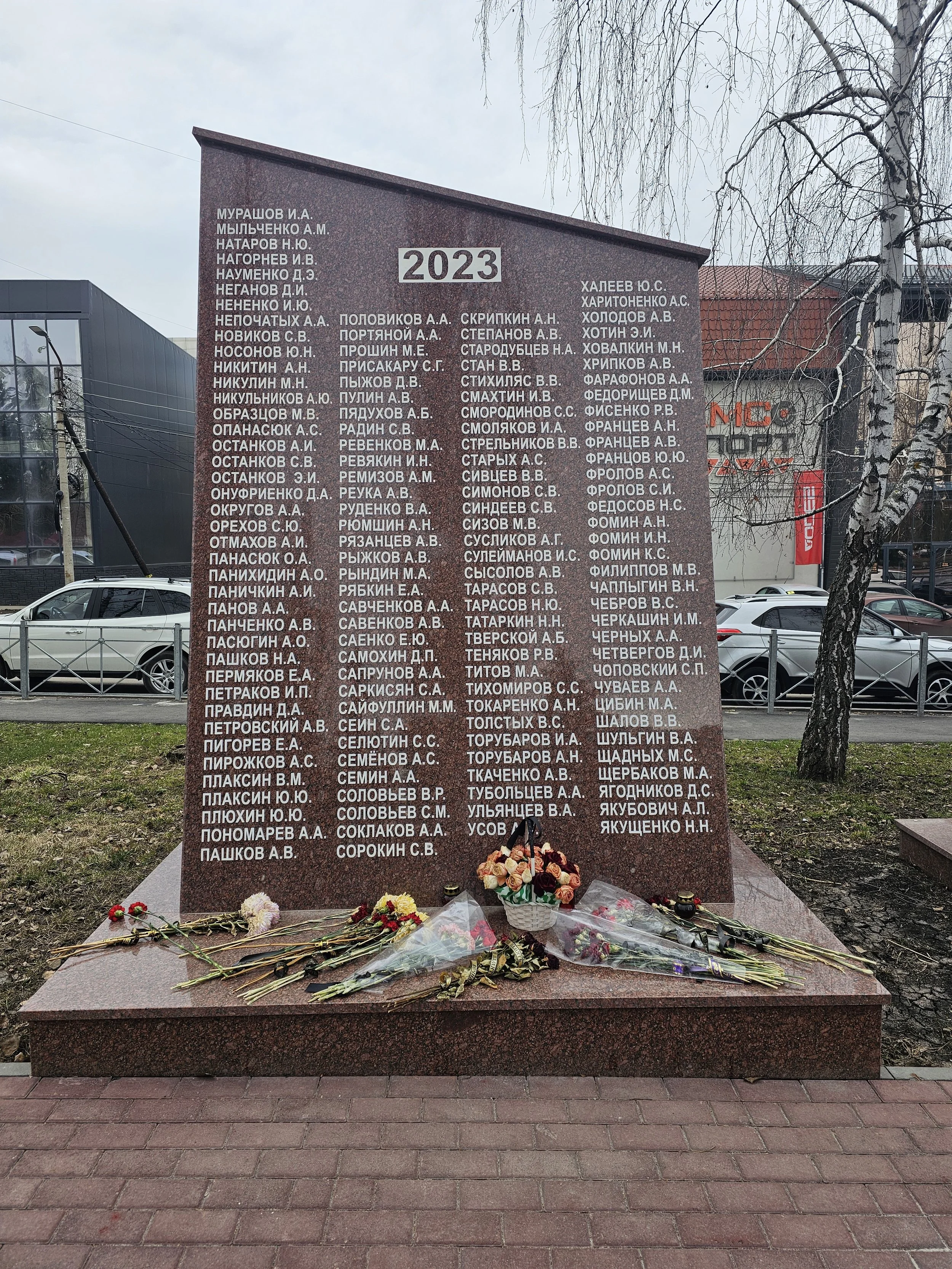
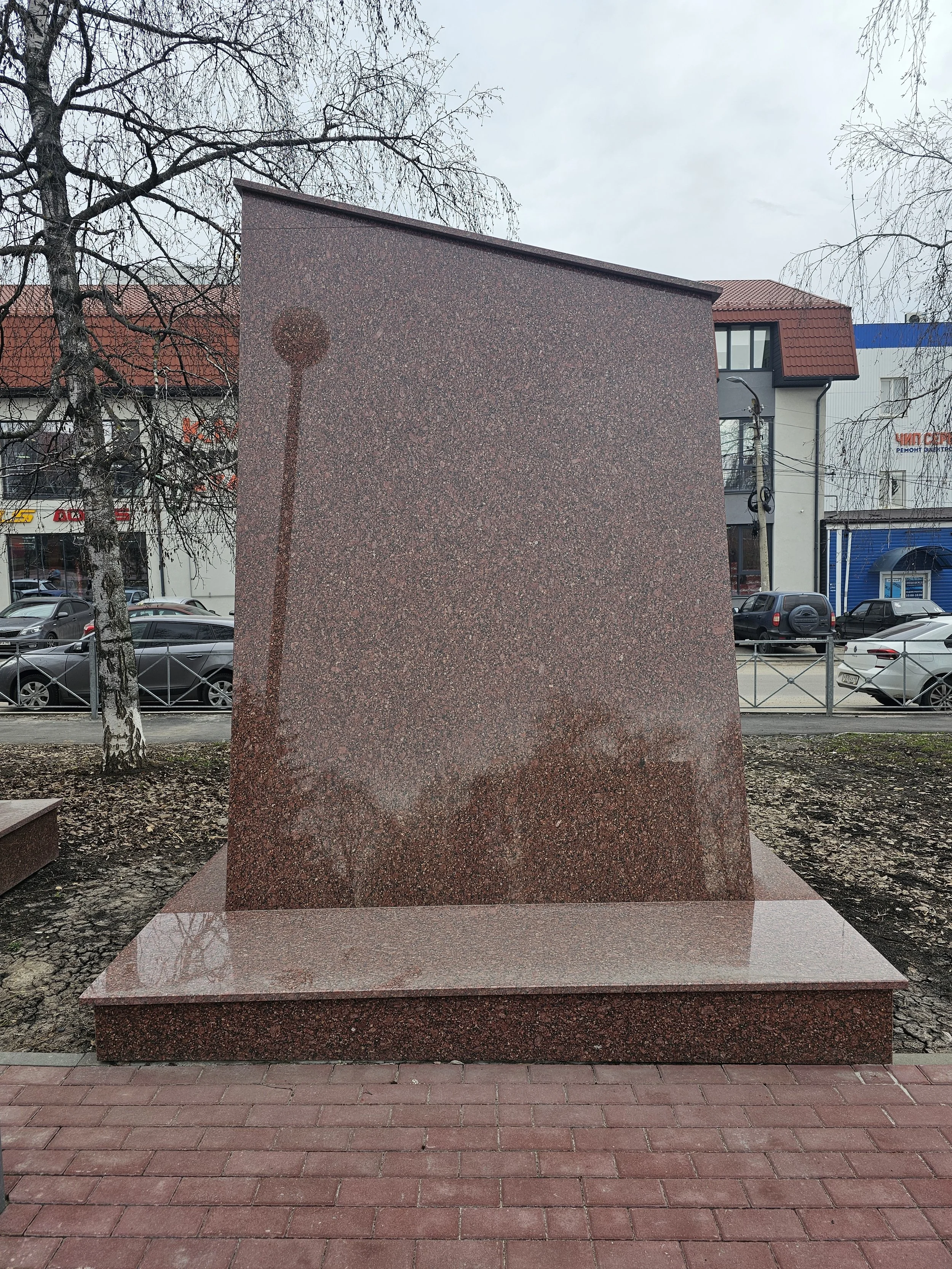
Although the war ended in 1989, additional slabs of marble were installed. Names inscribed continue into 2024. There is one marble slab which has no names.
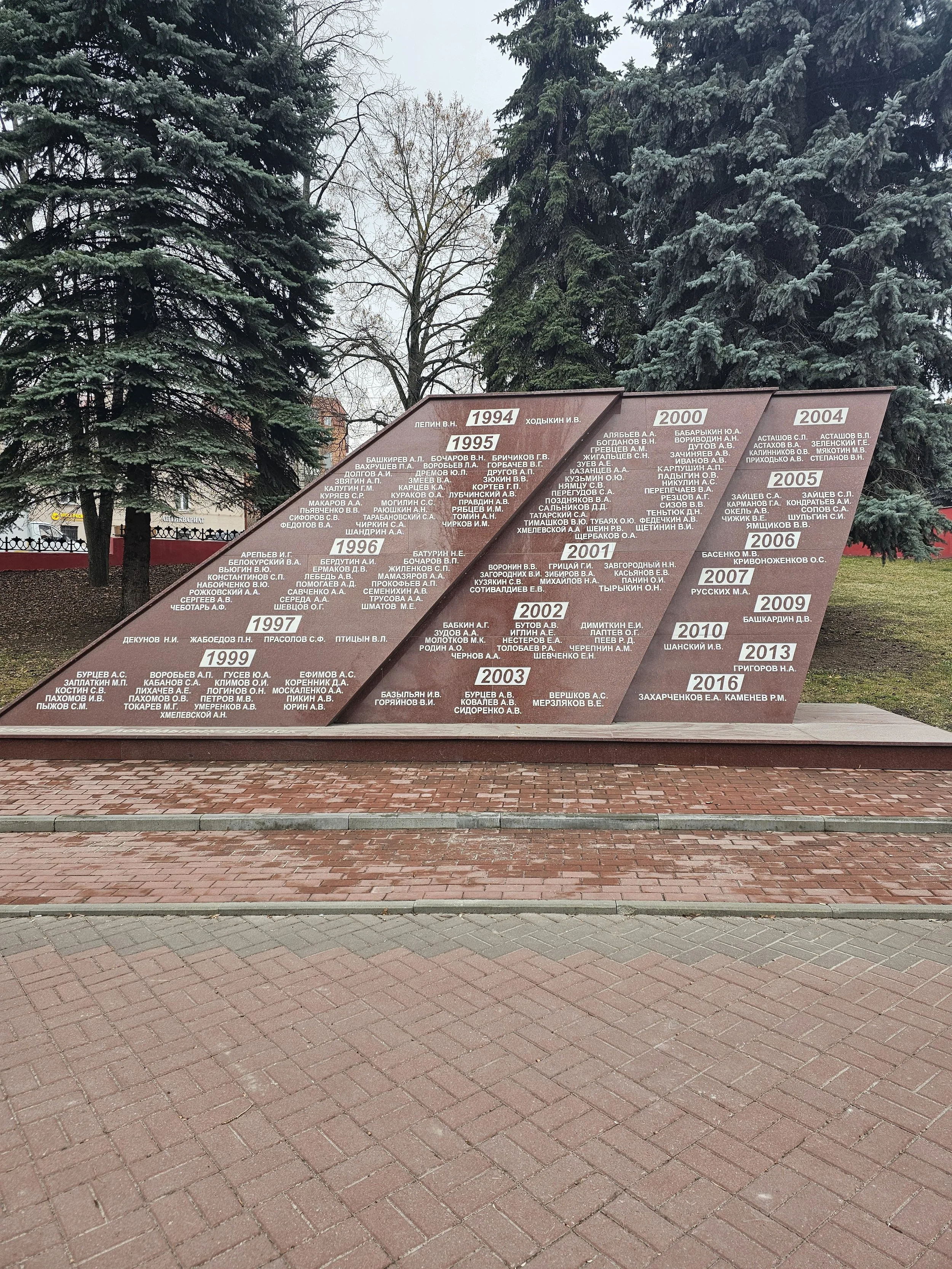
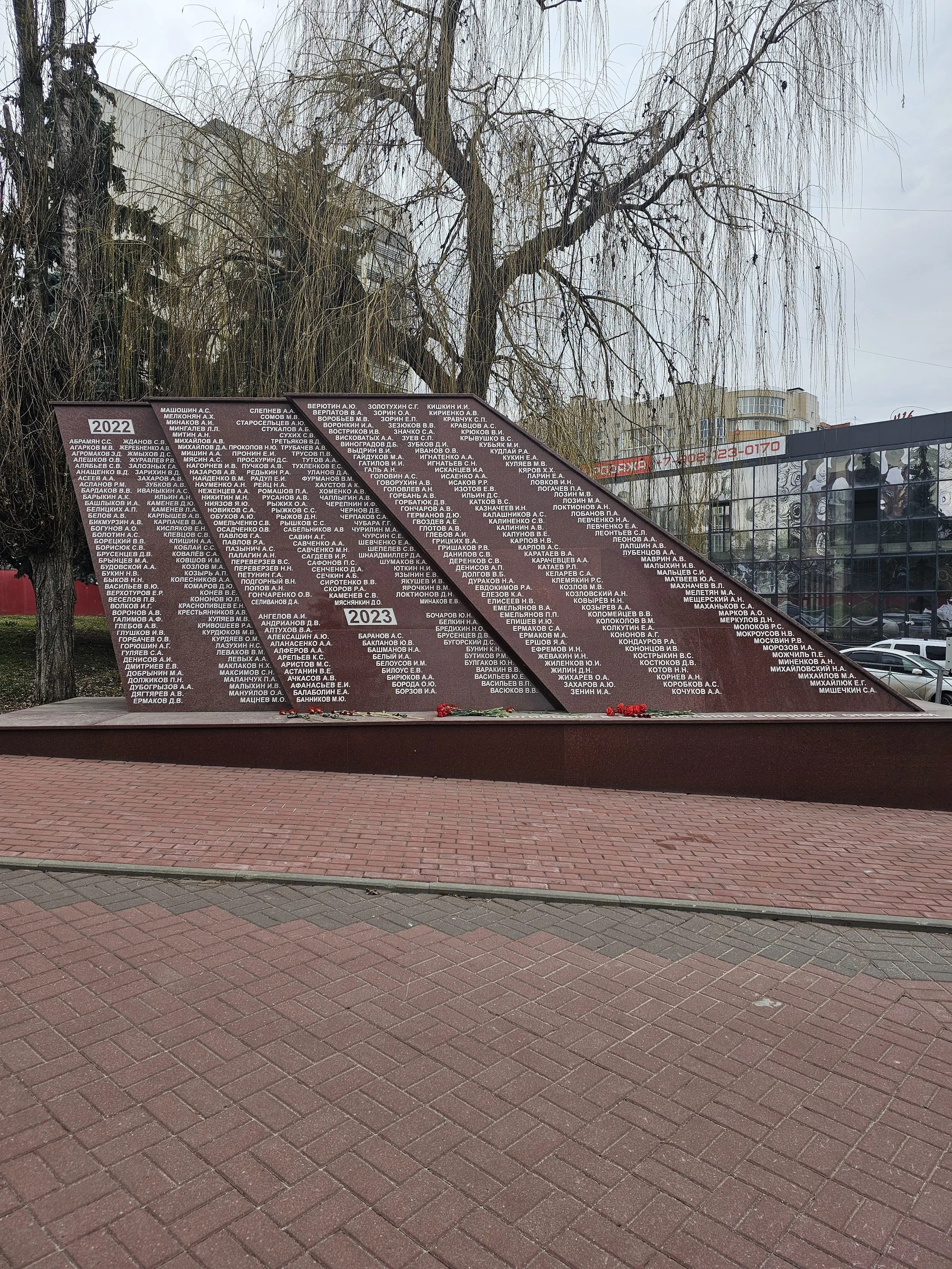
One explanation for the substantial increase in names inscribed on the slabs beginning in 2022 is on 24 February 2022 the armed forces of the Russian Federation invaded and further invaded the territory of Ukraine in what Vladimir Putin, President of the Russian Federation (2000-2008 and 2012-2030), defined first as a Special Military Operation (SMO) and on 22 December 2022 defined as a war. The initial invasion of Ukraine by the armed forces of the Russian Federation was in part from the territory of Belarus.
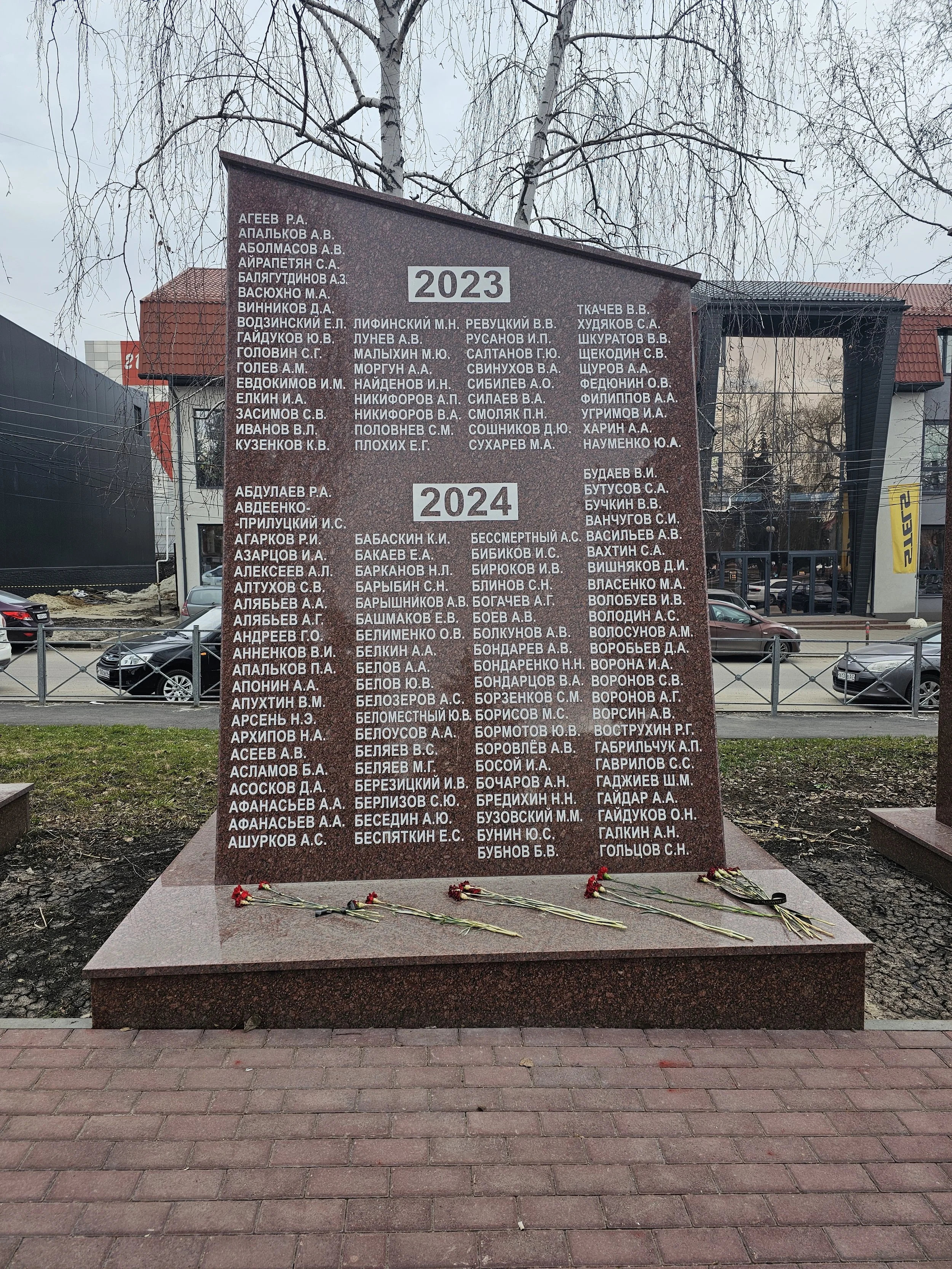
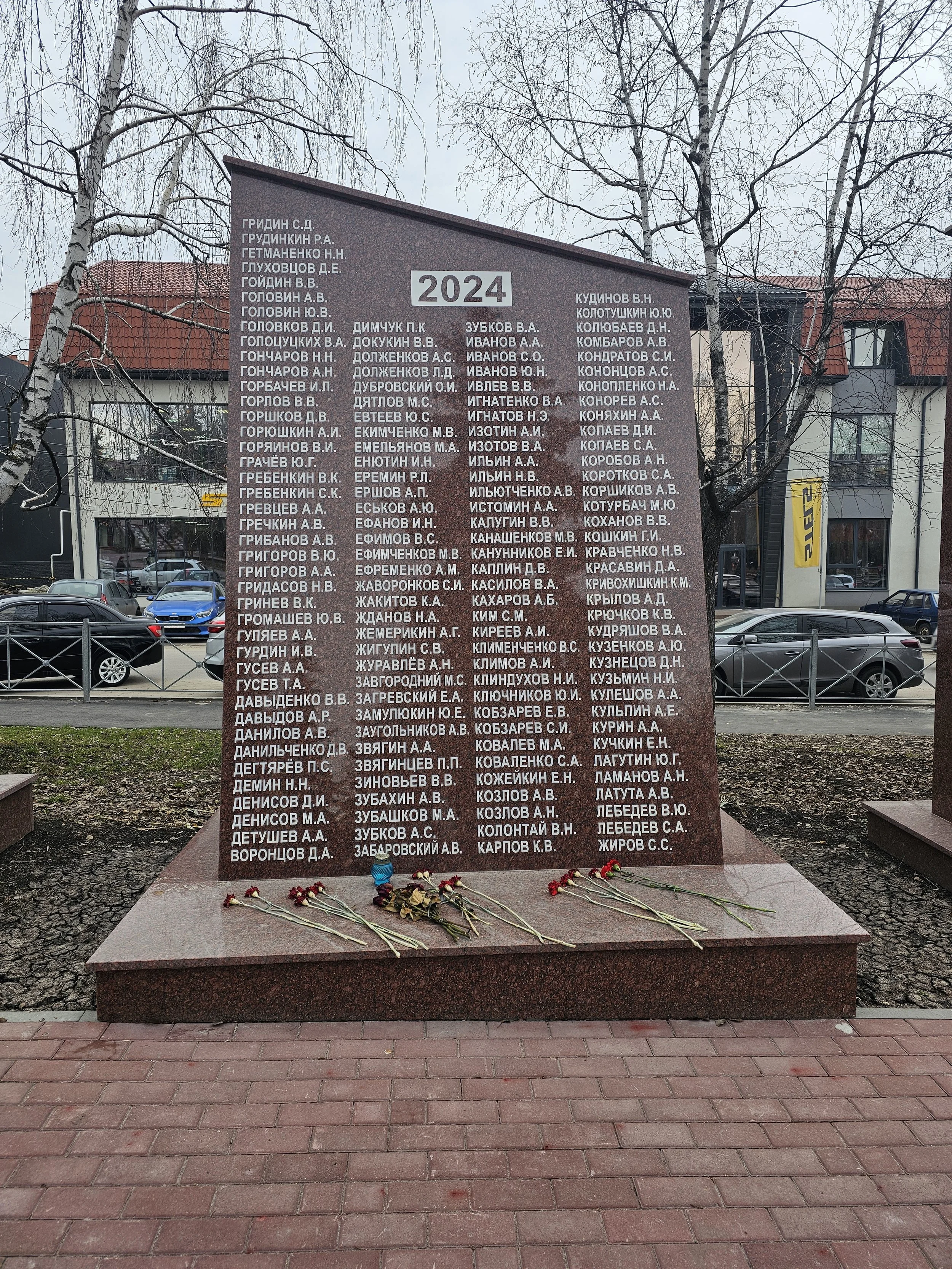
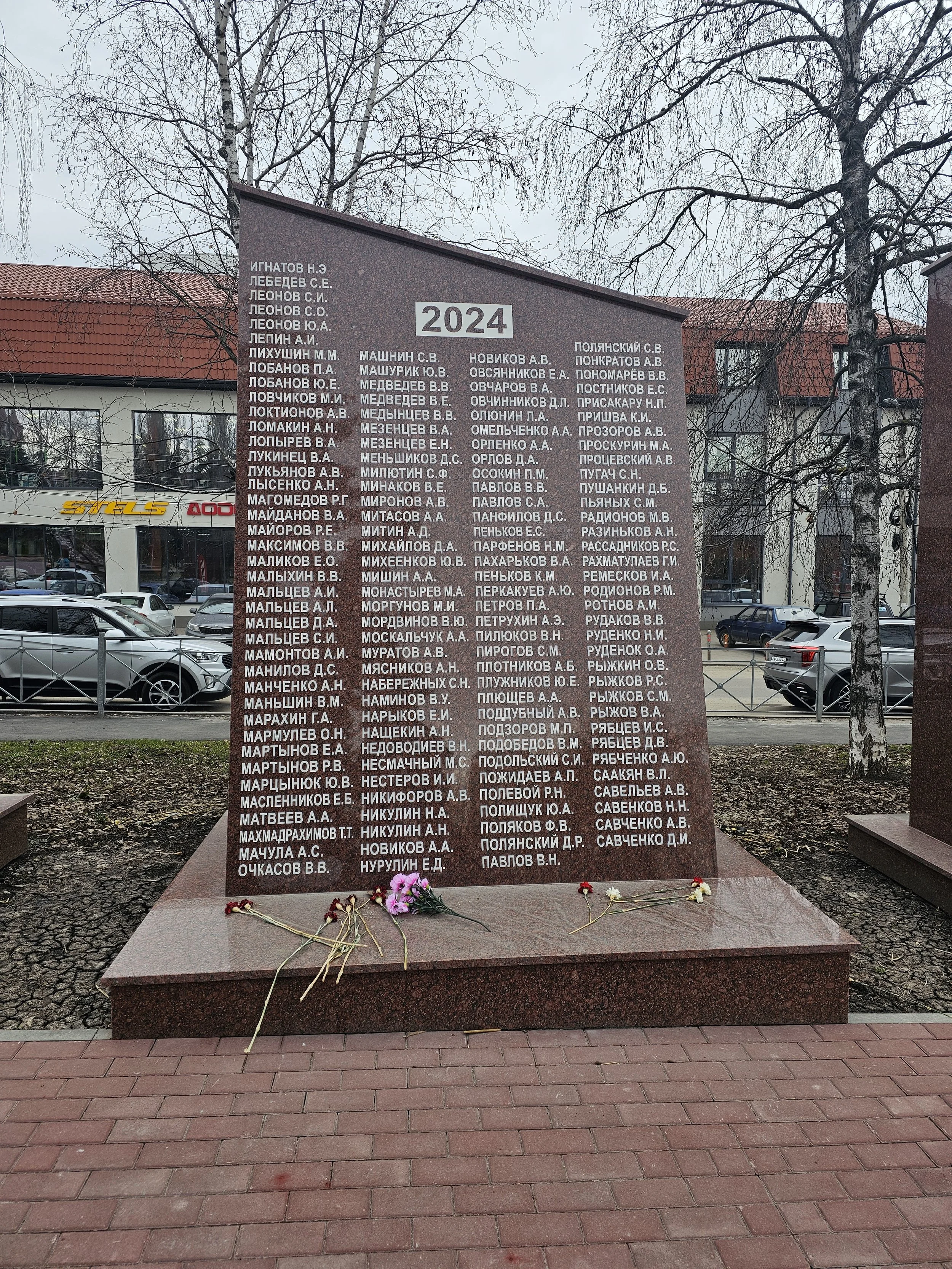
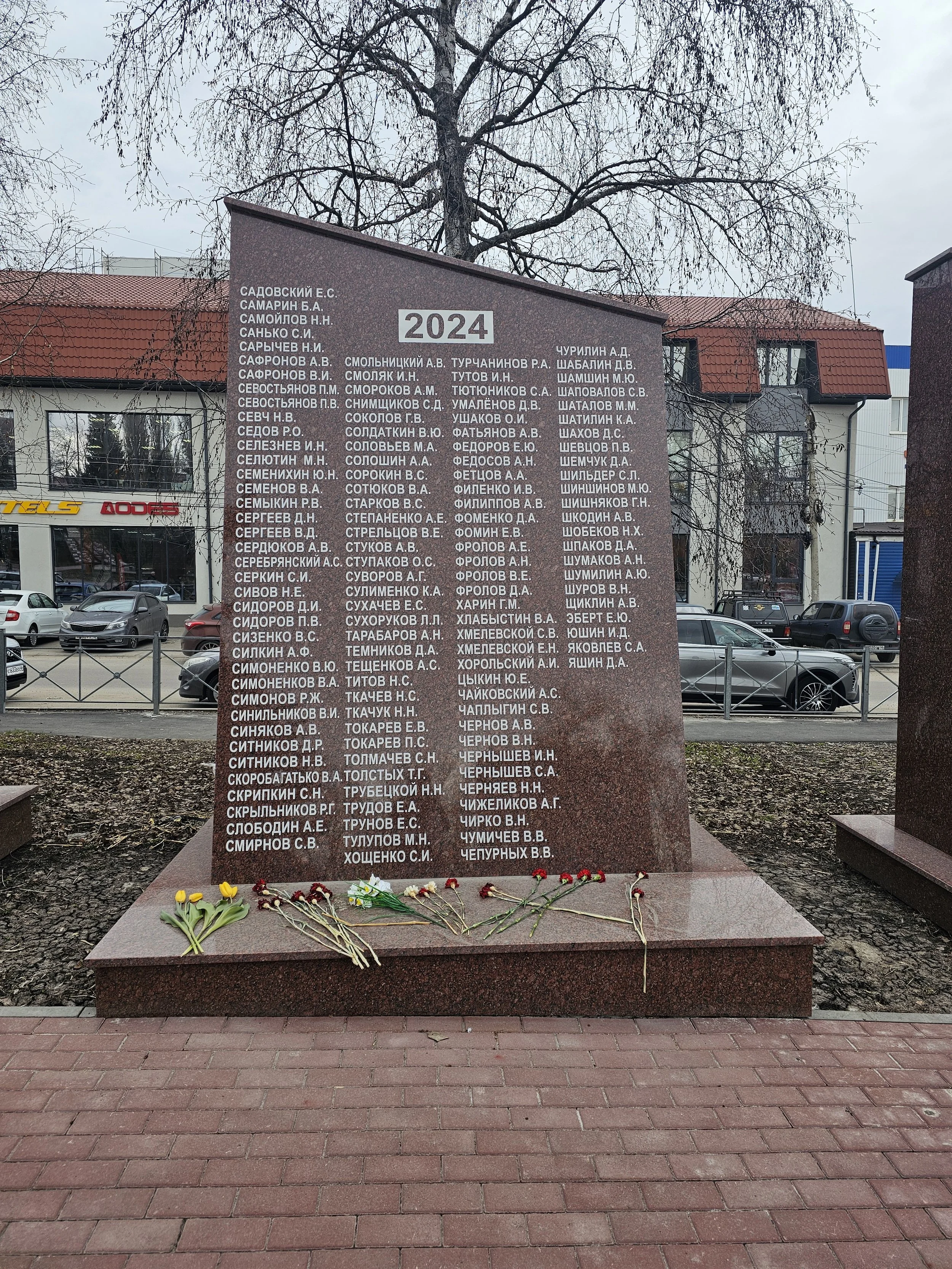
The war commenced by the Russian Federation against Ukraine did not commence on 24 February 2022. The roots began their trajectories on 20 February 2014 when the armed forces of the Russian Federation invaded the Crimean Peninsula and the area known as the Donbas Region (Donetsk Oblast and Luhansk Oblast).
As of April 2026, the armed forces of the Russian Federation control approximately 19.5% of the internationally-recognized territory of Ukraine. 100% of the Crimean Peninsula. Approximately 99% of Luhansk Oblast. Approximately 83% of Donetsk Oblast. Approximately 75% of Kherson Oblast. Approximately 75% of Zaporizhzhia Oblast. Very small portions (less than 1%) within Kharkiv Oblast, Mykolaiv Oblast, Dnipropetrovsk Oblast, and Sumy Oblast.