Offering To Help Gulf Countries, President Zelensky Should Not Have Made It A Quid Pro Quo. Would Gain More Benefit By Asking For Nothing In Return- Then Recipients Feel An Obligation
Volodymyr Zelensky, President of Ukraine (2019-2024; term extended due to imposition of martial law in 2022), was politically shrewd to offer drone interceptors, drone-interception technology, and drone-use specialists to some of the governments whose territories have been impacted by the Israel-United States-Iran War which commenced on 28 February 2026.
The drone-use specialists are reportedly en route from Ukraine or have arrived in some countries, with the Kingdom of Jordan publicly confirmed. Countries impacted thus far by drones, missiles, and rockets launched:
Azerbaijan, Bahrain, Cyprus, Iraq, Israel, Jordan, Kuwait, Lebanon, Oman, Qatar, Saudi Arabia, Syria, Turkiye, and United Arab Emirates.
“This week, all three (teams) will be in three different countries... Qatar, the United Arab Emirates (UAE), and Saudi Arabia.” Volodymyr Zelensky, President of Ukraine
President Zelensky was politically clumsy in asking, by tone demanding, something in return- a quid pro quo.
“We are ready to help those who help us, help Ukraine.” Volodymyr Zelensky, President of Ukraine
In return for assistance, the government of Ukraine wants delivered to the armed forces of Ukraine some (in reality all or the majority) of the inventory of drones, missiles, and rockets the countries have in their arsenals, along with unspecified substantial monetary contributions.
President Zelensky would have been far more advantaged by offering absent of seeking anything. In this way, the offer would have been accepted as selfless to support a greater good.
A small country at war since 2014 with the armed forces of the Russian Federation offering support to some of the wealthiest countries during what they believe an existential threat and asking nothing in return.
Particularly significant when that existential threat is defined as such by Donald Trump, President of the United States (2017-2021 and 2025-2029), and Benjamin Netanyahu, Prime Minister of the State of Israel (2022- , 2009-2021, 1996-1999).
By portraying the offer as that from a merchant, the potential impact is reduced significantly. President Zelensky presents as always wanting something- and when he does not obtain what he believes he should have, he berates, criticizes, and insults. Hopefully, this time will be different.
Background
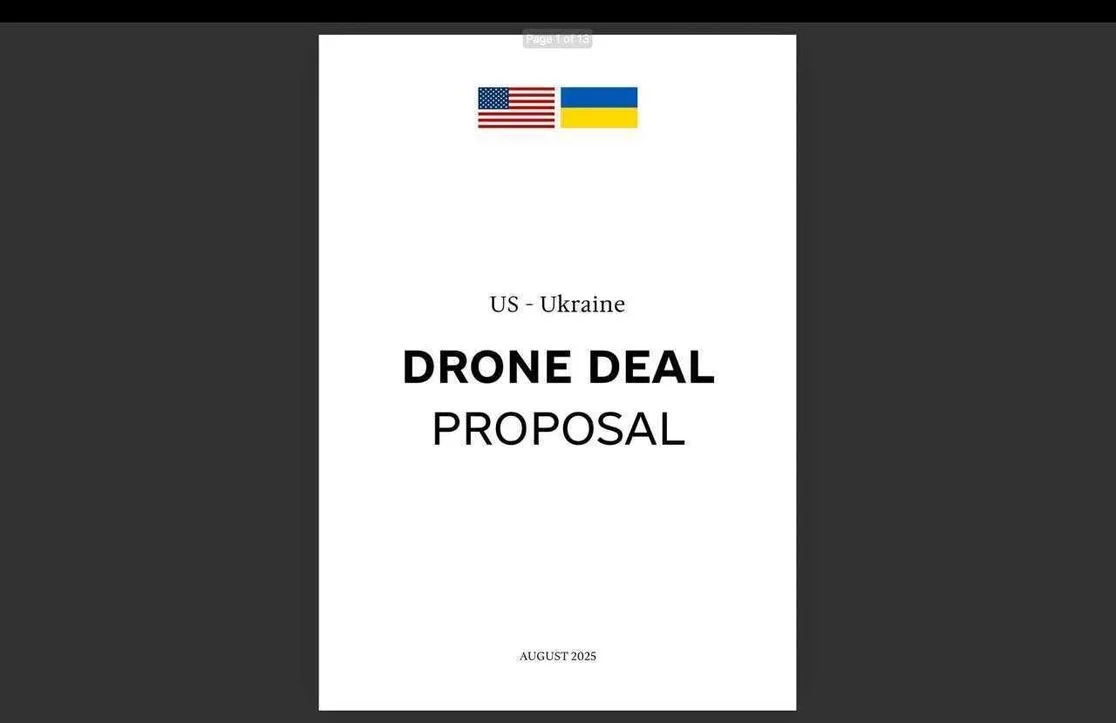
Axios (10 March 2026): Nearly seven months ago, Ukrainian officials tried to sell the U.S. their battle-proven technology for downing Iranian-made attack drones. They even made a PowerPoint presentation — obtained exclusively by Axios — showing how it could protect American forces and their allies in a Middle East war. The Trump administration dismissed the Ukrainians, only to reverse course last week because of more-than-expected drone strikes from Iran, Axios' Marc Caputo, Barak Ravid and Colin Demarest write. Why it matters: Snubbing Ukraine's offer ranks as one of the administration's biggest tactical miscalculations since the bombing of Iran began Feb. 28, two U.S. officials tell Axios. Iran's inexpensive Shahed drones have been linked to the deaths of seven U.S. service members and have cost the U.S. and its friends in the region millions of dollars to intercept. "If there's a tactical error or a mistake we made leading up to this [war in Iran], this was it," a U.S. official acknowledged. Zoom in: Ukraine is the world's most experienced country in combating Shaheds, which Russia has bought, reproduced and labeled as Geran drones by the thousands for its invasion of its western neighbor. Ukraine has developed a low-cost interceptor drone, among other sensors and air defenses, to shoot down Shaheds. Ukrainian PowerPoint includes a proposal for Drone Combat Hubs across Eastern Europe, the Middle East and Asia. Inside the room: At a closed-door White House meeting on Aug. 18, Ukrainian President Volodymyr Zelensky offered the interceptor drones to President Trump as a way to strengthen ties. The Ukrainians made a PowerPoint presentation to U.S. officials that displayed a map of the Middle East and had this prophetic warning: "Iran is improving its Shahed one-way-attack drone design." The presentation included the idea of creating "drone combat hubs" in Turkey, Jordan and the Persian Gulf states, where U.S. bases are located, to address the threat from Iran and its proxies. "We wanted to build the 'drone walls' and all the things necessary like the radar, et cetera," a Ukrainian official said. The intrigue: A U.S. official who saw the PowerPoint said Zelensky's team showed the presentation to the administration. "We figured it was Zelensky being Zelensky," the official said. "Somebody decided not to buy it." Zelensky told The New York Times that the U.S. requested anti-drone help last Thursday. He said that the next day, he dispatched interceptor drones and a team of drone experts to help protect U.S. bases in Jordan.
Ukrinform: As of now, Ukraine has received 11 requests from Iran's neighboring countries, European states, and the United States for security support, in particular, in countering the Shaheds. This was announced by President Volodymyr Zelensky on Telegram following the results of the meeting, Ukrinform reports. "There were reports from the Secretary of the National Security and Defense Council, the heads of intelligence, the Security Service of Ukraine, the Ministry of Foreign Affairs of Ukraine, and the Minister of Defense. We analyzed the main prospects of this war in Iran and the possible consequences of its prolongation. We also considered in detail the requests of states for security support from our side in countering the Shaheds and other similar challenges. As of now, there are 11 requests from countries – Iran's neighbors, European states, and America. There is clear interest in Ukraine's experience in protecting life, relevant interceptors, electronic warfare systems, and training. Ukraine is ready to respond positively to requests from those who help us protect the lives of Ukrainians and the independence of Ukraine. We have already responded to some of the requests with specific decisions and concrete support," he wrote. Zelensky noted that the National Security and Defense Council, together with the General Staff and the Defense Forces, will determine which other requests can be responded to positively without compromising Ukraine's own defense capabilities. “Ukraine's priority is clear: the Iranian regime must not gain any advantage over the defenders of life, and we must all work together to achieve tangible stabilization both in the region and in global markets,” he stressed. The President reported that the meeting discussed the destabilization caused by the war in Iran and the corresponding risks for global markets, countries in the region, and Ukraine's closest partners who provide support in defending against Russian aggression. He noted that events in the Middle East and the Gulf region directly affect Europe, including Ukraine, other parts of the world, critical supplies to Ukraine, and the security and well-being of our people.
At the same time, the head of state noted that Ukraine has long been offering its partners to renew and strengthen joint capabilities to protect life. “We talked about joint protection against drones and missiles, and about destroying the relevant production facilities of the aggressor regimes – the production of weapons that are currently being used in strikes. Each of these regimes has set itself against the world, and responses to this are needed. Every production site of the ”Shahed" is known. The Iranian and Russian regimes support each other, and there is more and more information, in particular, about Russian components in “Shahed” drones that strike Iran's neighbors," he said. The president added that the world is definitely stronger than anyone who tries to destabilize it. He expressed hope that partners will be decisive enough. As reported by Ukrinform, Ukraine has sent interceptor drones and a team of experts to protect US military bases in Jordan.
Kyiv Post: Kyiv to Deploy Drone Specialists to Middle East as Zelensky Floats Missile Trade. Zelensky proposed that the Gulf states exchange air defense missiles for Ukrainian drone-interception technology, and has reportedly sent drone specialists to help the US protect bases in Jordan. President Volodymyr Zelensky said Ukraine will send drone specialists to the Middle East this week as Kyiv seeks to trade its expertise in countering Iranian-designed drones for additional US-made air defense missiles. Speaking Sunday, Zelensky said Ukrainian experts would travel to the region to assess how Ukraine’s experience fighting drone attacks could help partners there, as Kyiv grapples with shortages of advanced air defense ammunition. “I think that next week, when the experts are on site, they will look at the situation and help,” Zelensky said after a meeting with Dutch Prime Minister Rob Jetten. The New York Times cited a Friday evening interview with Zelensky on a train ride back from eastern Ukraine, in which he said “Ukraine has sent interceptor drones and a team of drone experts to protect US military bases in Jordan.” Ukraine is currently facing limited supplies of expensive US-made PAC-3 interceptor missiles used in the Patriot air defense system. Kyiv fears that a prolonged conflict in the Middle East could further strain global stocks and disrupt deliveries. Earlier in the week, Zelensky proposed that US allies in the Gulf consider exchanging some of their air defense missiles for Ukrainian drone-interception technology. He argued that Ukraine’s experience defending against Iranian-designed drones could help regional partners counter similar threats.