Fifty-Six Words About Assets From President Trump Quietly Convulsing Government Of Ukraine, EU Leadership, EU Member Countries, NATO Leadership, NATO Member Countries
Fifty-Six Words From President Trump Quietly Convulsing Government Of Ukraine, EU Leadership, EU Member Countries, NATO Leadership, NATO Member Countries
What If? “Give Me Newly-Drawn Donetsk Oblast And US$320 Billion, And I Will Go Home”
US$2+ Billion In CBR Assets Frozen In US By OFAC
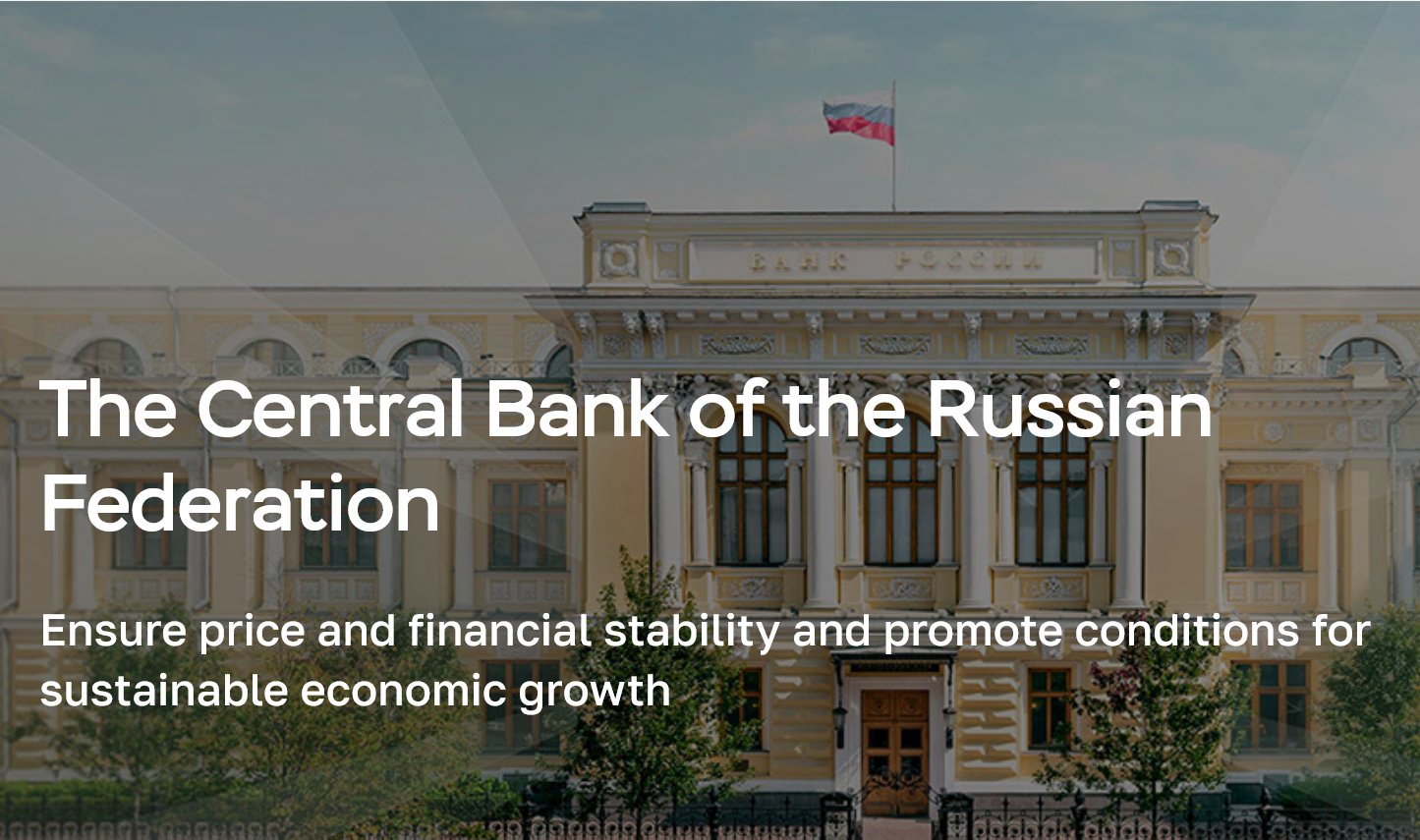
US$320 Billion In CBR Assets Frozen Worldwide. Most In EU
Confiscating And Then Using CBRF Frozen Funds Means Seeking More Later For Ukraine From EU Taxpayers, Not United States Taxpayers
Volodymyr Zelensky, President of Ukraine (2019-2024; term extended due to imposition of martial law in 2022), and Dr. Ursula von der Leyen, President (2019-2029) of the twenty-seven-country member Brussels, Belgium-based European Commission (EC), Antonio Costa, President (2024-2029) of the Brussels, Belgium-based European Council (EC), and Mark Rutte, Secretary-General (2024-2028) of the thirty-two-country member Brussels, Belgium-based North Atlantic Treaty Organization (NATO), have reason to be concerned.
EU: Austria, Belgium, Bulgaria, Croatia, Cyprus, Czech Republic, Denmark, Estonia, Finland, France, Germany, Greece, Hungary, Ireland, Italy, Latvia, Lithuania, Luxembourg, Malta, Netherlands, Poland, Portugal, Romania, Slovakia, Slovenia, Spain, Sweden.
NATO: United States, United Kingdom, Belgium, Canada, Denmark, Finland, France, Iceland, Italy, Luxembourg, Netherlands, Norway, Portugal, Albania, Lithuania, Bulgaria, Montenegro, Croatia, Czech Republic, Poland, Estonia, Romania, Germany, Slovakia, Greece, Slovenia, Hungary, Spain, Turkiye, Latvia, and North Macedonia, Sweden.
During a media availability at the conclusion of the G7 Leaders’ Summit in Evian-Les-Bains, France, Donald Trump, President of the United States (2017-2021 and 2025-2029), confirmed the United States would return to the Islamic Republic of Iran assets frozen in the United States.
“We have taken a lot of their money, and we have their money. It's not our money, it's their money, and we froze it at a certain point in time. I guess we're going to have to give it back, you know, if we didn't give it back, nobody would ever invest in the dollar again.”
The Trump-Vance Administration (2025-2029) will direct the Office of Foreign Assets Control (OFAC) of the United States Department of the Treasury to unblock the funds. Financial institutions (those within the United States and those in other countries) subject to United States jurisdiction would then be permitted to transfer the funds at the direction of the Central Bank of the Islamic Republic of Iran. The total value of assets frozen worldwide is estimated at US$110 billion.
The first assets of the government of the Islamic Republic of Iran were frozen in 1979 during the Carter-Mondale Administration (1977-1981).
The European Central Bank has shared concerns with the EU and EC of the legal risks associated with confiscating Central Bank of the Russian Federation assets. The ECB referenced similar reasoning as President Trump for assets frozen of the Islamic Republic of Iran: Not returning Central Bank of the Russian Federation assets frozen would undermine confidence in the global role of the Euro currency. And, some members of the EU are concerned that using income (interest) derived from Central Bank of the Russian Federation frozen assets may create a precedent for countries seeking reparations for previous grievances, for example from actions taken during World War II.
Question Posed On 27 June 2022: “Does the European Central Bank (ECB) support confiscating assets (reported as approximately US$340 billion) of the Central Bank of the Russian Federation which have been frozen by governments for the reconstruction of infrastructure damaged as a result of decisions by the armed forces of the Russian Federation from the 24 February 2022 deployment in Ukraine? The US$340 billion would be used to offset the estimated reconstruction costs of US$540 billion to US$1.1 trillion (European Investment Bank estimate).”
European Central Bank: “Thanks for checking but we prefer not to comment.”
During the last weeks, the armed forces of Ukraine have impressed President Trump with their successful operations impacting resource infrastructure and transportation infrastructure throughout both the internationally-recognized territory of the Russian Federation and territory of Ukraine occupied by the armed forces of the Russian Federation.
President Trump remains acutely aware the armed forces of the Russian Federation have and will continue to impact (target) the civilian population in Ukraine. Given the frequency of impact to the civilian population, not unreasonable for President Trump to believe the civilian population is deliberately targeted. The armed forces of Ukraine do not have the elasticity to target the civilian population in the Russian Federation because its internal and external support will not endorse it. The debate in Kyiv is whether Kyiv needs to act like Moscow to defeat Moscow. Become them to defeat them.
President Trump continues to focus upon a ceasefire as his primary goal. Peace for the government of the Russian Federation and government of Ukraine will remain illusory as there are bilateral issues and multi-lateral issues which will take decades to resolve, if they are resolvable. For President Trump, an end to the military operations is most important.
The optical perception is the government of Ukraine is nearing the negotiation tipping point where the government of the Russian Federation will choose negotiation rather than continuation.
If that moment happens, the result does not mean the armed forces of the Russian Federation withdraw from real estate it occupies. It may mean the armed forces of the Russian Federation seek no additional real estate.
“Without resolving the Donetsk issue, there is no chance.” Hakan Fidan, Minister of Foreign Affairs of Turkiye (2023- )
President Trump’s Next Move? He could pursue a deal with Vladimir Putin, President of the Russian Federation (2000-2008 and 2012-2030), consisting of money and real estate.
The government of the Russian Federation ceases military operations within the internationally-recognized territory of Ukraine and implements a 120-day ceasefire.
The government of the United States releases the US$2+ billion (some estimates US$5+ billion) in Central Bank of the Russian Federation assets frozen by the OFAC. The government of the United States persuades other countries to do the same, including collectively the EU.
The government of the Russian Federation unfreezes assets of United States-based companies and individuals and permits without penalty repatriation of assets by United States-based companies.
100% of a newly-drawn Donetsk Oblast is controlled by the government of the Russian Federation. The armed forces of the Russian Federation control approximately 76% of the Donetsk Oblast. President Putin has shared when 100% of the Donetsk Oblast is under control of the armed forces of the Russian Federation, he is prepared to cease military operations within the internationally-recognized borders of Ukraine. The line of contact would become de facto the new border of Ukraine and the new border of the Russian Federation. Since the armed forces of the Russian Federation do not control the entirety of the Donetsk Oblast, the position of the government of Ukraine is it will not surrender real estate that has not been taken. Shifting the current east border of Donetsk to the line of contact with the armed forces of the Russian Federation would permit President Putin to adopt that the armed forces of the Russian Federation have 100% of the Donetsk Oblast while permitting the government of Ukraine not to have surrendered any real estate under control of the armed forces of Ukraine. The Donetsk Oblast becomes smaller for the government of the Russian Federation and for the government of Ukraine.
The United States does not officially recognize territory of Ukraine occupied by the armed forces of the Russian Federation as internationally-recognized territory of the Russian Federation.
The government of the United States removes for 120-days some, but not all commercial, economic, financial, and political sanctions impacting the Russian Federation implemented by the OFAC and Bureau of Industry and Security (BIS) of the United States Department of Commerce, and United States Department of State. There would be a review after 120 days.
The government of the Russian Federation and the government of Ukraine release and exchange all prisoners of war.
The government of the Russian Federation returns children to Ukraine whose parents seek to have them returned.
The US$320 Billion
Brussels, Belgium-based Euroclear (approximately US$196 billion) and Brussels, Belgium-based Clearstream (approximately US$20 billion) combined hold more than approximately US$200 billion of assets of the Central Bank of the Russian Federation which have remained frozen since 24 February 2022, and which subsequently have been used for the benefit of the government of Ukraine. Among the disbursement mechanisms in place include payments for interest earned and use for collateralized loan guarantees. Another approximately US$120 billion in assets of the Central Bank of the Russian Federation remain frozen in financial institutions worldwide.
The Central Bank of the Russian Federation filed an application with the Court of Justice of the EU to challenge a regulation issued by the Strasbourg, France-based European Parliament (EP) and the Council of the EU authorizing the use of Russian Federation sovereign frozen assets to provide support in 2026-2027 to the government of Ukraine.
“The regulation allows for the repayment of the loan granted to it by Ukraine to be carried out at the expense of the assets of the Bank of Russia, which is an illegal and hidden form of using assets as collateral for a loan and/or further legalization of the expropriation of sovereign assets.” Central Bank of the Russian Federation
The Central Bank of the Russian Federation submitted an argument that the “disputed” EU mechanism/resolution treats sovereign assets of the Central Bank of the Russia Federation as an element of financial support for a third state (government of Ukraine), thus changing the legal and economic regime of sovereign assets. This change violates EU law and fundamental rights of international law and principles of international law, including immunity of states and their central banks.
The 24 February 2026 resolution states the EU loan to the government of Ukraine be repaid only when the government of Ukraine receives reparations from the government of the Russian Federation, and the EU authorized use of the Central Bank of the Russian Federation assets frozen to repay the EU the debt of the government of Ukraine.
Not unanticipated for the approximately US$320 billion in assets frozen of the Central Bank of the Russian Federation to have been exhausted prior to a “total and complete peace agreement” as President Trump might opine.
If that happens, will the government of Ukraine and the EU convey to the government of the Russian Federation that now it owes additional monies for reconstruction and reparations? Not unexpected would be a response from Moscow that since Kyiv and Brussels decided unilaterally to use the assets frozen for purposes other than reconstruction and reparations, they do not get to ask for additional monies.
Since 24 February 2022, EU-based taxpayers are on a trajectory to have committed more than US$500 billion and expectedly more, directly, or indirectly for the benefit of Ukraine. The funds are a combination of borrowing and budgetary reallocations from projects and services of interest to taxpayers located in the twenty-seven countries which comprise the EU.
“I think it’s very natural that given the enormous destruction in Ukraine and huge rebuilding costs that they will face, that we will look to Russia to help pay at least a portion of the price that will be involved.”Janet Yellen, United States Secretary of the Treasury (2021-2025)
The “Rebuilding Economic Prosperity and Opportunity for Ukrainians Act” (REPO) signed into law in 2024 during the Biden-Harris Administration (2021-2025) authorizes the president of the United States to confiscate Central Bank of the Russian Federation assets frozen in the United States and transfer them to the government of Ukraine for reconstruction and other purposes. Provisions of the REPO Act were implemented to provide a loan of US$20 billion to the government of Ukraine which was to be repaid from interest generated by the approximately US$320 billion in Central Bank of the Russian Federation assets frozen worldwide since 24 February 2022. The Biden-Harris Administration used later a provision of the REPO Act to forgive the US$20 billion thus becoming an involuntary obligation of United States taxpayers.
The “Seized Assets for Battlefield Equipment and Readiness Act” (SABER) introduced in 2026 in the 119th United States Congress amends the 2024 REPO Act to authorize the president of the United States to confiscate Central Bank of the Russian Federation assets frozen in the United States and transfer them to the government of Ukraine for the purchase of military equipment and other purposes.