
Ukraine Is Facing What Supermarkets Encounter Every Day: Clean-Up On Aisle…
Scene From 1995 Motion Picture, Tommy Boy, Reflects Reality Confronting Ukraine’s Quest For Security Guarantees
Prime Minister Carney In The Batter’s Box At APEC. Desires Connectivity With EU. Speaking Directly With President Putin Might Help That Along. Would Be Helpful To President Trump, Even If President Trump Doesn’t Think So
President Zelensky Trying To Convince Everyone The End To Russian Federation-Ukraine War Is About What Ukraine Will Accept Rather Than What Russian Federation Will Accept
Ukraine Wants Security Guarantees To Protect From Who? President Putin, His Successor, His Successor’s Successor? From Anyone And Everyone?
Volodymyr Zelensky, President of Ukraine (2019-2024; term extended due to imposition of martial law in 2022), did not have a good October 2026. November 2026 not looking particularly promising either. December 2026 probably like the previous two months.
If the armed forces of the Russian Federation completing the fifth year of expanded operations within the internationally-recognized territory of Ukraine remain constrained to approximately 20% of its 2014 and then 2022 objectives, governments in countries bordering Ukraine while believing the government of the Russian Federation desires additional real estate, believes it has neither capability nor capacity to engage in a successful hostile takeover of additional real estate.
There continue fulsome statements by heads of state and heads of government with whom President Zelensky visits- in person and virtually, and who since 2022 have allocated taxpayer funds, committed to borrowing, and added to debt obligations. Involuntarily for some and voluntarily for others to provide support to the government of Ukraine.
2027 will not be 2026 and 2026 is not 2022 when the twenty-seven country members of the Brussels, Belgium-based European Union (EU) and then thirty and now thirty-two country members of the Brussels, Belgium-based North Atlantic Treaty Organization (NATO) were shocked and awed by the audacity and intensity of decisions by the armed forces of the Russian Federation at the direction of the government of the Russian Federation. Members of the EU and NATO along with countries far away responded to the carnage.
EU: Austria, Belgium, Bulgaria, Croatia, Cyprus, Czech Republic, Denmark, Estonia, Finland, France, Germany, Greece, Hungary, Ireland, Italy, Latvia, Lithuania, Luxembourg, Malta, Netherlands, Poland, Portugal, Romania, Slovakia, Slovenia, Spain, Sweden.
NATO: United States, United Kingdom, Belgium, Canada, Denmark, Finland, France, Iceland, Italy, Luxembourg, Netherlands, Norway, Portugal, Albania, Lithuania, Bulgaria, Montenegro, Croatia, Czech Republic, Poland, Estonia, Romania, Germany, Slovakia, Greece, Slovenia, Sweden, Hungary, Spain, Turkiye, Latvia, North Macedonia.
Today, there remains empathy and sympathy for citizens of Ukraine, but no longer are taxpayers and voters willing to sacrifice as previously asked of them by those appointed and those elected to represent them.
Every Euro, Dollar, Pound Sterling, Yen and other currencies spent in support of the government of Ukraine is a Euro, Dollar, Pound Sterling, Yen and other currencies not spent or spent on products, projects, and services within countries.
In 2027, there are elections within the EU that will most certainly result in less financial benefits to government of Ukraine. Funding will be less in 2027 and be less in 2028 and beyond.
If the government of Ukraine continues to request nearing US$100 billion annually and the armed forces of the Russian Federation continue to occupy no more than approximately 20% of the internationally-recognized territory of Ukraine, the question becomes how much is protecting the other 80% worth on an annual basis to the taxpayers of the EU and NATO?
As the government of Ukraine continues to seek more funding daily, the polarization by taxpayers and voters increases in lockstep. The question for taxpayers and voters is when will the government of Ukraine be satisfied. The answer based upon the political and rhetorical trajectory from Kyiv is likely never. There will always be a reason to ask for more. This will be particularly acute if the government of Ukraine becomes a member of the EU.
These financial obligations are multi-year, multi-decade, multi-generational, and most will likely never be repaid by the government of Ukraine.
A strategy of the government of the Russian Federation is for the government of Ukraine to be an undesirable obligation rather than an asset for the EU and NATO. Define the government of Ukraine as managing a systemically corrupt country whose leadership believes entitled to anything it wants from taxpayers in other countries.
President Zelensky excoriates governments who he deems to be interfering in the internal affairs of the government of Ukraine.
He has no restraint from inserting himself and inserting issues relating to Ukraine into the political process throughout each of the five continents, with a particularly fulsome focus toward the United States of America.
He has no issue inserting himself into the politics of the United Kingdom (England, Northern Ireland, Scotland, Wales): “Defence needs to be 100% the priority. My advice to John [Healey, Chancellor of the Exchequer] is don’t delay. Sorry John … but it’s important to be direct.”
Not every insertion goes according to plan. On 26 August 2026, to appeal to the ego of Elon Musk who developed, operates, and controls Starlink (for civilian use) and Starshield (for military use), President Zelensky awarded Mr. Musk with the Order of Freedom. The timing was to coerce a very public presentation to Mr. Musk in September 2026 at the annual United Nations General Assembly (UNGA) in New York City. The ultimate objective was to entice Mr. Musk to visit Ukraine. Neither objective was achieved.
“DECREE OF THE PRESIDENT OF UKRAINE No. 835/2026. On awarding I. Musk with the Order of Freedom. For outstanding personal merits in protecting people's lives and freedom, the development of relations between the peoples of Ukraine and the United States of America, I decree: To award the Order of Freedom to Elon Musk, entrepreneur, engineer, head of SpaceX and Tesla, United States of America.”
Within a month, President Zelensky accused accurately the Trump-Vance Administration (2025-2029) and Mr. Musk of degrading the operational effectiveness of Starlink and Starshield. He blamed The White House and Mr. Musk for the deaths of Ukrainians.
President Zelensky complains that offers and promises from heads of state and heads of government often remain unfulfilled- that there is distance between the utterance of words and the delivery of products and services. He is correct.
The reason(s) he can do little to change. Country finances change. Country focuses change. Country necessities change. Country politics change. The impact of an unknown event takes precedence. Not a sound survival tactic for a politician to advocate for taxpayers and voters to suffer further from an event in their country rather than delay support- promised or otherwise, to the government of Ukraine.
For President Zelensky, he views whatever funds, products, and services provided to the government of Ukraine and citizens of Ukraine and companies in Ukraine since 2022 as past-due obligations and reparations owed for the inaction of governments in 2014 when the armed forces of the Russian Federation invaded and then annexed portions of the internationally-recognized territory of Ukraine.
Even if the government of Ukraine today “agrees” to repay what is quickly approaching and will surpass US$500 billion in commercial, economic, financial, military, and social support, those obligations will remain unreimbursed and unrepaid. And the allocation, amount, and source(s) of funding for the reconstruction of Ukraine remains more uncertain with each day.
If the collective EU decides to expropriate the approximately US$220+ billion in assets of the Central Bank of the Russian Federation which have remained frozen since 2022, and if non-EU governments do the same, with then total value in the range of US$320 billion, how will the funds be allocated?
To date, loans made to the government of Ukraine by the EU and the government of the United States have been guaranteed by assets of the Central Bank of the Russian Federation. Some of the loans have already been forgiven- meaning taxpayers will be repaying for decades. The interest earned by the assets of the Central Bank of the Russian Federation have been allocated to benefit the government of Ukraine.
NOTE: The idea of using the interest was first conveyed in 2022 by a United States citizen to Serhiy Marchenko, Minister of Finance of Ukraine. At the time, a prominent United States-based economist/journalist responded that would never happen.
At this trajectory, all the assets of the Central Bank of the Russian Federation will have been spent when the military component of the Russian Federation-Ukraine War has ceased- temporarily or permanently.
The government of Ukraine believes the value of reconstruction is nearing US$500 billion. The corruption component could be 20% or more. That means the siphoning-off of potentially US$100 billion into the pockets of agents, attorneys, brokers, commissions, companies, consortiums, criminals, financial institutions, and officials in the government of Ukraine and outside of Ukraine.
There is already a mathematical problem. There are far more funds mentioned as required than there are funds available, existing, or likely unearthed. If the assets of the Central Bank of the Russian Federation are expropriated, then what? Does the government of Ukraine demand more funds from the government of the Russian Federation? How much more? Is there a limit? The government of Poland believes the Russian Federation-Ukraine War has cost its taxpayers more than US$100 billion. Does that get deducted from the assets of the Central Bank of the Russian Federation? Is the government of Poland entitled to reimbursement before the government of Ukraine? If not, in what order? What about other governments with claims?
Then there is a who-comes-first problem. Every head of state and head of government whose taxpayers have contributed to the government of Ukraine believe companies in their countries should be first in line to reap the benefits of reconstruction contracts.
The government of Ukraine continues to seek, better describe as demand “complete and total” membership in the EU.
In October 2026, the EU decided to separate the candidacy processes of Moldova and Ukraine, despite the objections of the government of Ukraine. This is another example of macro political desires colliding like atoms with micro political realities. There will be more examples.
President Zelensky believes Ukraine, its citizens and its government, have already paid into EU membership and NATO membership by defending the European Continent from the armed forces of the Russian Federation. EU members and NATO members disagree.
EU members will have elections in 2026 and in 2027. The more the government of Ukraine inserts itself into those internal political dialogues, the further away the government of Ukraine will be from EU membership and from further funding by EU taxpayers.
President Zelensky believes the EU will not survive without the government of Ukraine as a member of the EU and will not survive without the citizens of Ukraine as members of the EU. And, primarily, he believes the EU will not survive without the territory of Ukraine as a member of the EU. He is wrong. The EU can survive and thrive absent Ukraine.
Taxpayers in the EU will be asked to give more while simultaneously knowing that if the government of Ukraine becomes a member of the EU, then it will also become the largest of the poorest members of the EU. That means entitled to access to oversized percentages of the collective EU budget- at the expense of the other members whose taxpayers will be funding a competitor, particularly in agricultural commodities and food products. The largest members of the EU are currently attempting to substantially decrease the multi-year EU budget.
President Zelensky and members of his government maintain neither he nor the citizens nor the government will accept connectivity with the EU other than membership- not associate, not junior, not partial. The reality is the government of Ukraine will accept whatever the unanimous vote of the EU members offers. Arrogance has its limitations.
Since 2022, administrative leadership of the EU continues with eloquent oratory about Ukraine, its collective citizens, businesses, and government. About Ukraine’s “rightful place” in the EU.
However, as those macro-focused words necessarily migrate toward micro-focused words, is where the distance between macro and micro become apparent for Ukraine and a barrier to Ukraine.
Whatever “security guarantees” the government of Ukraine obtains from the EU, obtains from NATO and obtains from other governments, those “security guarantees” may deter, but will not prevent a repeat of 2014 or 2022.
Governments will be increasingly reluctant to commit funding and commit personnel to defend the territory of Ukraine. Taxpayers and voters want their monies and decisions by appointed and elected officials to focus inward rather than outward. Administratively, the EU is returning to a focus upon issues relating to commerce. They will ask, and political leadership will ask, if Ukraine was not necessary in 1991 (at its independence from the U.S.S.R.), in 2008 (when the armed forces of the Russian Federation invaded Georgia), in 2014 (when the armed forces of the Russian Federation invaded the internationally-recognized territory of Ukraine), or on 23 February 2022 (the day before the armed forces of the Russian Federation invaded further into the internationally-recognized territory of Ukraine), then why is it today essential to the collective benefit of the current geography and population of the EU?
There is a scene in the 1995 motion picture, Tommy Boy, where representatives of an automotive brake pad company are engaging a perspective customer. The perspective customer wants a guarantee printed on the box, until he doesn’t.
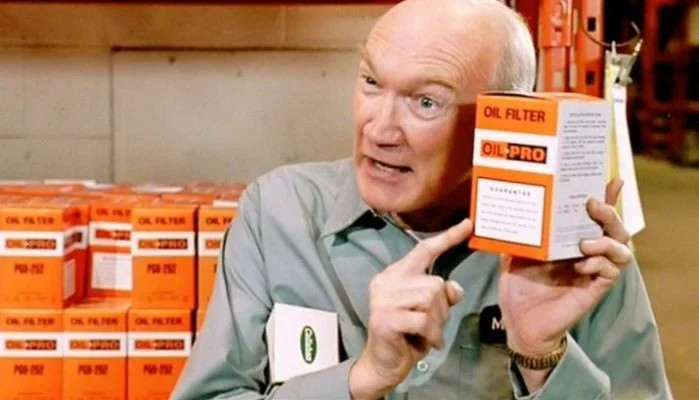
The scene reflects the quixotic journey by the government of Ukraine as it demands binding, perpetually guaranteed security guarantees as a component condition to sign a co-existence agreement (more likely than a peace treaty) with the government of the Russian Federation.
The government of Ukraine may well negotiate security guarantees, but the words chosen by the signatories to provide a maximum mechanism to delay, deny, or postpone any deployment of military assets on behalf of the government of Ukraine.
Ted: I like your line and I like your prices. But there’s a problem. There's no guarantee on the box.
Tommy: If they break down, you can call me at home, even if I'm watching TV. Callahan has guaranteed every part sold since…
Ted: Maybe so, but it's not on the box. It should always be on the box. Comforting you, calling out “I’m good. I'll never let you down. But if I do, I’m gonna make all things better.”
Richard: Our brake pads are made of a non-corrosive poly-plated...
Ted: Son, if you’re not talking about a guarantee, skip it. My customers need to see that little label, lookin’ at ‘em right in the eye.
Tommy: Alright, uh, you wanna talk about guarantees, then...
Ted: Fellas, you just ran out of time.
Tommy: Let’s think about this for a sec, Ted. Why would someone put a guarantee on a box? Hmm, very interesting.
Ted: Go on, I’m listening.
Tommy: Here’s the way I see it, Ted. A guy puts a fancy guarantee on the box ‘cause he wants you to feel all warm and toasty inside.
Ted: Yeah, makes a man feel good.
Tommy: Of course it does. Why shouldn't it? You figure you put that little box under your pillow at night, the Guarantee Fairy might come down and leave a quarter, am I right, Ted?
Ted: What's your point?
Tommy: The point is, how do you know the fairy isn't a crazy glue sniffer? “Building model airplanes” says the little fairy. Well, we’re not buying it. He sneaks into your house once, that’s all it takes. Next thing you know there's money missing off the dresser and your daughter is knocked up. I’ve seen it a hundred times.
Ted: But why do they put a guarantee on the box then?
Tommy: ‘Cause they know all they sold you was a guaranteed piece of shit. That’s all it is, isn’t it? Hey, if you want me to take a dump in a box and mark it “guaranteed”, I will. I got spare time. But for now, for your customers’ sake, for your daughter’s sake you might wanna think about buying a quality product from me.
Ted: Okay, I'll buy from you.
The government of Ukraine wants security guarantees to reflect the obligations and wording of Article 5 of the NATO Charter.
If the obligations and words of Article 5 are included in the security guarantees provided by governments, one result is the government of the Russian Federation having little concern. Why? Because they know, unlike some politicians representing the governments and institutions who may provide the security guarantees, that Article 5 does not require any military engagement. From NATO:
“With the invocation of Article 5, Allies can provide any form of assistance they deem necessary to respond to a situation. This is an individual obligation on each Ally and each Ally is responsible for determining what it deems necessary in the particular circumstances.”
“This assistance is taken forward in concert with other Allies. It is not necessarily military and depends on the material resources of each country. It is therefore left to the judgment of each individual member country to determine how it will contribute. Each country will consult with the other members, bearing in mind that the ultimate aim is to “to restore and maintain the security of the North Atlantic area.””
“At the drafting of Article 5 in the late 1940s, there was consensus on the principle of mutual assistance, but fundamental disagreement on the modalities of implementing this commitment. The European participants wanted to ensure that the United States would automatically come to their assistance should one of the signatories come under attack; the United States did not want to make such a pledge and obtained that this be reflected in the wording of Article 5.”
The Asia-Pacific Economic Cooperation (APEC) Economic Leaders' Meeting in Shenzhen, People’s Republic of China scheduled for 18 November 2026 and 19 November 2026.
Xi Jinping, President of the People’s Republic of China (2013- ), will host heads of state and heads of government including Donald Trump, President of the United States (2017-2021 and 2025-2029), and Vladimir Putin, President of the Russian Federation (2000-2008 and 2012-2030). President Zelensky has not been invited.
Steven Witkoff, Assistant to the President, Senior Advisor, and Special Envoy (2025- ) of the Trump-Vance Administration, and Jared Kushner, a son-in-law of President Trump, and Mr. Kirill Dmitriev, Special Envoy and Chief Executive Officer of the Russian Direct Investment Fund (RDIF), may participate. Mr. Dmitriev increasingly appears as the Russian avatar of Mr. Witkoff.
In October 2026, Mr. Witkoff said during a meeting with President Putin: “You talk so much about my president, President Trump, being a humanitarian. You are a humanitarian also, sir, and I salute that, I commend you, and I thank you again.”
In October 2026, Alexander Stubb, President of Finland, and Jonas Gahr Store, Prime Minister of Norway, two NATO member countries bordering the internationally-recognized territory of the Russian Federation, spoke by telephone with President Putin. The governments of Denmark and Sweden objected.
Mark Carney, Prime Minister of Canada (2025- ), will attend APEC, but thus far does not have a bilateral, conversation, encounter, or pull-aside anticipated with President Putin. This despite his comment: “I think it depends on the message, and whether previous messengers were clear enough. Sometimes it’s better to have those direct leader-to-leader conversations.”
Asia Pacific Economic Cooperation (APEC): Australia, Brunei, Canada, Chile, China, Hong Kong, Indonesia, Japan, Malaysia, Mexico, New Zealand, Papua New Guinea, Peru, Philippines, Russia, Singapore, Republic of Korea, Chinese Taipei (Taiwan), Thailand, United States, Vietnam.
The G20 Leaders’ Summit in scheduled for 14 December 2026 and 15 December 2026 December at the 643-room (two presidential suites) Trump National Doral Miami Golf Resort in the State Florida. President Xi is expected. President Putin remains uncommitted. President Zelensky seems to have been invited. The government of Germany believes President Putin should be invited and should participate.
G20: Argentina, Australia, Brazil, Canada, China, France, Germany, India, Indonesia, Italy, Japan, Mexico, Poland, Republic of Korea, Russian Federation, Saudi Arabia, Spain, Turkiye, United Kingdom, United States, European Commission (president) and European Council (president), and African Union (since 2023) representing its fifty-five (55) member states. Note: The Trump-Vance Administration replaced the Republic of South Africa with Poland. South Africa is not among the twenty-largest economies, Poland is the 20th largest. In 2027, government of the United Kingdom as G20 host may reinstate South Africa.
The EU is demanding a seat at the negotiating table with President Putin, President Trump, and President Zelensky.
To date, EU heads of state, EU heads of government, and EU administrators have chosen absence rather than engagement because they do not want to legitimize decisions of the government of the Russian Federation.
There have been since 2022 opportunities for heads of state and heads of government to engage directly with representatives of the government of the Russian Federation- its head of state, its minister of foreign affairs, and its representatives.
If avoidance is the core strategy of EU members and NATO members, then the result should be unsurprising. Funds from their respective taxpayers continue to be allocated for a cause that becomes increasingly unpopular to fund. Direct engagement is required.
There have been telephone calls. There should be additional face-to-face engagement which thus far is limited to President Trump. Heads of state and heads of government complain about the results of his engagement with President Putin. Then they question why they are unable to influence the outcome. Demanding a seat at the table is fine. Waiting for an invitation is unproductive.
Prime Minister Mark Carney soon will have a moment. He has political street credibility- outside of the internationally-recognized territory of Ukraine as Canada is the home to the most individuals of Ukrainian descent.
A moment to put some of his words at the 2026 World Economic Forum (WEF) in Davos, Switzerland, into action… request a bilateral with President Putin.
After the bilateral, if Prime Minister Carney wants to complain, then he does so with increased credibility- from a face-to-face encounter.

from www.kaivac.com