
From Kharkiv: Moving Two Generators. Chocolate Is More Than Calories. Woman Could Be Waiting For Orient Express. Where Are We? Where Headed? Reality Check
Moving Two Generators
Chocolate Is More Than Calories In Kharkiv
Doing Good
Is This Woman Really In Kharkiv? Or On Train Platform Waiting For The Orient Express
Where Are We? Where Headed?
Reality Check
Early morning of Tuesday, 24 February 2026, began with familiar notifications and sounds in the city of Kharkiv, Ukraine, situated nineteen miles from the border with the Russian Federation,
Air Alerts to cellular devices with “immediately proceed to the nearest shelter” and providing geolocating for the nearest shelter. Then, the thuds- messengers purveyors of death and destruction. Visiting Ukraine often, there is a creeping complacency to heeding Air Alerts. Residents too become complacent. Anniversary dates are different.
Moving Two Generators
A 9:00 am breakfast reservation at Snianishana, one of the many New Ukrainian Cuisine restaurants to have opened in Ukraine during the last five years. The food and service are outstanding. That’s not what made this visit memorable.
Arriving at 8:50 am, the doors are locked; team members are inside preparing to welcome their first guests. One young, petite, team member emerges and begins preparing the staircase for her customers- removing snow and ice a priority along with pre-positioning the generator electrical connection. In the vestibule are two generators- both large and soon evident full of fuel and heavy. The generators are blocking the entrance way. Offering to move them is welcomed by the team member. In Ukraine, these niceties are instinctive- and just appropriate. So, lift and drag and reposition the two generators outside and to the side of the entry doors was no big deal. Check blood pressure.
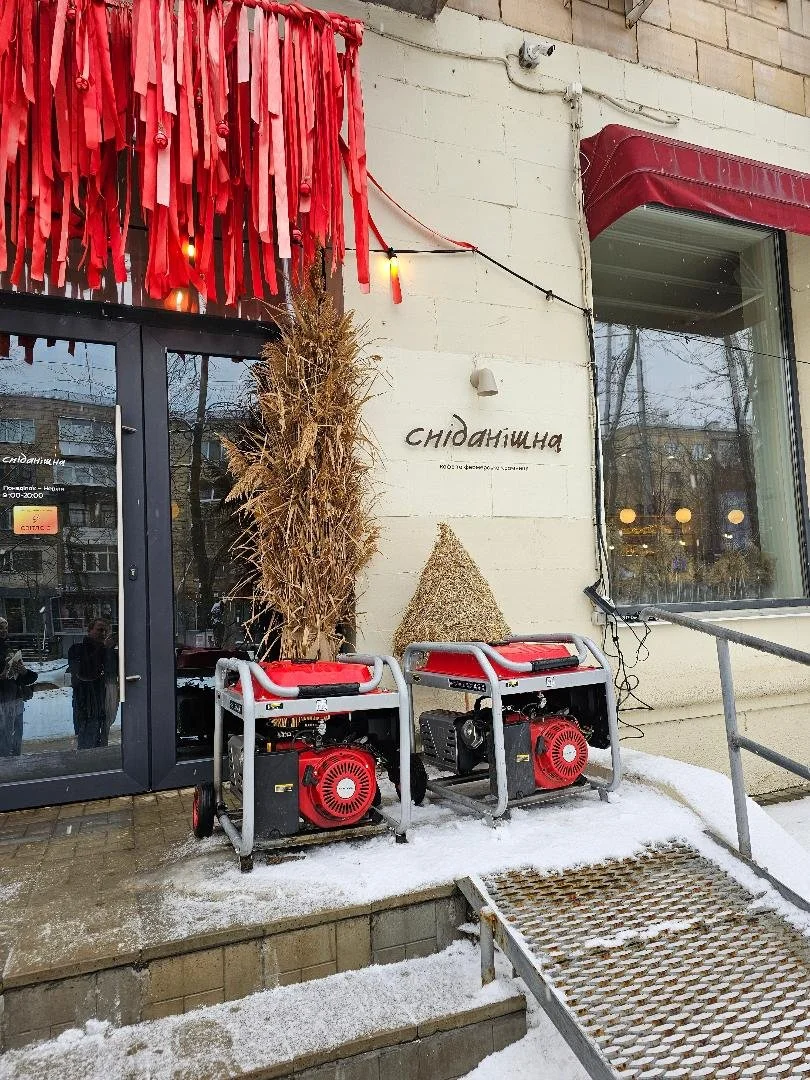
As breakfast concludes, the team member presents an appreciation in the form of a loaf of freshly-baked bread- still warm to the touch.
Visitors need to be nice- always. Visiting a country at war provides no opportunity for “sorry, having a bad day.” Gratuities always outsized. Each morning, a note of appreciation and money on the bed for housekeeping.
Ukraine’s Willy Wonka
The day prior, a very special visit to a very special place, PrJSC Kharkivyanka Confectionary. The oldest in Ukraine as in more than one hundred years. Parts of the facility are from prior to the 1917 Russian Revolution. Impacted by the Russian Federation-Ukraine War: struck by rockets, workers injured, half the number of workers today than in 2021, supply chain challenges, commodity price fluctuations (which confronts many companies). The company exports products to thirty countries, including the United States. And, almonds and peanuts from the United States are among the cocoa, nuts, berries, and flavorings imported from throughout the world.
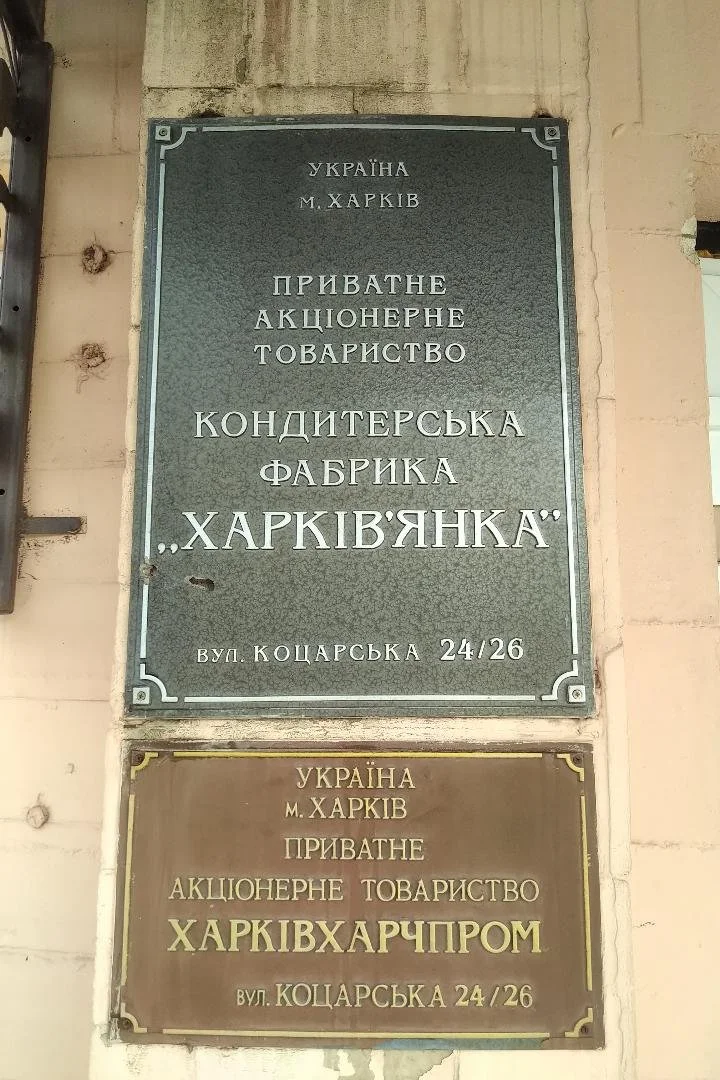
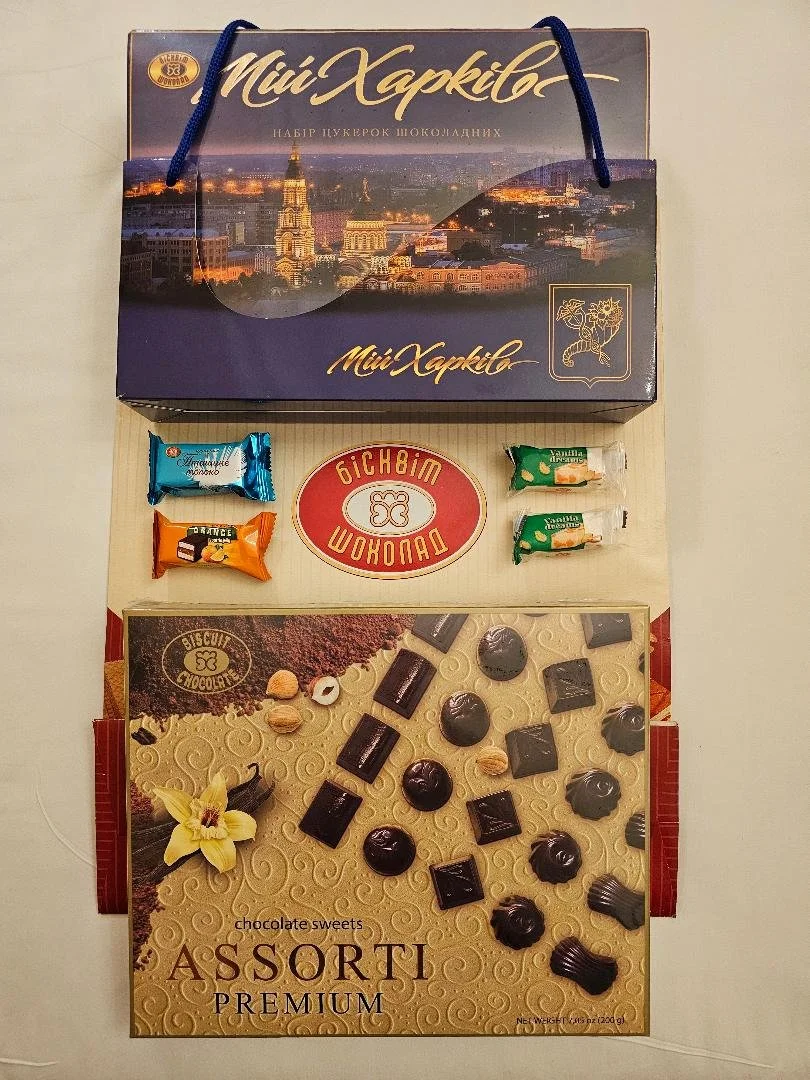
Not unnoticed is while the Director is a seasoned male, the Senior Managers- meaning those who actually do and supervise design, packaging, production, and quality control are… women.
Memorable- entering a small room stacked high with colorful boxes. Five women seated with each decorating chocolate biscuit cakes- hundreds each day. Yes, when this company prints “handmade” on its packaging, it means it.
During war, chocolate has a unique place- for soldiers it represents comfort, a taste of normal, a reminder of what they are, in part, fighting to preserve- heritage.
In the United States, during the Revolutionary War (1785-1783), Civil War (1861-1865), World War I (1914-1918), and World War II (1939-1945), Hershey, Pennsylvania-based The Hershey Company provided chocolate to soldiers. During World War I and World War II, soldiers would trade chocolate (and cigarettes) for other items. When soldiers encountered children, they would instinctively offer chocolate. For those children, that moment- receiving chocolate, unwrapping it, the first bite- revived memories of living before war, even if only lasting until the last cherished morsel was no more… and then a smile.
Doing Good
A morning walk before departure. Passing a convenience store on Sumska Street in Kharkiv where an older man is sitting on a bench, hunched next to what seem to be his only possessions. His gray tattered snow boats wrapped in torn plastic bags. Hesitating, then entering the convenience store with an offer to pay for coffee and food for him. The cashier responds the man is known, the “local homeless man” and they do care for him.
The Platform
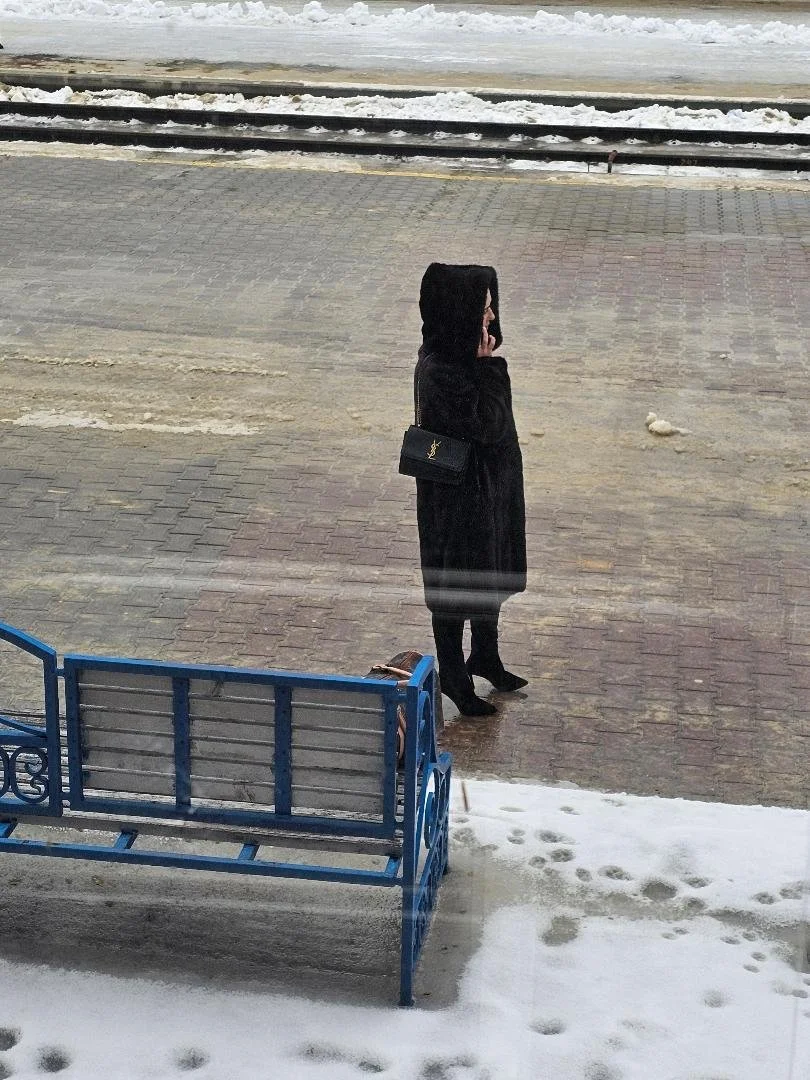
Resembling a passenger awaiting a first-class seat on the Eurostar or compartment on the Orient Express, a young woman awaits the Kharkiv to Kyiv train. Speaking into her cellular device. Wearing black leather boots- thigh-high. French manicure. A below-the-knee length fur coat with fur hood. Carrying a black purse with the large letters YSL in gold along with a Louis Vuitton tote. During a war, there is always normal- which can seem so out of place. Yet, this normal must co-exist with the abnormal that is war because absent it can also go hope.
Where Are We? Where Headed?
The government of Ukraine and the inhabitants of Ukraine are ending the first day of the fifth year of the Russian Federation-Ukraine War. That’s sobering. In 2014, the armed forces of the Russian Federation commenced their incursion into the Crimea Peninsula and Donbas Region (Luhansk Oblast and Donetsk Oblast), which they continue to occupy.
Also sobering is a continually re-calibrating, reformatting, restructuring, and rewinding of the demands from Moscow to cease its military operations within the internationally-recognized territory of Ukraine and the demands from Kyiv to cease its military operations within the internationally-recognized territory of Ukraine and within the internationally-recognized territory of the Russian Federation.
The nearer should be the conclusion of the military component of the Russian Federation-Ukraine War, the further that conclusion continues to be from implementation. The nearer everyone believes they are, the further away they actually are.
There remains a proposition that the Russian Federation-Ukraine War will end when enough people in the Russian Federation and in Ukraine have died. If that proposition has validity, then what is true today is not yet have enough people died.
Volodymyr Zelensky, President of Ukraine (2019-2024; term extended due to imposition of martial law in 2022), has replaced demanding immediate membership in the Brussels, Belgium-based North Atlantic Treaty Organization (NATO) with demanding immediate membership in the Brussels, Belgium-based European Union (EU). He further continues to misstate the realities of security guarantees which have been discussed and proposed, but yet to be legally proffered and legally accepted and legally adopted. He is unlikely to receive what he wants. No better are heads of state and heads of government who continue to project a willingness to support the government of Ukraine far more than their respective taxpayers and voters will accept.
Vladimir Putin, President of the Russian Federation (2000-2008 and 2012-2030), remains determined the armed forces of the Russian Federation have operational control and territorial control of the Luhansk Oblast and Donetsk Oblast, combined described as the Donbas Region. The goals for Luhansk Oblast have for the most part- 99%, been achieved. Donetsk Oblast is approximately 20% controlled by the armed forces of Ukraine. President Putin wants President Zelensky to relinquish that 20%. The armed forces of the Russian Federation control approximately 70% of Zaporizhzhia Oblast and approximately 80% of Kherson Oblast. Thus far, President Putin has not (publicly) required President Zelensky to relinquish the remaining territory of either oblast. There also remains a question as to whether President Putin is prepared to forgo further demands regarding the “root causes” of the Special Military Operation (SMO) commenced on 24 February 2022 if President Zelensky cedes the remaining territory of Donetsk Oblast.
Regarding Donetsk Oblast, the most efficient solution remains to re-draw the boundaries of Donetsk Oblast.
Complicating discussions and negotiations are leadership of the EU has now added its list of demands of President Putin as a condition for permitting the armed forces of Ukraine to cease operations against the armed forces of the Russian Federation. This has the definition of insane written all over it. To be determined is the response from taxpayers and voters in the EU as to continuing a commitment of nearing US$500 billion with an upward trajectory of potentially another US$200 billion. With reconstruction of Ukraine now estimated at US$588 billion, that is a US$1.288 trillion invoice primarily destined for the mailboxes of taxpayers and voters in the twenty-seven countries who are members of the EU.
With the ever-changing demands of the parties- Coalition of the Willing, EU Leadership, Russian Federation, and Ukraine, there should be little surprise Donald Trump, President of the United States (2017-2021, 2025-2029) finds the current and currently-developing diplomatic landscape problematic when added to what he believes is essential for the government of the United States to remove sanctions and tariffs implemented upon the Russian Federation- its citizens, its companies, and its government.
Reality Check
Visitors from the United States need embrace a reality that how citizens of Ukraine may have felt about citizens of the United States in 2022 is not the same as in 2026. There is no reversing history. The government of the United States will struggle to be viewed appreciatively and positively once concludes the military component of the Russian Federation-Ukraine War. The citizens of Ukraine will be increasingly bitter from what they believe was an unwillingness in 2022 by the Biden-Harris Administration (2017-2021) and others to deliver what the government of Ukraine believed would help it end quickly the Russian Federation-Ukraine War.