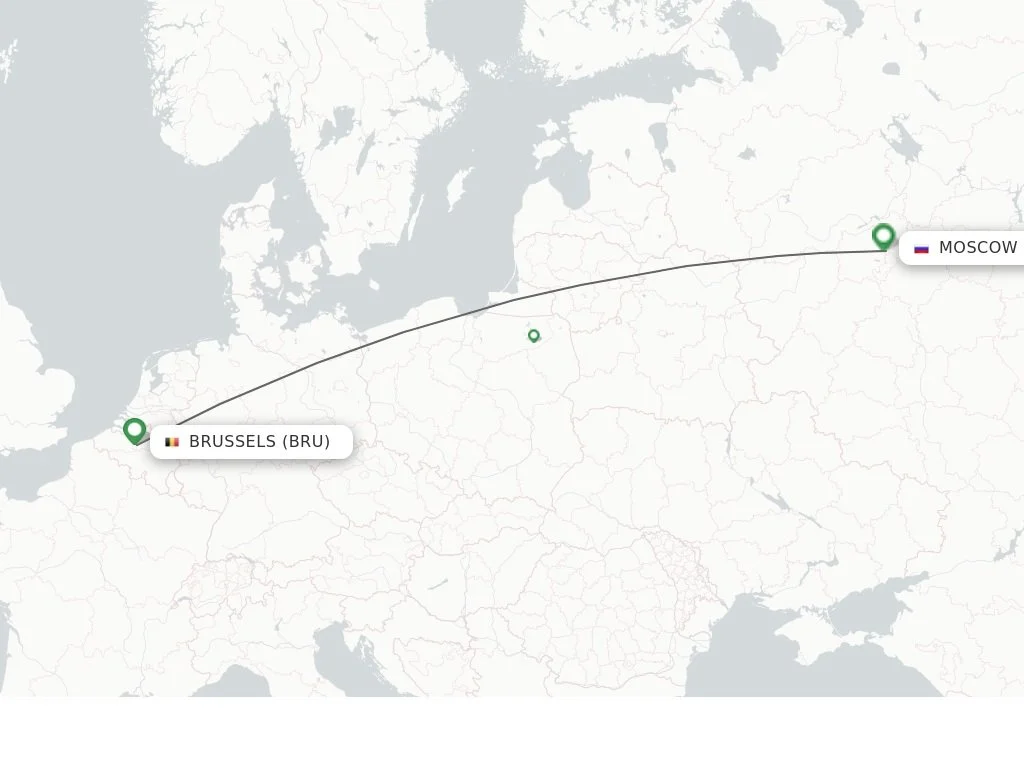
Ursula Von Der Leyen Demands Invitation To Russia-Ukraine-US Negotiating Table. Waiting For Message From OpenTable, Tablebooker, Or Yandex? Consider 3+ Hour Flight To Moscow
Dr. Ursula Von Der Leyen Demands Invitation To Russia-Ukraine-US Negotiating Table. Consider 3+ Hour Flight To Moscow To Locate Host, Seat, And Table.
Waiting For Cellular Device Notification From OpenTable, Tablebooker, Or Yandex That Her Reservation Is Confirmed?
Dr. Von Der Leyen Needs Remedial Lesson About “Realities On The Ground” Versus Desired Realities.
According To Dr. Von Der Leyen, EU Will Not Accept “Borders Redrawn By Force” Which Sounds Formidable. What Does That Mean? Military Force? Political Force? Where Has EU Successfully Intervened To Prevent By Force Border Changes?
What About Borders Imposed In 2024/2025 By The State Of Israel On The Territory Of Gaza And Russian Federation Defacto Control Since 2008 Of The Regions Of Abkhazia And South Ossetia In Georgia?
Russian Federation Has Since 2014 And Further Since 2022 Taken By Force Territory Of Ukraine And Unlikely To Return It.
Refusing To Recognize What Exists May Provide A “Feel Good Moment” But Does Nothing To Advance An End To At Minimum The Military Component Of The Russian Federation-Ukraine War.
When The Armed Forces Of The Russian Federation Believe It Controls The Entirety Of Luhansk Oblast, Donetsk Oblast, Zaporizhzhia Oblast, and Kerson Oblast, The Government Of The Russian Federation Could May Its Military Operations Within The Internationally-Recognized Territory Of Ukraine.
Once Military Conflict Disengages, The Most Difficult Issue Negotiations Engage. They Will Require Years, Perhaps Decades.
Time For Dr. Von Der Leyen To Travel To Moscow To Meet With President Putin. Maybe Leading “Coalition Of The Willing”
Dr. Ursula von der Leyen, President of Brussels, Belgium-based European Commission (EC) since 2019 (reappointed in 2024 to a second five-year term), is a physician and mother of seven children. Her thinking should be based the analytical, formulated using empirical evidence, historical precedence, and prescribing realistic treatments.
Dr. von der Leyen self-styles as an uber-combination head of government and head of state, and composite administrator and bureaucrat. These positions are not elected by popular vote of the approximately 450 million inhabitants within the twenty-seven (27) member countries of the Brussels, Belgium-based European Union (EU).
European Union (EU): Austria, Belgium, Bulgaria, Croatia, Cyprus, Czech Republic, Denmark, Estonia, Finland, France, Germany, Greece, Hungary, Ireland, Italy, Latvia, Lithuania, Luxembourg, Malta, Netherlands, Poland, Portugal, Romania, Slovakia, Slovenia, Spain, Sweden.
Dr. von der Leyen and Kaja Kallas, High Representative for Foreign Affairs and Security Policy, a Vice President of the EC, continue to maintain there must be a “just and lasting peace” protecting Ukraine.
That goal, while laudatory, remains distant. More accurately, it remains unlikely and unworkable. A “just and lasting peace” would quite probably necessitate a time machine for a return to January 2014 and January 2022, dates before the armed forces of the Russian Federation invaded Ukraine.
Perfectly acceptable, appropriate, and laudatory for the EC, EU, and members of the Brussels, Belgium-based North Atlantic Treaty Organization (NATO) to implement a plan to wait out the government of the Russian Federation until its commercial, economic, financial, military, and political resources are exhausted or prosecuting the war is no longer desired by political leadership in the Kremlin.
NATO: United States, United Kingdom, Belgium, Canada, Denmark, Finland, France, Iceland, Italy, Luxembourg, Netherlands, Norway, Portugal, Albania, Lithuania, Bulgaria, Montenegro, Croatia, Czech Republic, Poland, Estonia, Romania, Germany, Slovakia, Greece, Slovenia, Hungary, Spain, Turkiye, Latvia, and North Macedonia, Sweden.
However, the nearing fifth year of the expanded Russian Federation war with Ukraine continues to find the EC and the EU encountering limitations as to what the twenty-seven member countries of the EU believe Ukraine is worth.
Any plan to “wait out” the government of the Russian Federation first requires funding. Harnessing determination, grit, and willingness is important. Identifying funding is critical.
The current debate in Brussels and in the capitals of the EU members is about additional monies for Ukraine- both for the government to operate and for the military to operate. There is no consensus as to the provision of funding. There is no consensus about how to create the funds. Individual EU members almost uniformly are incurring budget issues- and their respective taxpayers and voters are not inclined to assist to Ukraine if the result is multi-year or multi-decade increased costs for education, deficits, fees, healthcare, taxes, and transportation.
There is the leprechaun-like pot of gold, or currency, in the form of approximately US$320 billion in assets of the Central Bank of the Russian Federation frozen since 24 February 2022. Note the original intent of freezing the funds was to have available monies for the reconstruction of Ukraine resulting from decisions implemented by the armed forces of the Russian Federation within the internationally-recognized territory of Ukraine.
In 2024, a US$50 billion loan (of which US$20 billion was forgiven by the Biden-Harris Administration (2021-2025) while the EU share remains on its accounting books) was secured using the US$320 billion. Now, there are efforts to use US$140 billion either directly debited from the US$320 billion or collateralized by the US$320 billion. Either outcome would mean EU taxpayers will be expected to bear the financial burden. Since 24 February 2022, global financial support for Ukraine is approximately US$300 billion- and increasing. Depending upon how calculated, the original Trump-Vance Administration (2025-2029) twenty-eight-point plan crafted by interests in Florida, Moscow, and Washington DC, could siphon-off approximately US$220 billion of the US$320 billion for investment programs focusing upon Ukraine and, shockingly, upon the Russian Federation.
Friedrich Mertz, Chancellor of Germany (2025- ), maintains that “Europe is not a plaything, but a sovereign actor for its own interests and values.” History will note Germany is the poster child for seeking to redraw borders by force- and even with overall failures from WWI and WWII, there were material consequences to the 20th century map of Europe and are already material consequences for the 21st century map of Europe.
While Europe does have its “own interests and values,” each are only adaptable and only sustainable if Europe collectively is willing to accept the commercial, economic, financial, military, political, and societal impact from defending those interests and those values. Thus far, political leadership, taxpayers, and voters have demonstrated more constraint and restraint than boldness.
In early 2022, political leadership of the EU did implement decisions that initially resulted in increased prices for consumers due to the imposition of sanctions upon the Russian Federation, its government and its private sector. That was a demonstration of political leadership despite knowing there could be consequences- voters using the ballot box.
Over time, as the global marketplace has absorbed the impact, consumer prices normalized and stabilized. Since 2022, there have been implemented nineteen EU sanctions packages directed toward the Russian Federation and increasingly toward countries engaging with the Russian Federation. A twentieth EU sanctions package is expected to be implemented by January 2026. The government of the Russian Federation, private sectors within the Russian Federation, and consumer throughout the Russian Federation continue to adapt, though not enthusiastically.
For Volodymyr Zelensky, President of Ukraine (2019-2024; term extended due to imposition of martial law in 2022), his role has been to watch as his country has become a commodity- a commercial commodity, an economic commodity, a financial commodity, a military commodity, and a political commodity. There continue to be value fluctuations for each type of commodity.
On 24 February 2022, the armed forces of the Russian Federation invaded and further invaded the territory of Ukraine in what Vladimir Putin, President of the Russian Federation (2000-2008 and 2012- ), defined first as a Special Military Operation (SMO) and on 22 December 2022 defined as a war. The initial invasion of Ukraine by the armed forces of the Russian Federation was in part from the territory of Belarus.
The war between the Russian Federation and Ukraine did not commence on 24 February 2022. The roots began their trajectories on 20 February 2014 when the armed forces of the Russian Federation invaded the Crimean Peninsula and the area known as the Donbas Region (Donetsk Oblast and Luhansk Oblast).
For President Zelensky, his goal is to maintain high values for each of the commodities to maintain interest from the buyers and the sellers, in this case first governments and second taxpayers and voters. Not an easy task.
For Europe- defined through the European Commission, European Council, European Union, and NATO (other than Canada and United States which reside across the Atlantic Ocean), decisions implemented must be practical rather than adhere to and embrace rhetorical aspiration and inspiration towards the goal of a “just and lasting peace” for Ukraine, which is just as unlikely as is only “peace” between the Russian Federation and Ukraine as most interlocutors would define the term.
Distrust. Hatred. Retribution. Vengeance. These are what define and guide the interests of Kyiv and Moscow. Seeking non-military engagement as a baseline to co-existence might be a better fit for the realities on the ground.
Once the military conflict has ceased, far sooner than comfortable and digestible for many members of the thirty-plus country “Coalition of the Willing” there will be constituencies (heads of state and heads of government) who will advocate for a collective re-engagement or country-by-country re-engagement with the Russian Federation, its government and its population- particularly its 140 consumers, customers, investors, and travelers.
If Dr. von der Leyen wants a seat at the negotiating table, traveling to the Brussels Airport may be more demonstrably impactful than teleprompter-assisted statements whose primary result are verbal wind gusts… which do not last long.