Russia’s Aeroflot Adapts To Sanctions, Economic Stress With Restaurant-Level Business Class Service On Domestic Route
Champagne Served In Flutes
Russian Federation-Ukraine War Has Deprived Aeroflot Of Growth And Reputation That Is Likely Not Recoverable
Future Of Aeroflot If Sanctions Continue On Russian Federation Hospitality Sector?
View Of Kaliningrad’s Youth “Living in a cage”
In the nineteen eighties, the reputation of Moscow, U.S.S.R.-based Aeroflot Airlines was such that the most sought-after mileage reward by expatriates was “a year of avoiding Aeroflot.”
In the decades and years since, now Moscow, Russian Federation-based PJSC Aeroflot (2025 revenue 902 billion Rubles compared to 413 Billion Rubles in 2022 and 491 billion Rubles in 2021) has left that reputation in the “dustpan of history” on the tarmac. PJSC Aeroflot has 171 aircraft including seven A350-900 aircraft.
Value of Russian Ruble To United States Dollar
2021 (31 December 2021)- 74.29
2022 (31 December 2022)- 70,33
2023 (31 December 2023)- 89.68
2024 (31 December 2024)- 101.10
2025 (31 December 2025)- 78.22
2026 (31 October 2026)- 80.55
Note: 73.77% of the shares of PJSC Aeroflot are held by the Ministry of Finance of the Russian Federation and the Federal Agency for State Property Management.
Note: PJSC Aeroflot does not publish in its annual reports the individual compensation data for its officers and directors which is contrary to good governance and transparency, particularly as a government-controlled public company whose assets belong to taxpayers and voters in the Russian Federation. PJSC Aeroflot employees would certainly welcome the information so they may compare it with their compensation- and determine their worth to the company.
Despite sanctions imposed by countries upon the company 2022, management continues to adapt. With the implementation of those commercial, economic, and financial sanctions, PJSC Aeroflot is not supposed to be what it is today.
The number of routes continues to change. The number of aircraft operating continues to change. The type of aircraft operating continues to change. The composition of the workforce continues to change. Airports in the Russian Federation continue modernization, some of which is paid for by PJSC Aeroflot.
A challenge for PJSC Aeroflot is its infrastructure. The national footprint and international footprint of the company were designed in the years prior to 2022 for an audience projected larger than what exists today. An increasing number of travelers are using Russian Railways as there are fewer delays and competitive pricing.
However, Russian Railways is straining due to not having available immediately new rolling stock, although there are replacements due for the high-speed Sapsan, which has high-quality service in its First Class offering. Russian Railways is also again in control of its kitchens towards an upgrade to offerings in all classes of service.
These circumstances will exist in parallel with the duration of the active military component of the Russian Federation-Ukraine War.
Even if the Trump-Vance Administration (2025-2029) removes some sanctions or all sanctions imposed by the United States government, the twenty-seven members of the Brussels Belgium-based European Union (EU) will not necessarily align with decisions in Washington DC. Pique may result in Brussels implementing further sanctions attempting to offset any value to PJSC Aeroflot from decisions by Washington DC.
EU: Austria, Belgium, Bulgaria, Croatia, Cyprus, Czech Republic, Denmark, Estonia, Finland, France, Germany, Greece, Hungary, Ireland, Italy, Latvia, Lithuania, Luxembourg, Malta, Netherlands, Poland, Portugal, Romania, Slovakia, Slovenia, Spain, Sweden.
PJSC Aeroflot will remain subject to restrictions- limited access to fuel-efficient and time-efficient routes, limited access for aircraft to airports and service at airports, reputational consequences due to connectivity of PJSC Aeroflot to the government of the Russian Federation, and continued visa restrictions upon citizens of the Russian Federation.
The more re-normalization for the company in the global marketplace absent an end of the military component of the Russian Federation-Ukraine War, the more will be pushback by travelers. Non-Russian Federation citizens may be willing to pay more to travel on a non-Russian Federation-based airline to deprive the government of the Russian Federation with revenue.
Note: The government of the Russian Federation will be expected to continue restricting use of its airspace by “unfriendly” countries which results in additional flight durations, additional consumption of aviation fuel, and additional costs for passengers.
The hospitality sector throughout the Russian Federation will remain constrained until the removal of sanctions permit time-efficient airline routes; there is a return of the largest global airlines to the marketplace; credit cards and debit cards issued by all financial institutions are usable; internationally-recognized hotel brands return to the marketplace; and access to the Internet is unfettered and unrestricted for platforms including AOL, Google, Facebook, Instagram, iOS, LinkedIn, Signal, Telegram, X, and WhatsApp. Business travelers and tourists will avoid environments that do not mirror their own, and communication and sharing in real-time is considered the norm rather than an exception to the travel experience.
If a traveler needs to guess how much currency they will spend during a visit to the Russian Federation, particularly when there will be no means to obtain more currency, there are other destinations far less stressful. If a traveler is unable to access additional spending capacity, then the impulse purchases disappear- no extra souvenirs, no splurging on champagne and caviar, no extra day in St. Petersburg. The Russian Federation may be on most travelers’ bucket list, but it is easily delayed or replaced.
This environment will confront management of PJSC Aeroflot despite its impressive service trajectory- both on the ground and in the air, particularly in its premium cabins.
Moscow Sheremetyevo Alexander S. Pushkin Airport (SVO), located approximately one hour outside of the city center, is the capital’s primary and most well-known airport. It too, in the nineteen eighties and nineteen nineties did not project a welcoming arrival experience or departure experience.
Those memories are long gone. Today, SVO is a multi-terminal behemoth connected by railway to near the center of Moscow. A modern facility with every feature of the most modern airports globally.
The premium-class experience by PJSC Aeroflot for domestic routes mirrors the premium-class experience for international travelers among the global airlines.
The Domestic Business Class check-in area secluded, carpeted, and adjacent to a security screening lane for Domestic Business Class.
There are several Business Class lounges for domestic passengers. The flagship is the Rublev Lounge in Terminal B- Domestic. Though it was renovated in 2018, it looks new. A Clarins Spa with two treatment rooms, four sleep rooms, champagne bar, and refrigerators featuring several types of caviar. If an aircraft is positioned away from a terminal gate, there is Business Class ground transportation provided. Announcements in the Business Class lounge and in the terminal are by a woman in Russian and English. Clear, concise, and loud enough to hear without straining.
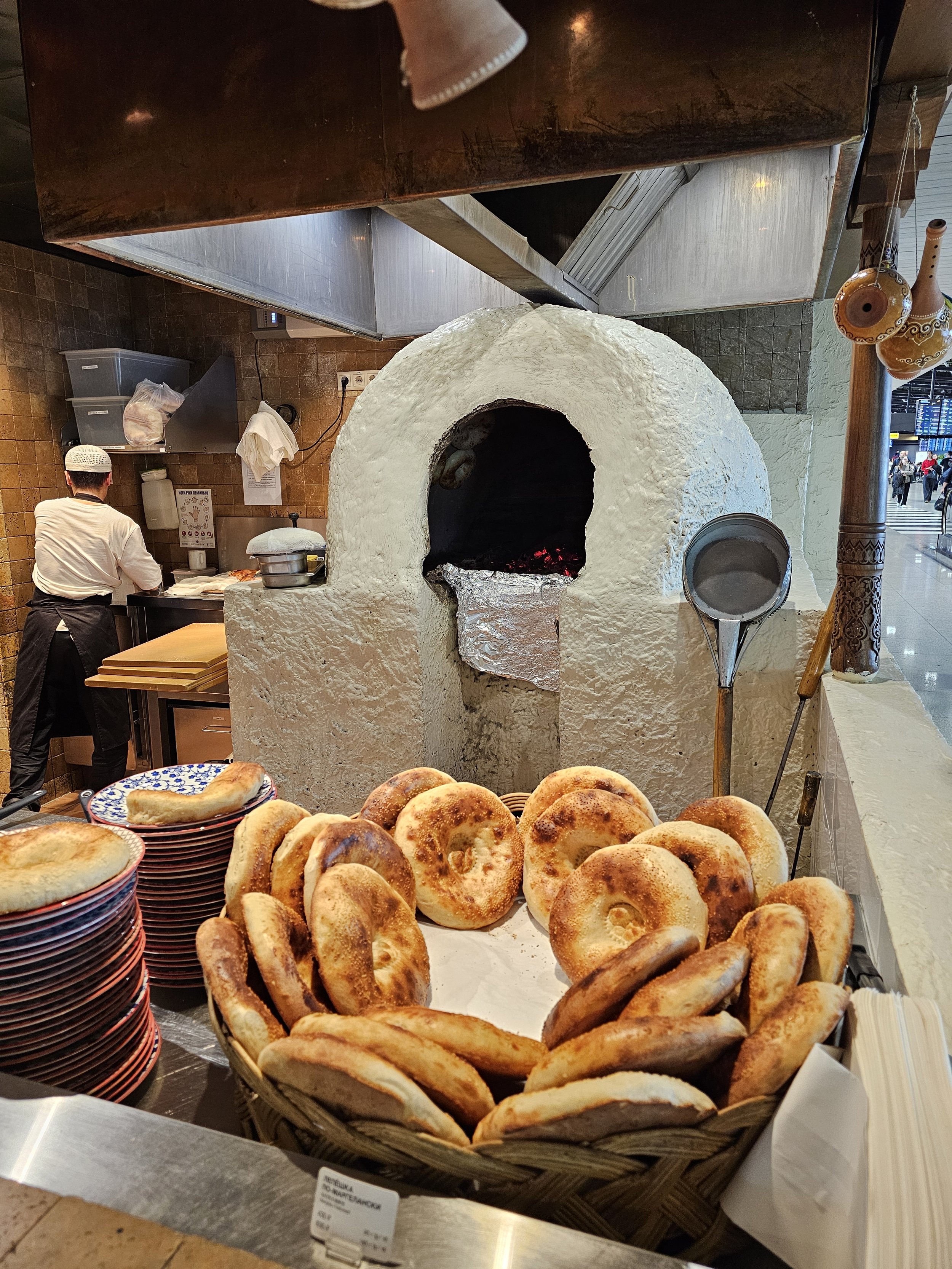
There are multiple food stations with servers. At breakfast, three types of hot cereals: buckwheat, millet, and oats. An impressive variety of beverages, cheeses, eggs, meats, and pastries.
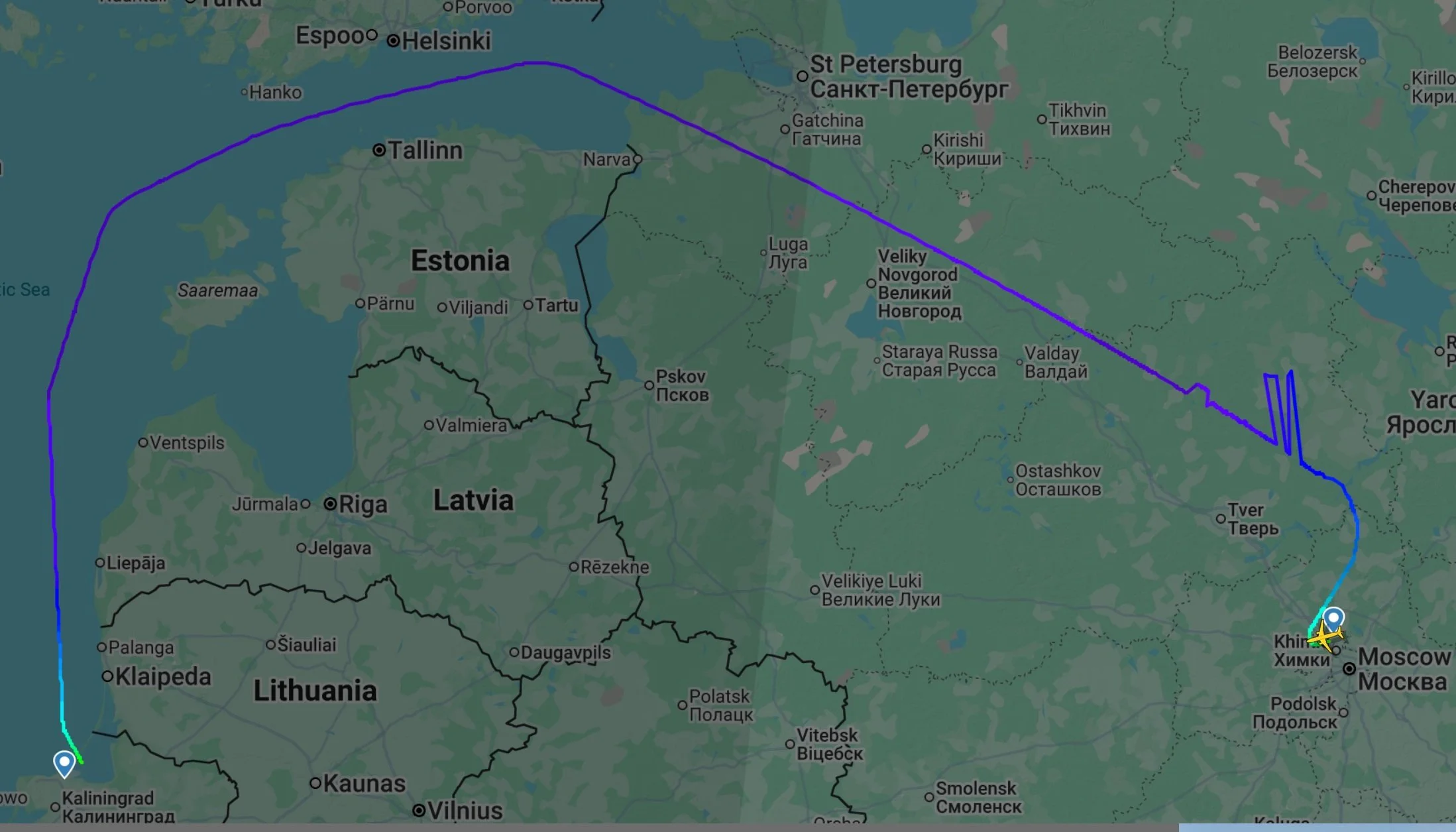
PJSC Aeroflot flight SU1004 from SVO to Khrabrovo Airport (KGD) in Kaliningrad, Russian Federation, on an Airbus A321 aircraft (flight safety card references printing in 1-3-2022) is a two-hour-and-forty-five-minute journey from Moscow scheduled to depart at 12:50 pm. The aircraft is loaded and departs from the gate at 12:46 pm and is airborne at 12:57 pm. Arrival is scheduled for 2:30 pm (one-hour time change). There are sixteen seats in Business Class. The one-way airfare is subject to dynamic pricing. For this journey, 51,699.00 Rubles (approximately US$630.47). The return flight two days later is 39,699.00 Rubles (approximately US$484.13).
Note: A reason for the longer than pre-2022 normal duration of the flight is due to overflight restrictions in place by the EU, PJSC Aeroflot must transit a route from Moscow to the Baltic Sea and then southward with a left turn into Kaliningrad Oblast. What had been a flight of one-hour-and-forty-five minutes is today a flight of two-hours-and-forty-five minutes.
Note: PJSC Aeroflot has not removed the Skyteam emblem from the fuselage of its aircraft. In 2022, PJSC Aeroflot was suspended from the eighteen-member airline alliance which is led by Atlanta, Georgia-based Delta Air Lines (2025 revenue approximately US$63.4 billion).
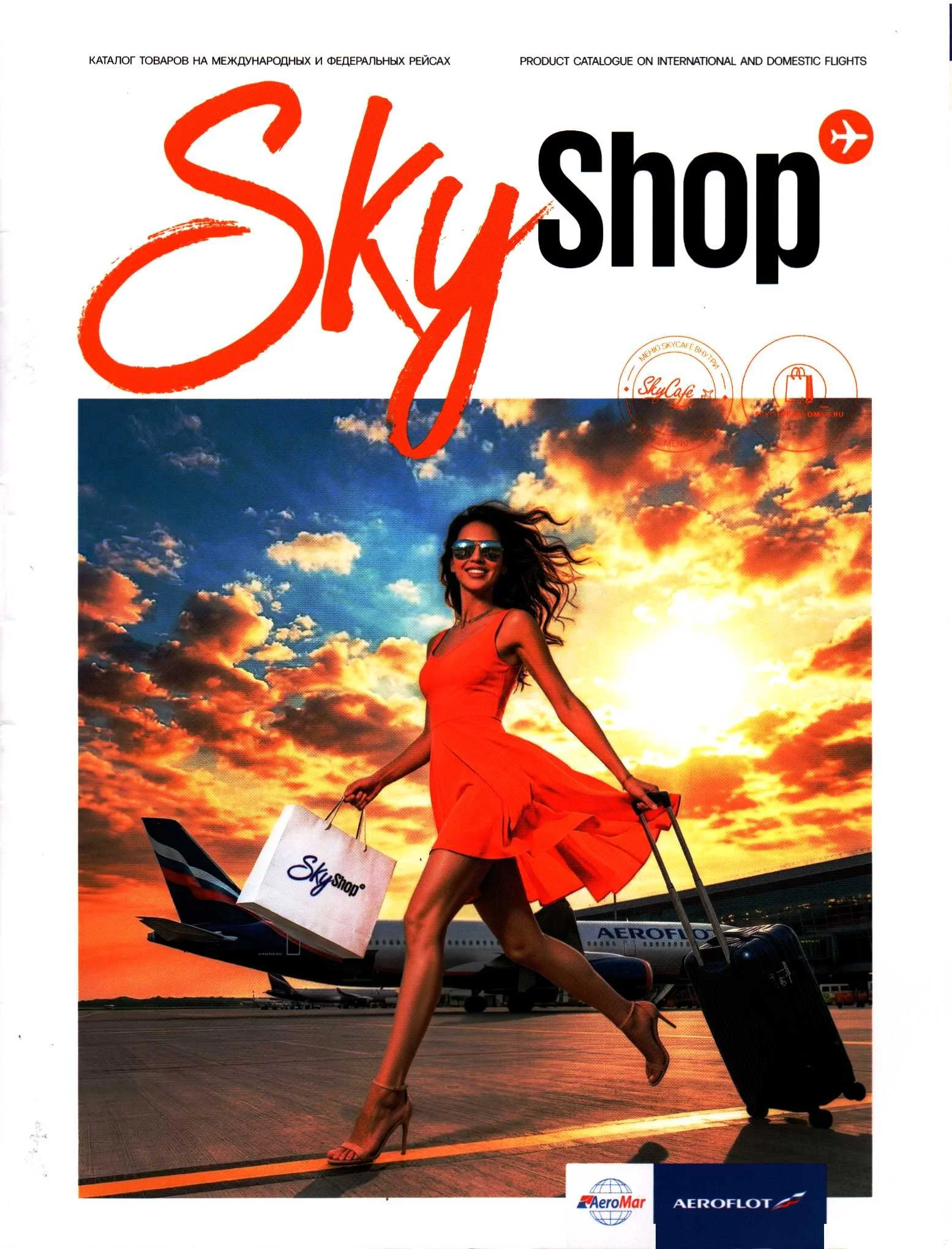
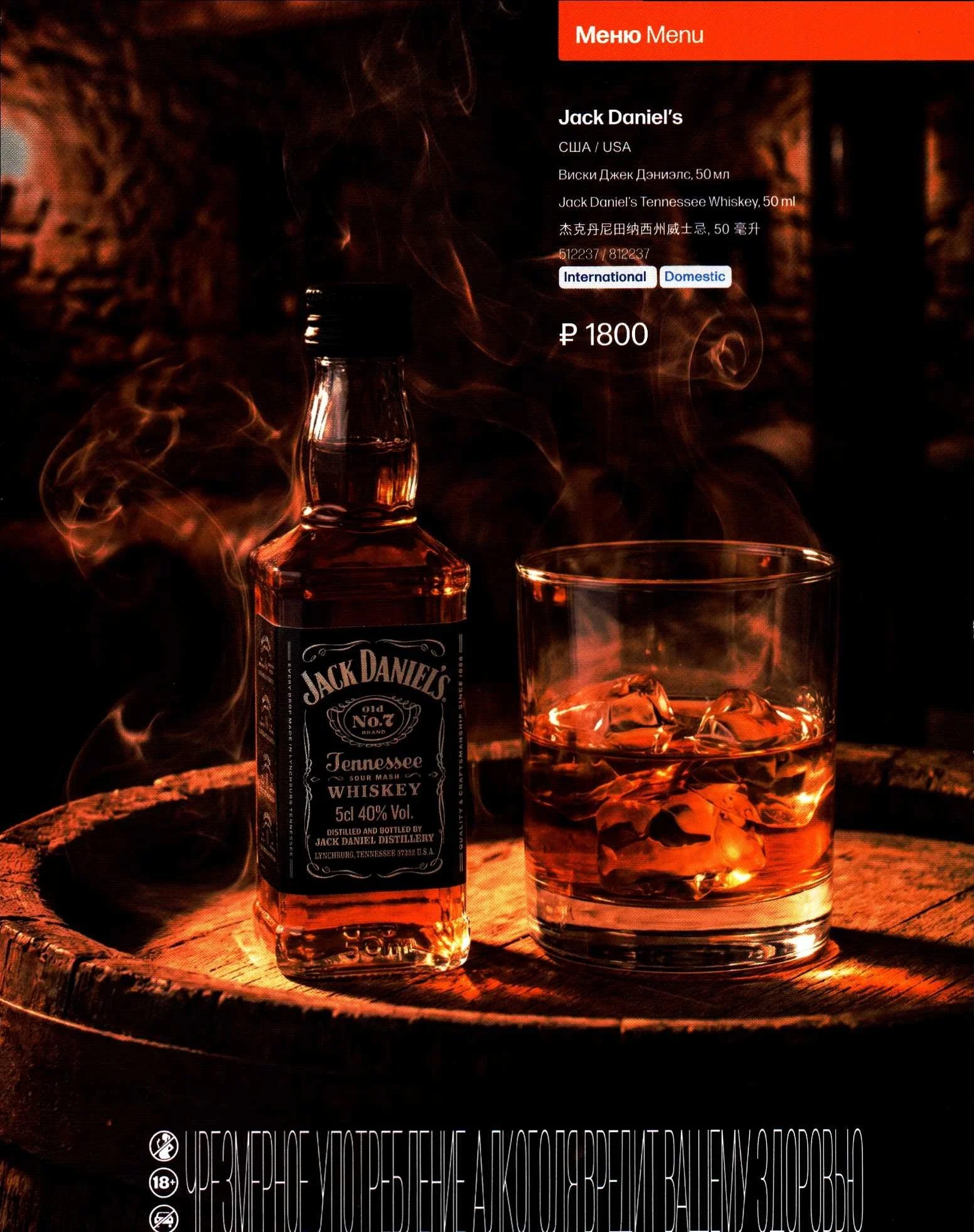
Note: Skyshop, the PJSC Aeroflot inflight duty-free and retail product catalog features on page seven a full-page advertisement for a 50ml bottle of Jack Daniels for 1,800.00 Rubles (approximately US$21.95). The brand is manufactured by Louisville, Kentucky-based Brown-Forman Corporation (2025 revenue approximately US$3.9 billion).
On each seat in Business Class is a blanket, pillow, and a fabric bag containing slippers. Pre-departure beverages are offered. The two flight attendants are attired in fitted couture-inspired uniforms. There is free wi-fi for all passengers.
The standard of service and quality of offerings in PJSC Aeroflot Business Class on a domestic route are not dissimilar to what a multi-star restaurant would provide and would require. The flight attendants speak Russian and English, ask the name of each passenger. They flow synchronized as swimmers. Elegance at 30,000 feet. Near landing, an offer to passengers- would they prefer their coat immediately or when they deplane.
This is despite the low salaries, which are normal in the global airline marketplace, combined in the Russian Federation with high inflation, high interest rates, and increasing prices for products and services.
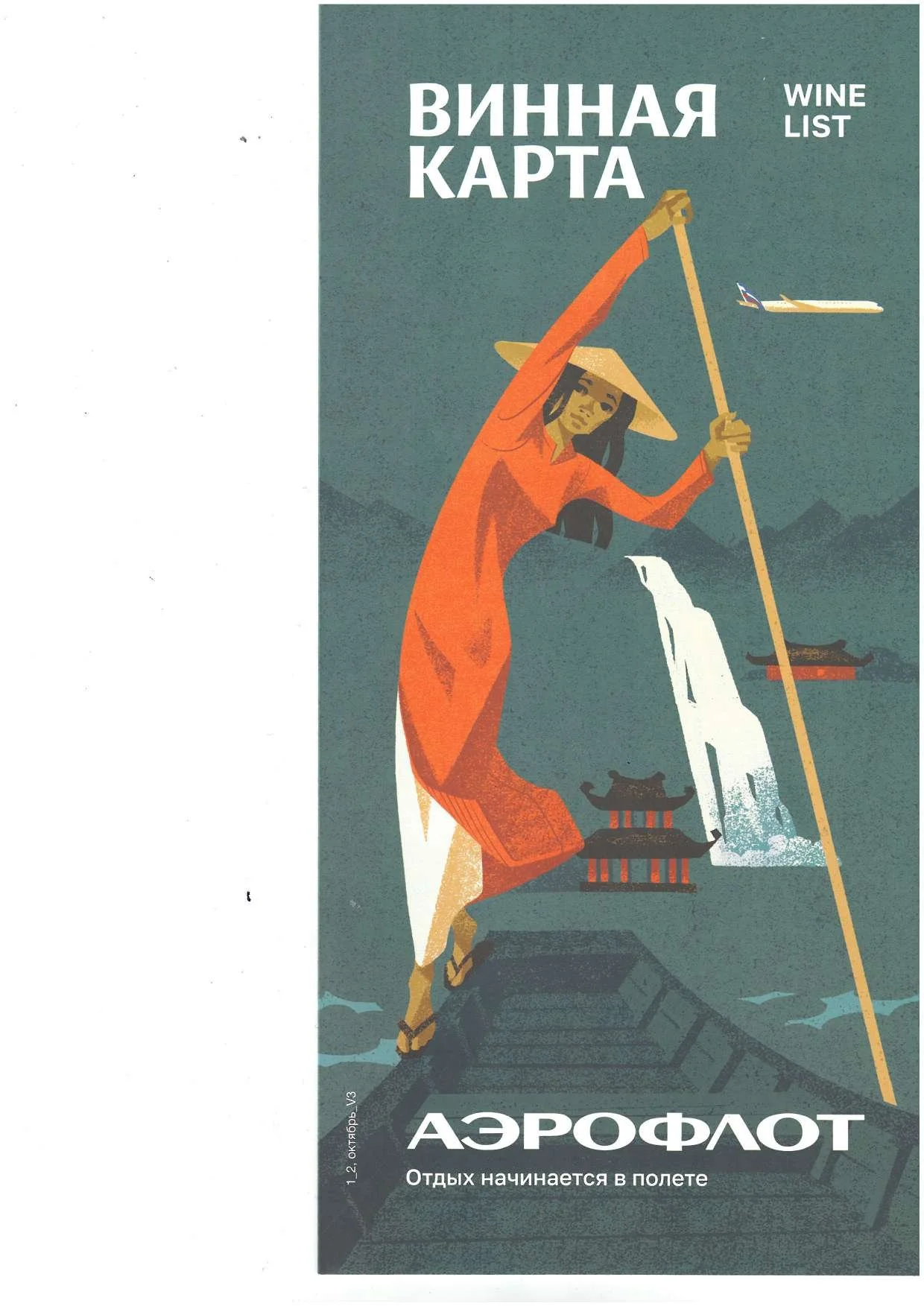
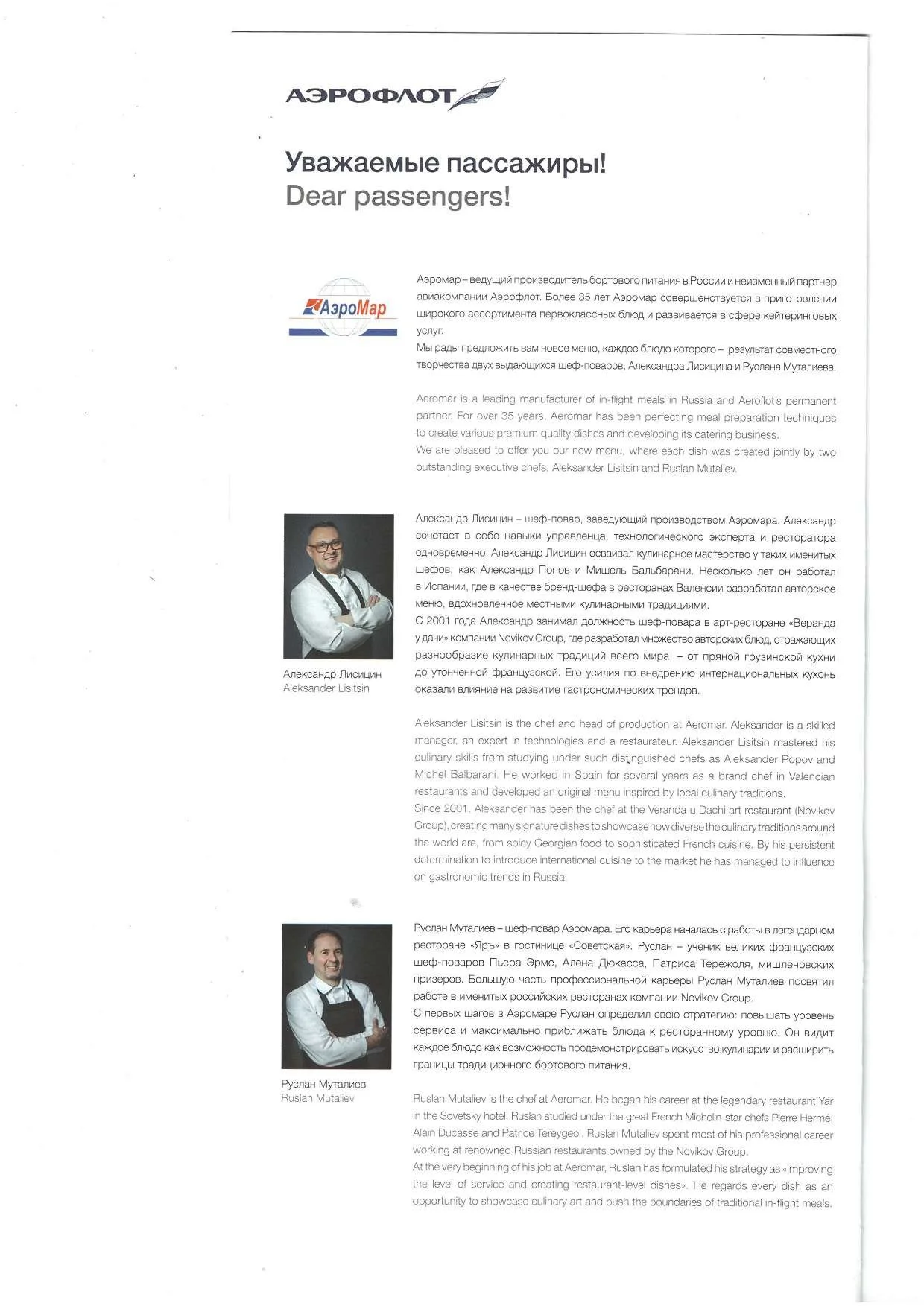
Consumed a glass of tomato juice. Empty glass on tray. Flight attended removes glass, returns glass filled with tomato juice. Anticipation. Champagne, sparkling wine, wine- three from France and three from the Russian Federation. Champagne and sparkling wine are served in glass flutes. Wine is served in stemmed glasses. Crudité (carrots and celery) served with a Sky High cocktail (vodka and tomato juice). A note at the bottom of the beverage list: alcohol abuse is dangerous for your health.

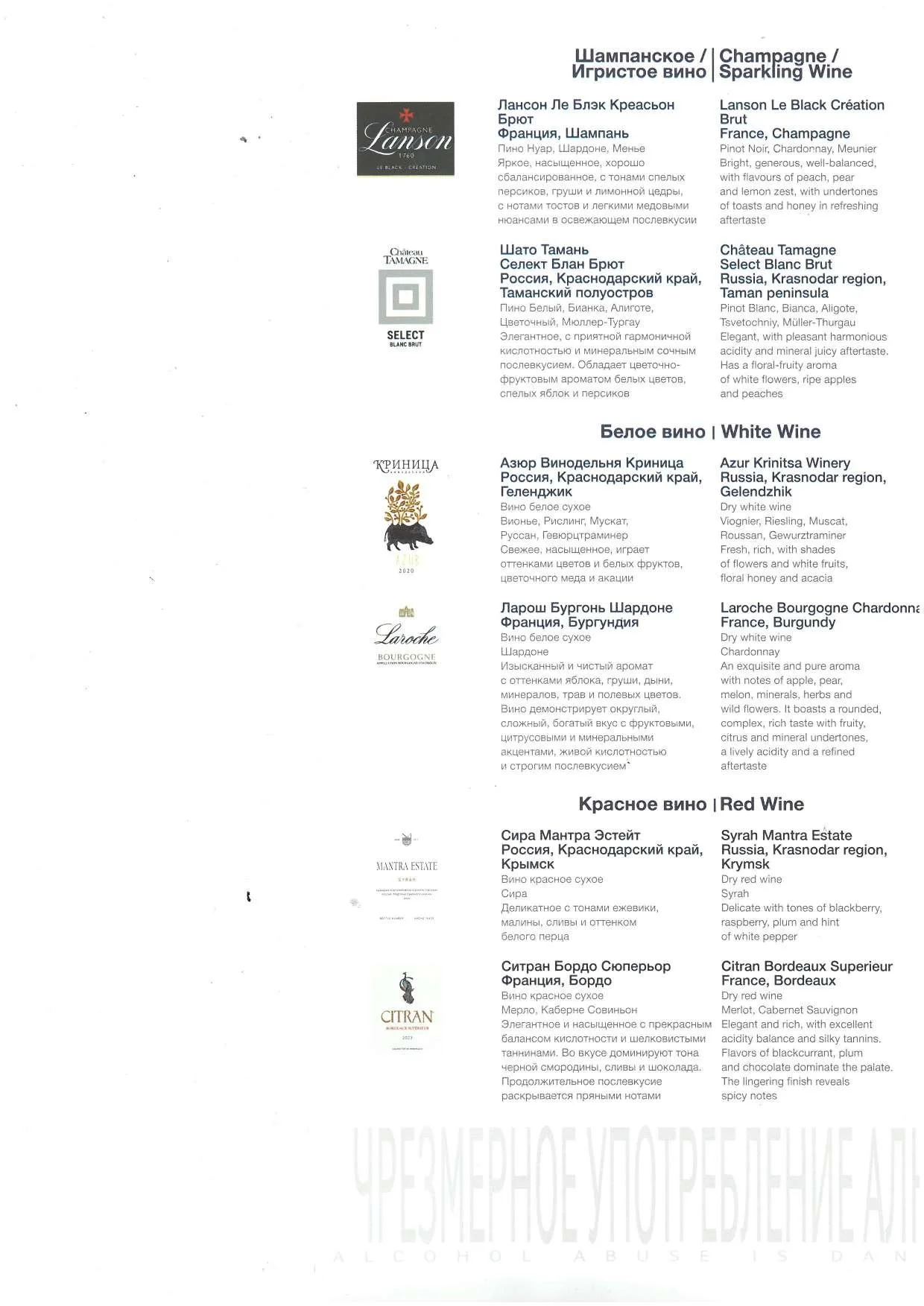
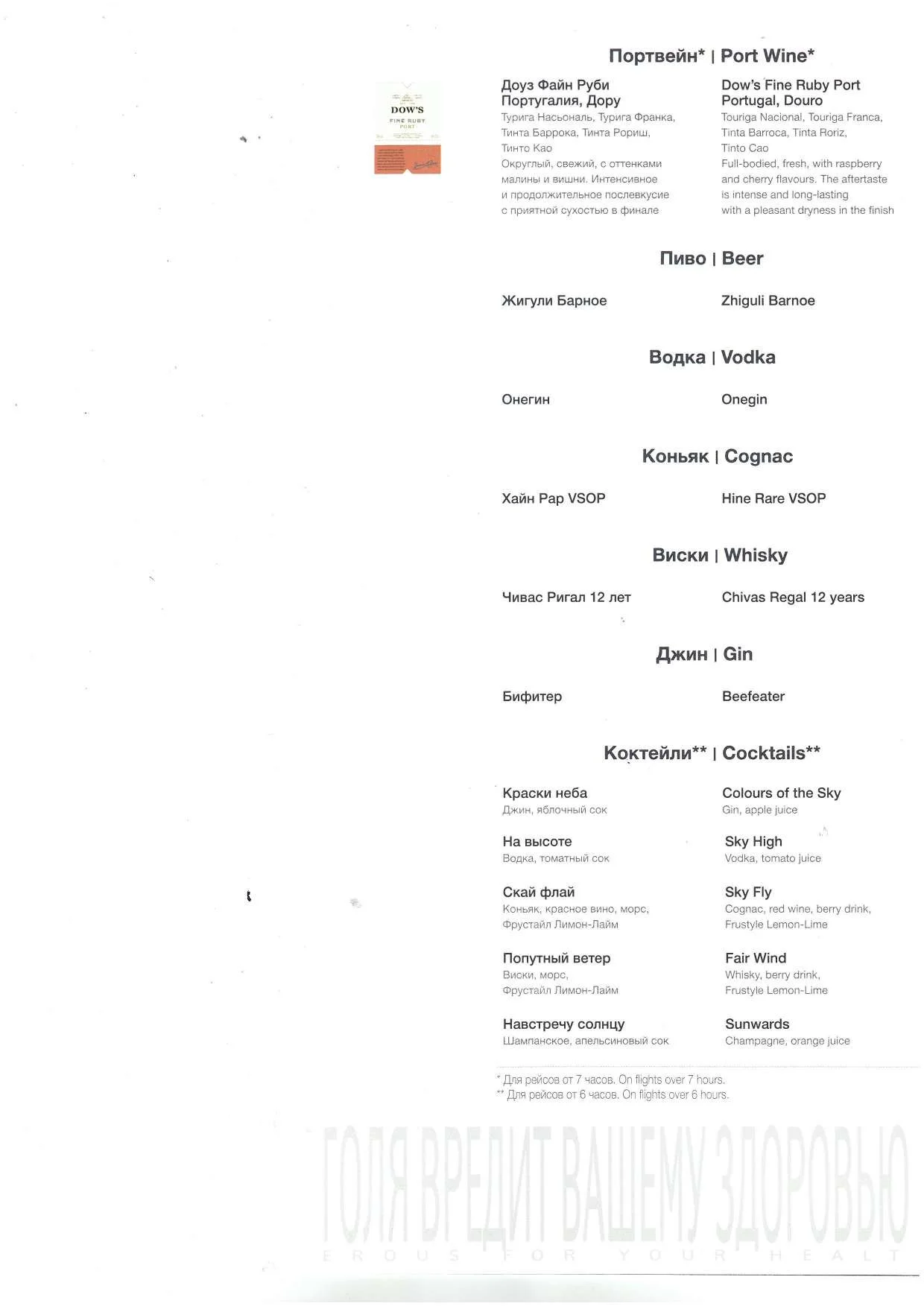
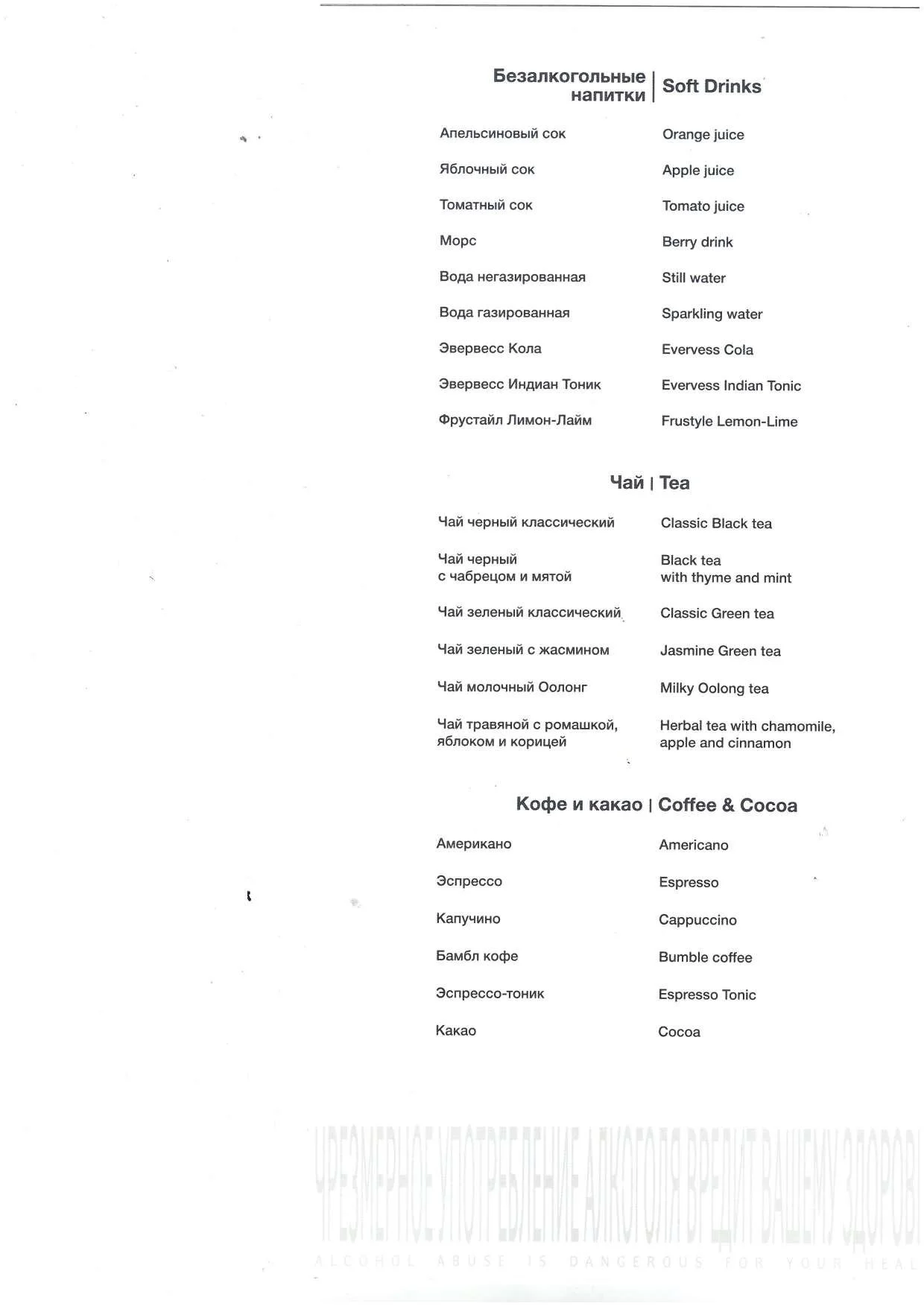
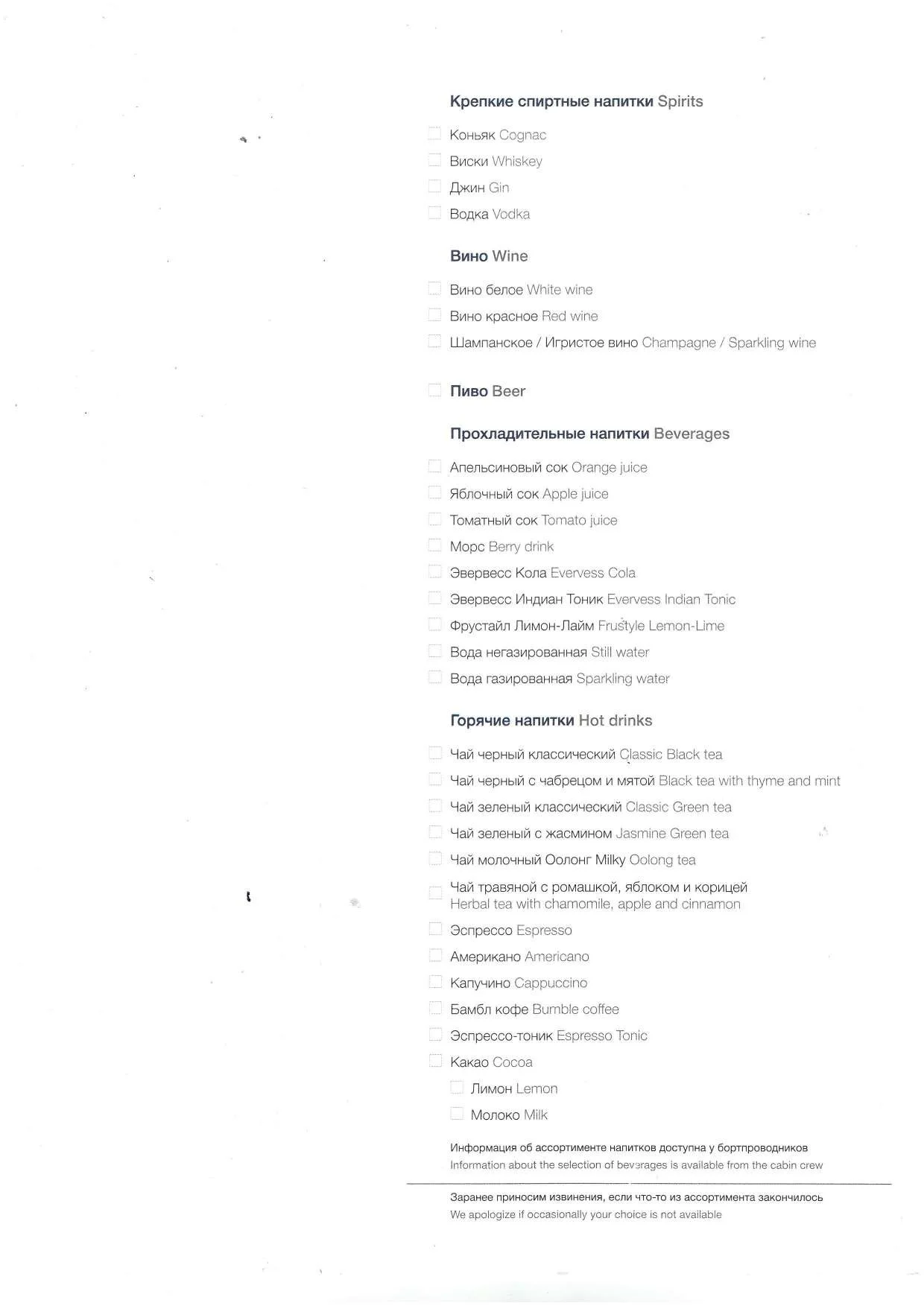
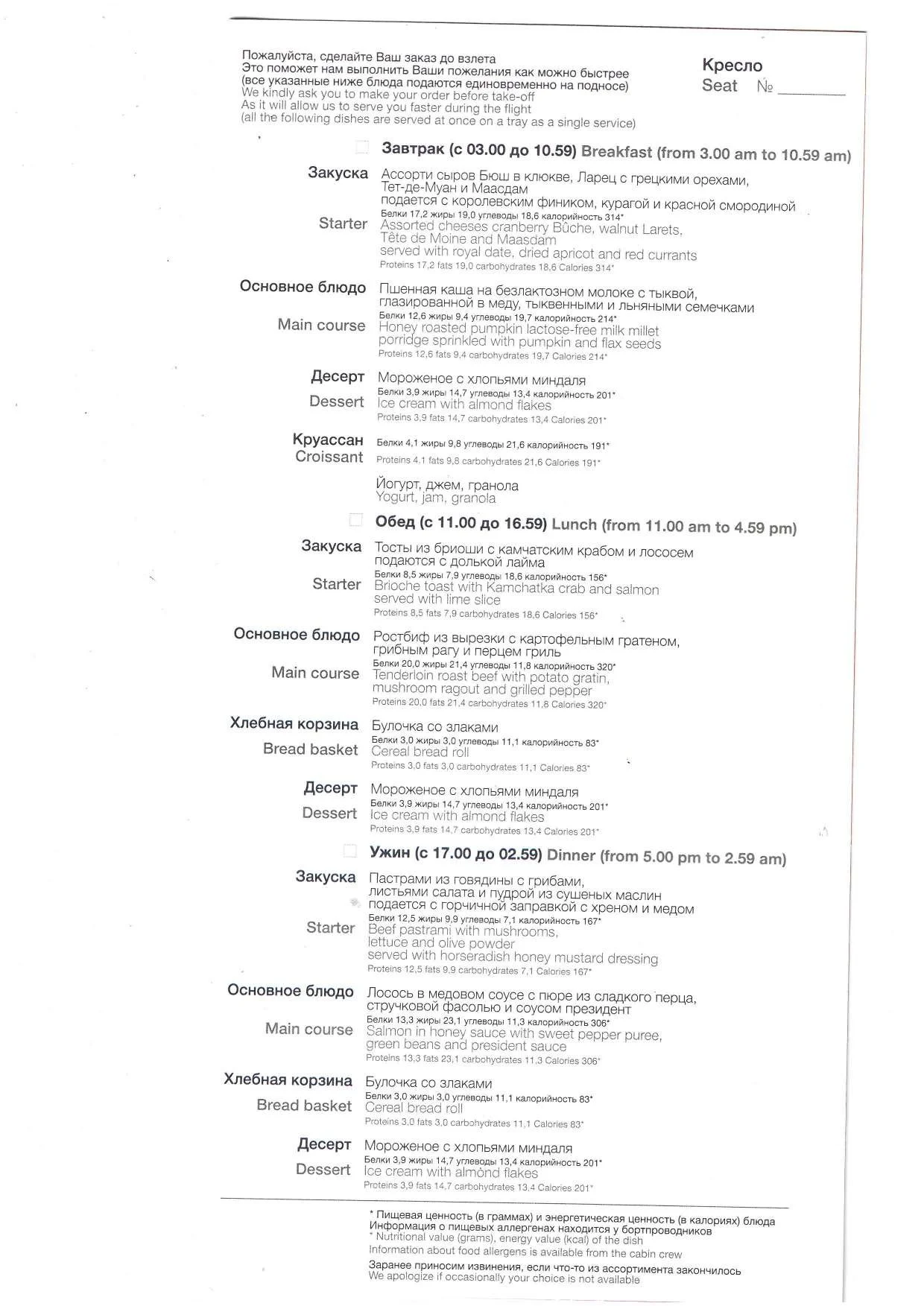
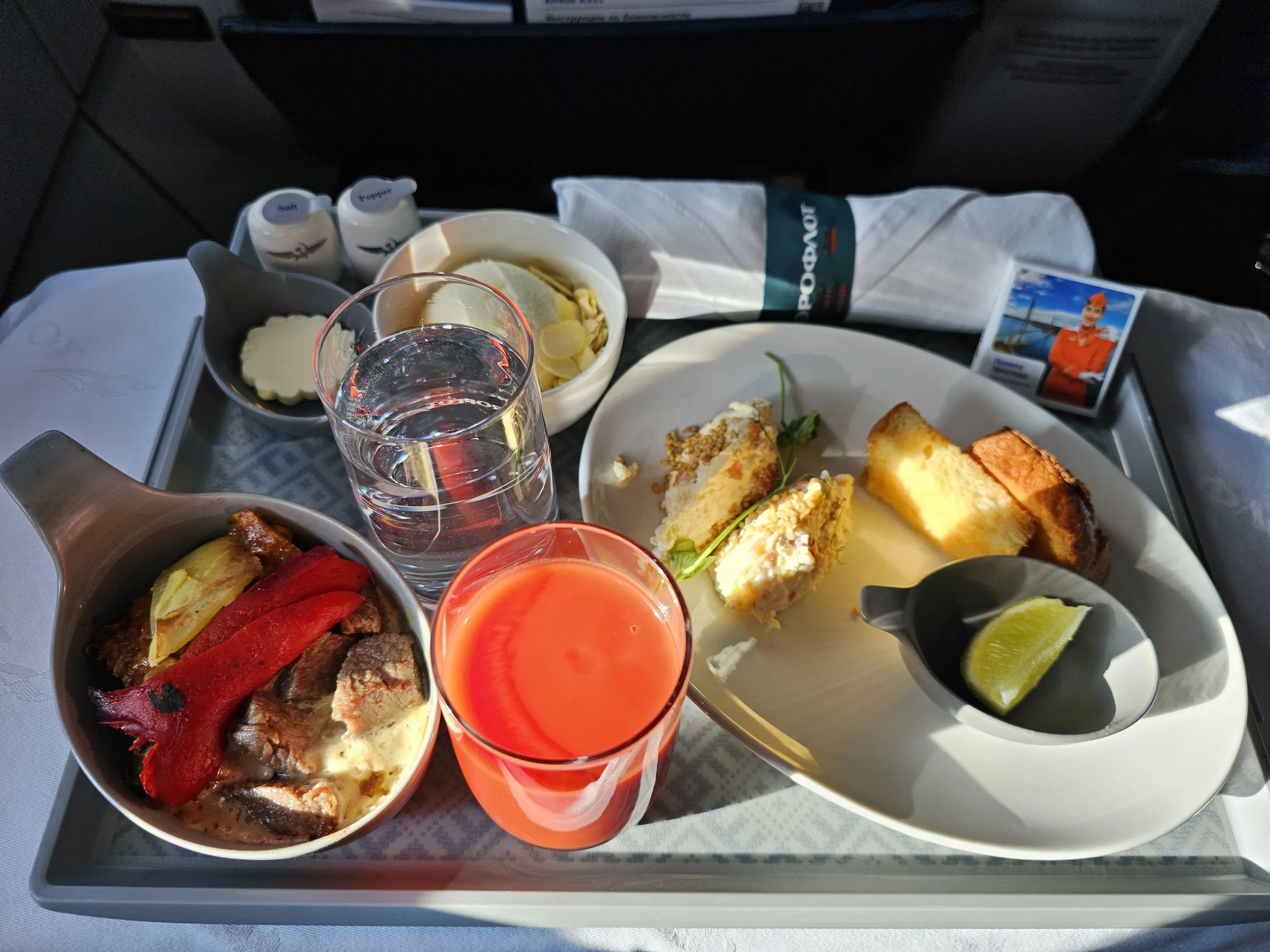
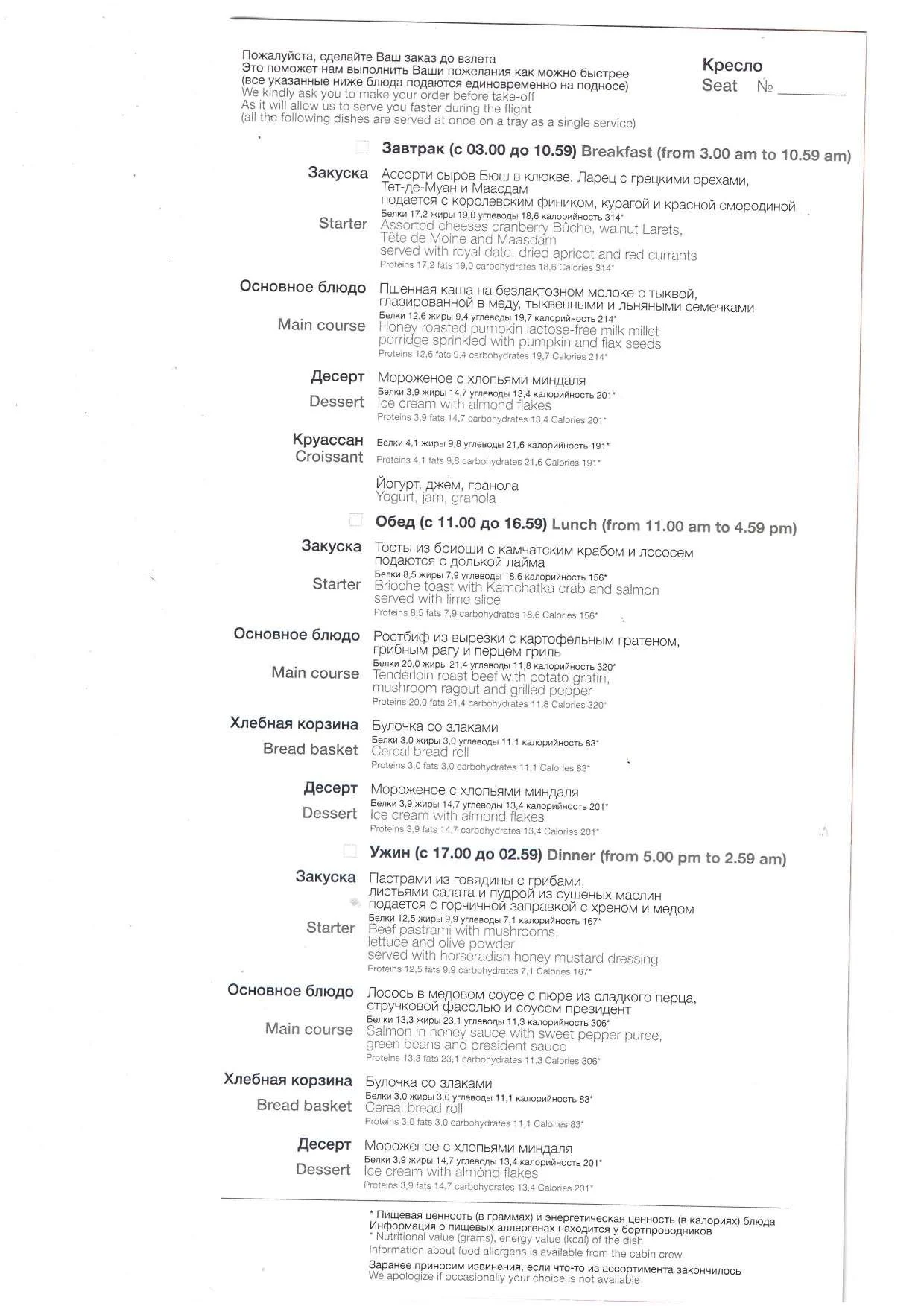
From SVO to KGD: Appetizer of Bioche toast with Kamchatka crab and salmon served with lime slice. Main course of tenderloin roast beef with potato gratin, mushroom ragout, and grilled pepper. Desert is ice cream with almond flakes.
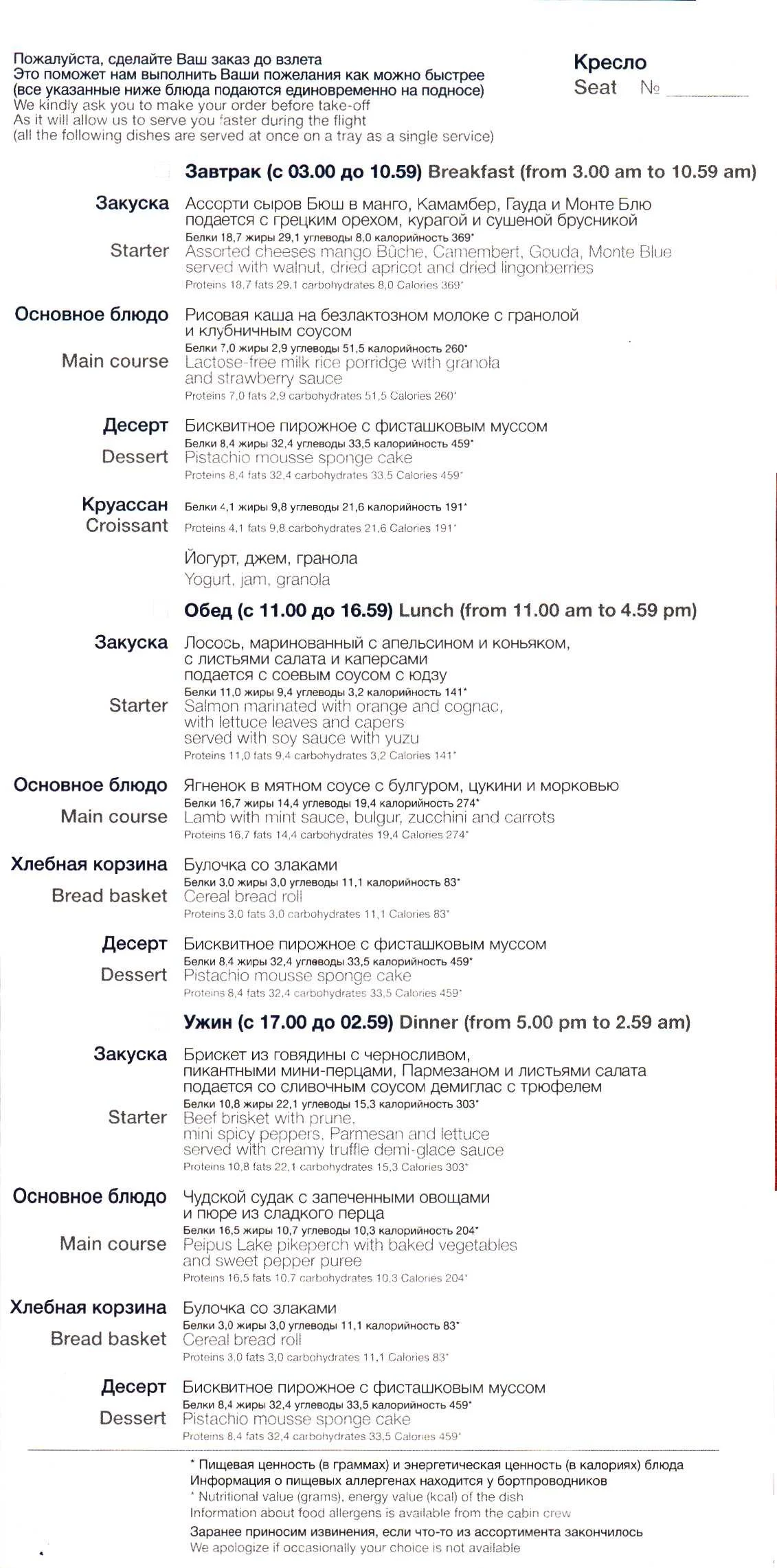
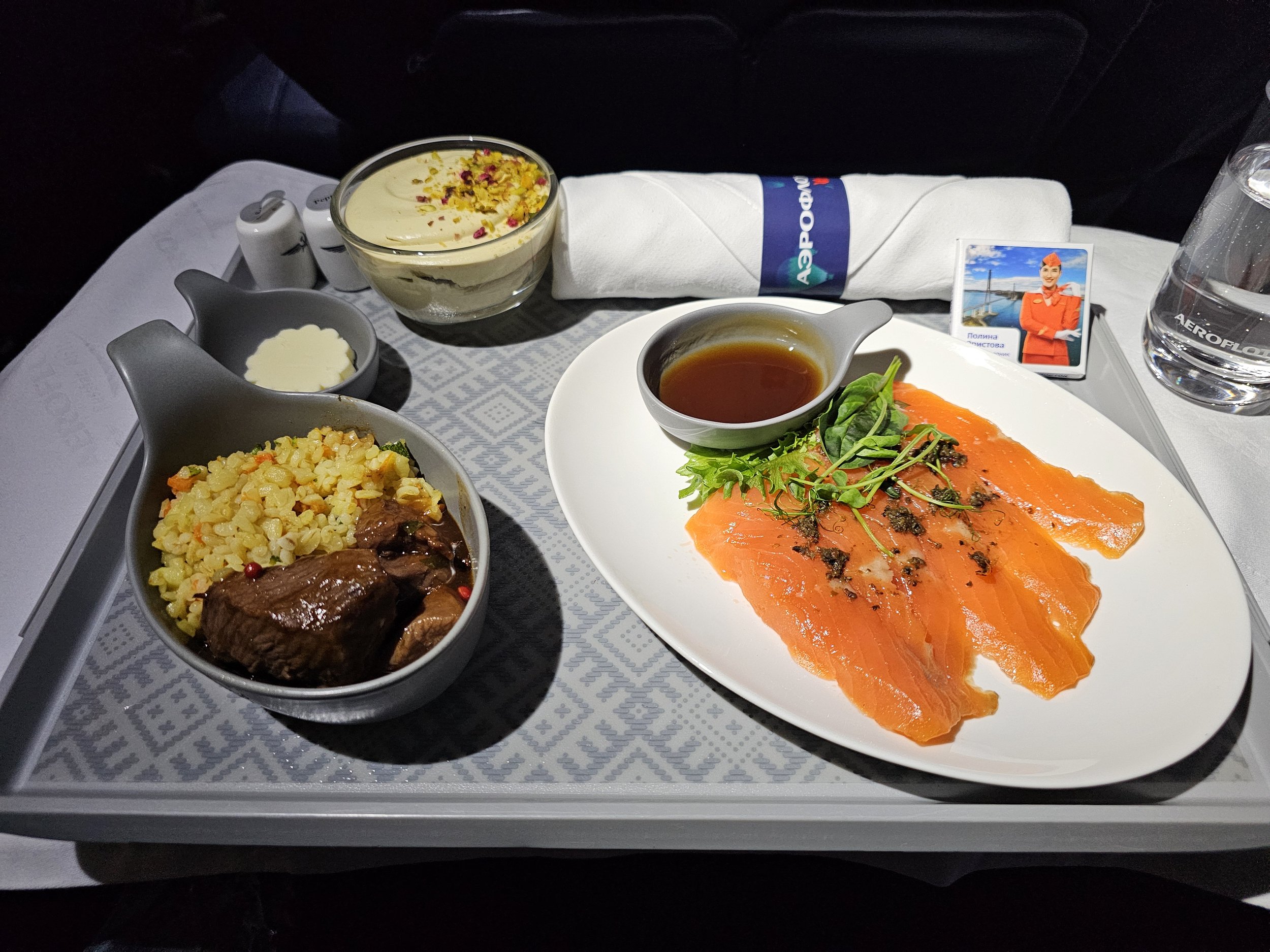
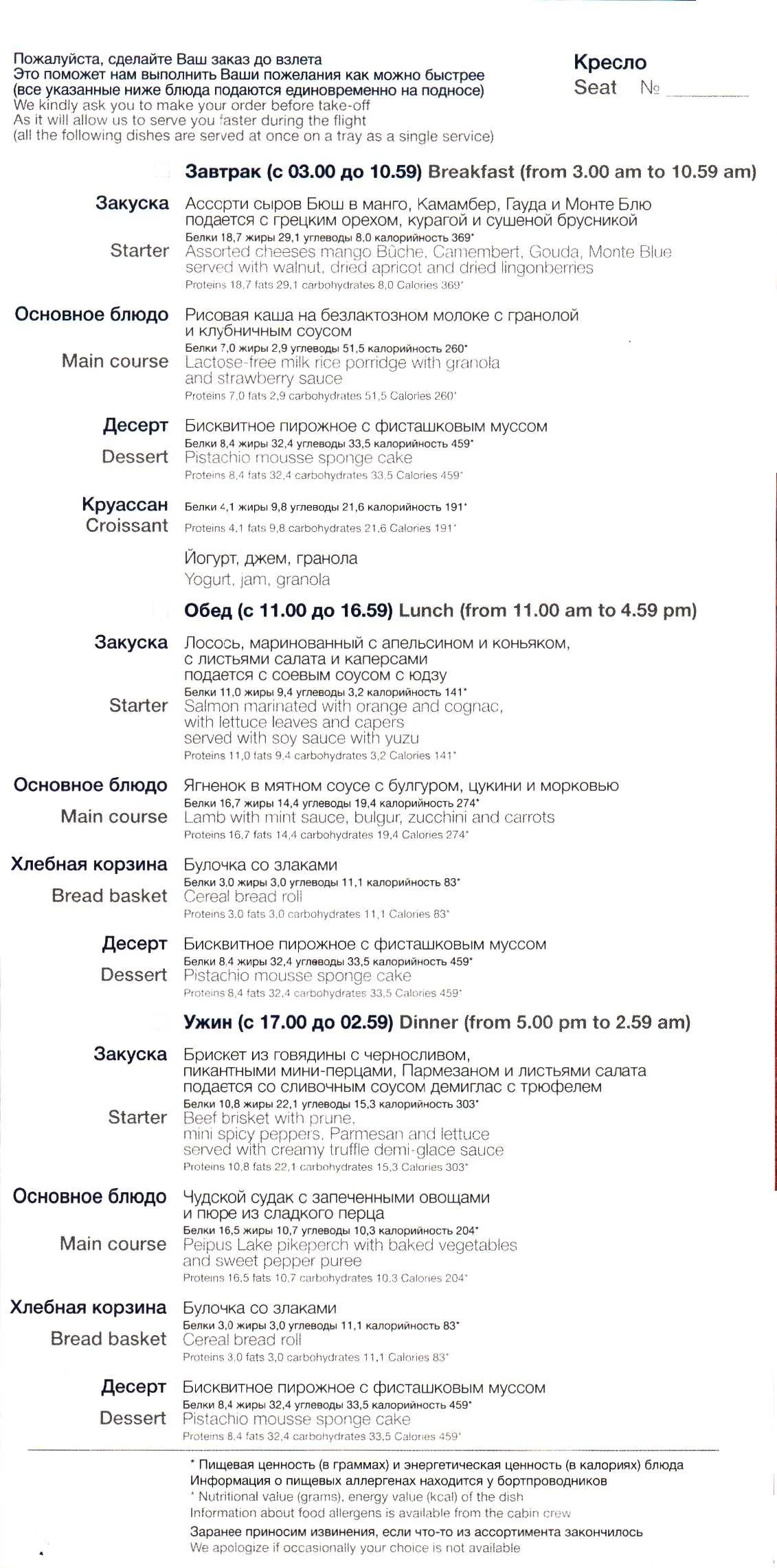
From KGD to SVO: Appetizer of salmon marinated with orange and cognac, with lettuce leaves and capers served with soy sauce with yuzu. Main course of lamb in mint sauce with bulgur, zucchini, and carrots. Desert is pistachio mousse sponge cake.
No plastic. All ceramic and porcelain. Salt and Pepper holders have white adhesive tabs in English. Inquiring the reason, informed that remove the adhesive tab for each and one has a single hole (for salt) and the other has three holes (for pepper); “Russians know this.”
On PJSC Aeroflot flights of six-hours or more, tea service includes porcelain teapots, which Minsk, Belarus-based Belavia Airlines does on all international flights.
Prior to 24 January 2022, PJSC Aeroflot had the operational infrastructure of a major global carrier. The Russian Federation-Ukraine War has disabled the company, not crippled it, but forced ambitions to be realigned with operational realities.
Those realities have been increasingly complicated throughout 2026 as the armed forces of Ukraine have improbably delivered drones, missiles, and rockets throughout the internationally-recognized territory of the Russian Federation.
Those deliveries have continually disrupted not only PJSC Aeroflot flights, but the flights of other Russian Federation-based airlines and airlines from other counties, particularly Istanbul, Republic of Turkiye-based Türk Hava Yolları, known as Turkish Airlines (2025 revenue approximately US$24.1 billion) which operates from two airports in Turkiye the most daily flights by any airline to the Russian Federation. Some of its flights have been delayed up to eight hours, and some have been diverted from its primary airport, Vnukovo International Airport (VKO) in Moscow, to Pulkovo Airport (LED) in St. Petersburg, Russian Federation.
Note: SU1005, the return flight from KGD to SVO was scheduled to depart at 3:30 pm and arrive at 7:05 pm. The actual departure was 4:40 pm due to the incursion near SVO of drones delivered by weather balloons launched from the internationally-recognized territory of Ukraine by the armed forces of Ukraine. Some flights were delayed hours.
Note: PJSC Aeroflot has a Business Class lounge at KGD staffed with an engaging, helpful, and polite team and they continually maintain the seating areas. As at SVO, there are flight announcements in English and Russian.
Observations From Kaliningrad
The Mercure Kaliningrad Center Hotel was constructed in 2018 and is situated adjacent to Ozero Verkhneye (Upper Lake). It is listed as a four-star property. The team delivers a five-star experience.
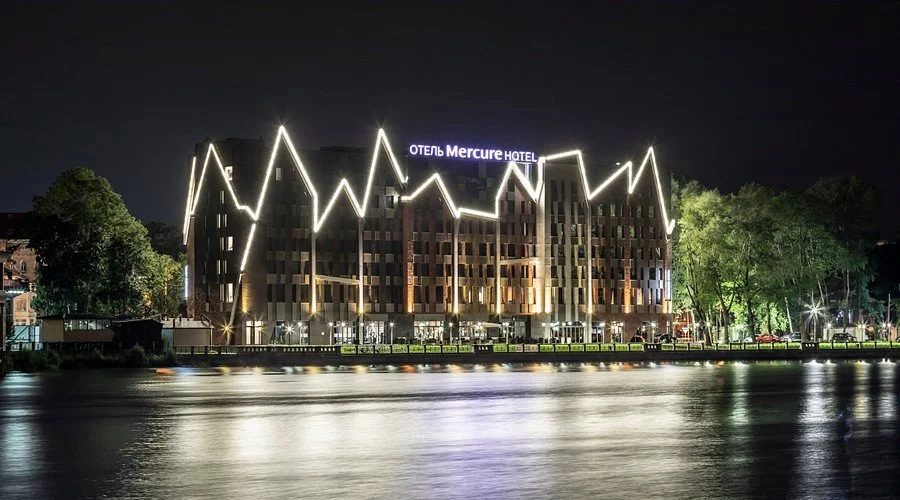
Note: Paris, France-based Accor S.A. (2025 revenue approximately US$6.6 billion) separated its operations- https://www.accor.ru for its brands in the Russian Federation and https://www.accor.com for its brands in the remainder of the world.
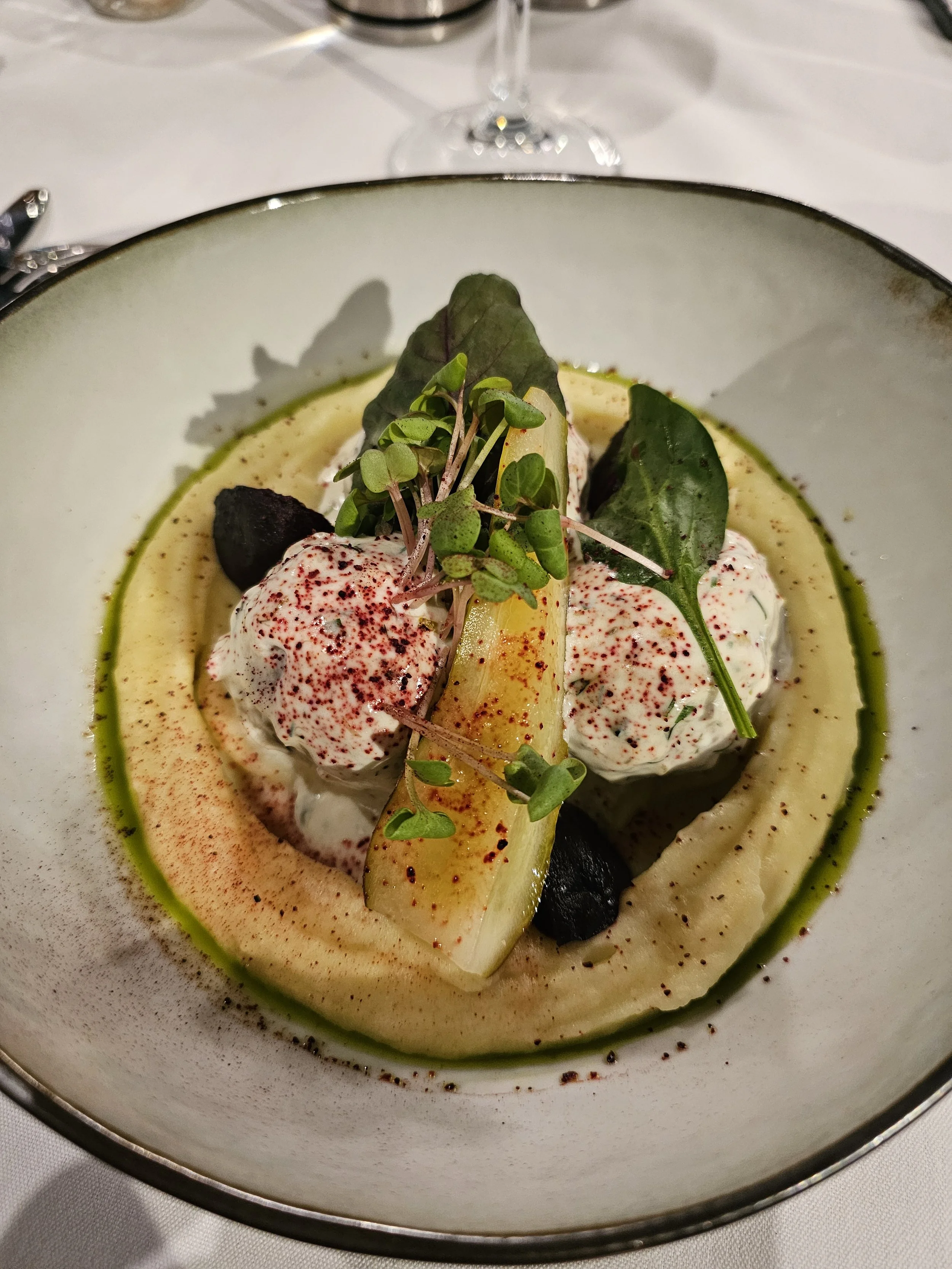
The value provided is more than the cost. The two restaurants are very good- and the dishes are presented creatively. The breakfast buffet includes freshly-squeezed orange juice- the oranges are pre-sliced in half, and the guest uses as much as desired with the hand-operated juice press. A uniqueness to this property is its management. The management team are all women. That dynamic creates a noticeable and comfortable and engaging atmosphere.
The Mercure Kaliningrad Center Hotel is near the covered markets and open markets featuring hundreds of meters of vendors offering bread, cheeses, confections, eggs, fish, fruits, honeys, meats, poultry, and vegetables. The prices are higher than in a supermarket, but the quality is superior. In one instance, where there are seven female vendors offering butter and cheese curds, only one has more than thirty people in her line. In the shopping malls, there are kiosks, pop-ups, stands, and stores, few have many customers.
Conversations in Kaliningrad with young men and young women elicit descriptions of their lives as “living in a retirement community” due to the number of older residents to “living in a cage” because of travel restrictions to longing for the “lost years” which tragically are not replaceable.
Kaliningrad Oblast is quiet. Kaliningrad is isolated. The real estate of Kaliningrad Oblast is feared by some in residing in Lithuania and Poland, both of which border Kaliningrad Oblast. Lithuania and Poland also share a border with Belarus. Airline flights are long and expensive. Railway journeys can last twenty hours.
In 2026, young adults in Kaliningrad learned to fear the development and implementation of Artificial Intelligence (AI) upon their employment prospects, as have their brethren in other countries. Ironically, decisions from 2022 by men rather than machine have and will impact them acutely.
Lost is the opportunity of post-high school and post-university to travel abroad, to work abroad, to visit family abroad. Limitations are imposed upon them by those appointed and elected to represent them- and protect their future. To preserve ambition.
For those boys and girls who were children in 2022, today as adults they can drink, drive, serve, and vote.
The time since 24 February 2022 is for youths in Kaliningrad and Russian Federation (both internationally-recognized territory and non-internationally-recognized territory) so long ago. It was a moment.
However, that moment has never ended- it continues altering and impacting their life trajectory. Not in a beneficial manner. That is a pox on appointed and elected political leadership. Like shooting your own- with each bullet representing the future on a young man or young woman.
To political leadership in Moscow, youth in Kaliningrad seek an answer. They want to know how much better for them, what specifically will be provided to them from the publicly-stated desired result of the Russian Federation-Ukraine War?
The currency to prosecute the Russian Federation-Ukraine War today is their future. They are living the costs of the conflict, crisis, special military operation (SMO), war, however it is marketed. When do the costs transition into benefits?