
Turkiye’s Earthquakes. Waiting For Toz Duman Dağıldığında. Dust Gone, Work Completed. Reclaiming. Last Key To Last Door. If Trump Was Turkiye President On 6 February 2023? Gaza/Ukraine Connection
Four Days: Cities Of Hatay, Osmaniye, and Kahramanmaras
Waiting For Toz Duman Dağıldığında
When The Dust Is Gone, The Work Is Completed
Reclaiming, Reconstruction, Renewal, And Resettling
“The Last Key To The Last Door”
Connectivity With Gaza And Ukraine
What If Donald Trump Had Been President Of Turkiye On 6 February 2023?
“Thank you for sharing our heartbreak” the words to an early-morning visitor from a reception team member at Swissotel Bosphorus in Istanbul, Turkiye.
An appropriate word-wrapping after a four-day organized visit to the cities of Hatay, Osmaniye, and Kahramanmaras, whose residents were most severely impacted by the up to 7.6 magnitude earthquakes on 6 February 2023 in the Republic of Turkiye.
More than 53,000 citizens of Turkiye died and more than 107,000 citizens of Turkiye were injured.
“A total of 11 provinces, 124 districts, and 6,929 neighbourhoods and villages were affected by the earthquakes. Seven provinces were declared as regions affecting the life of the general public, while 18 provinces suffered damage.” Approximately 2.5 million residents were required to move to another location. Approximately three million container homes were constructed. Lithuania has a population of approximately 2.8 million and the territory of Gaza has a population of approximately 2.3 million.
“The earthquakes damaged 676,000 residential units and 115,000 commercial properties, warehouses, and barns, totalling over 800,000 affected independent units.”
Approaching from above, the visuals surrounding Hatay Airport (HTY) are striking. The airport was constructed on a lake-bed. The landscape of the airport from above resembles a Saharan oasis- life surrounded by a lack of it. The earthquake severely damaged its only runway which was then repaired; a second was added subsequently.
The location of the airport is considered reclaimed because before there was water, there was land. So too there are hundreds of thousands of residents in Hatay, Osmaniye, and Kahramanmaras reclaiming three years later what was taken violently from them three years earlier.
They may reclaim things. They cannot reclaim lives stolen in seconds. They can be provided with the means to rebuild. No government can provide the means to return dead to living.
Families were erased- entire families. Children were orphaned. Widows and widowers created. Grandparents without grandchildren and grandchildren without grandparents. Teachers without students. Students without teachers. Buses without drivers. Pasts absent futures.
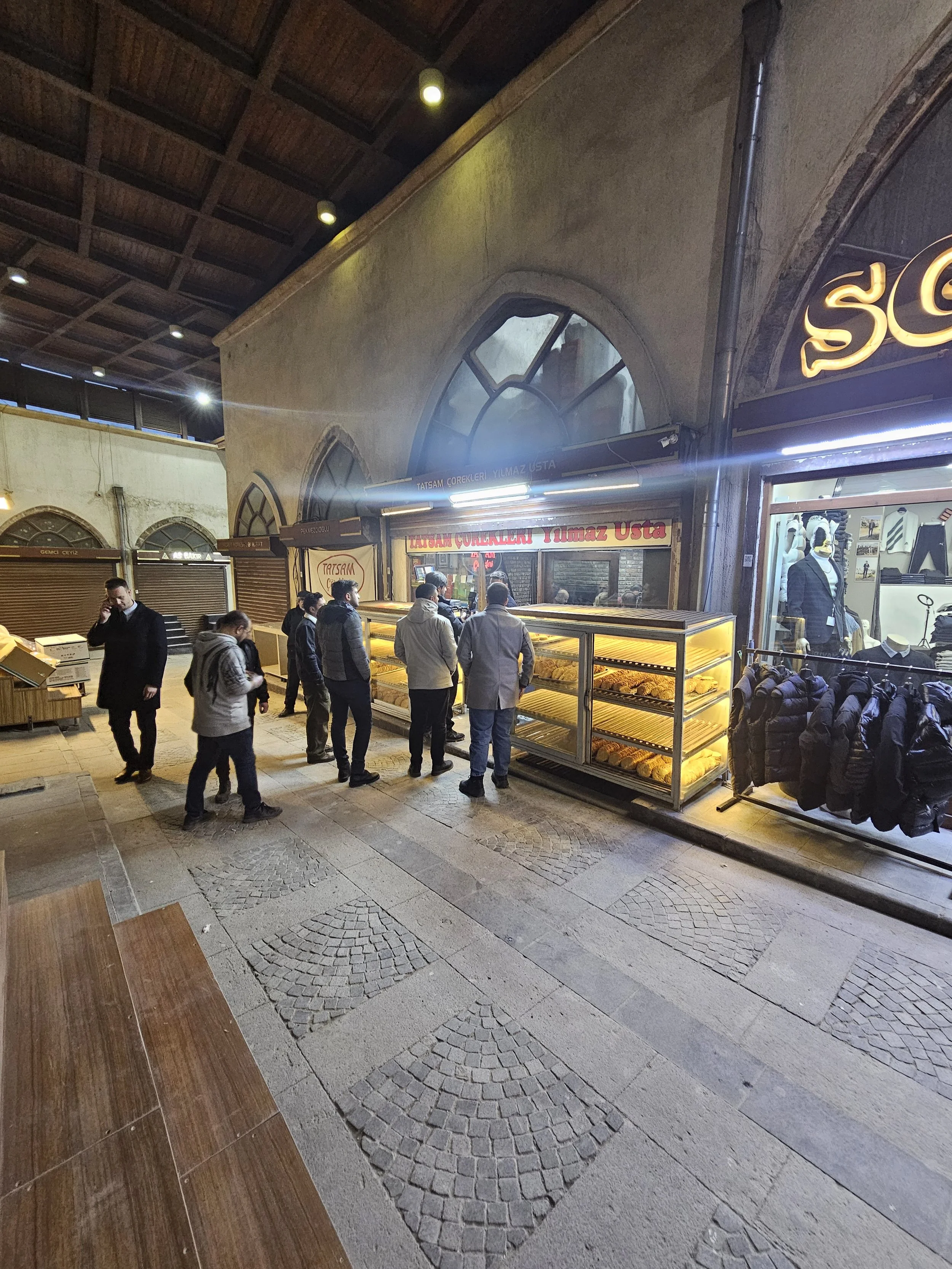
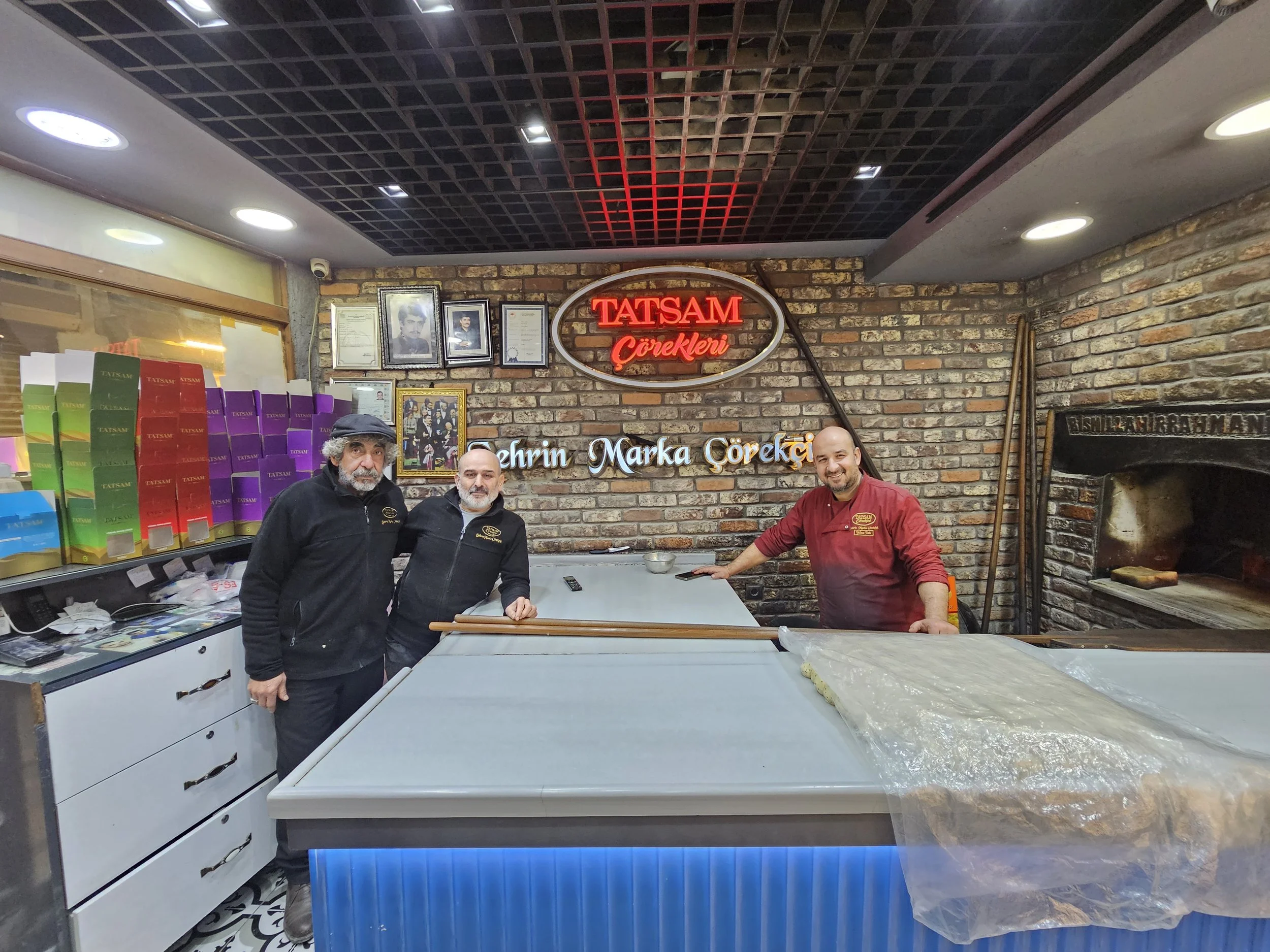
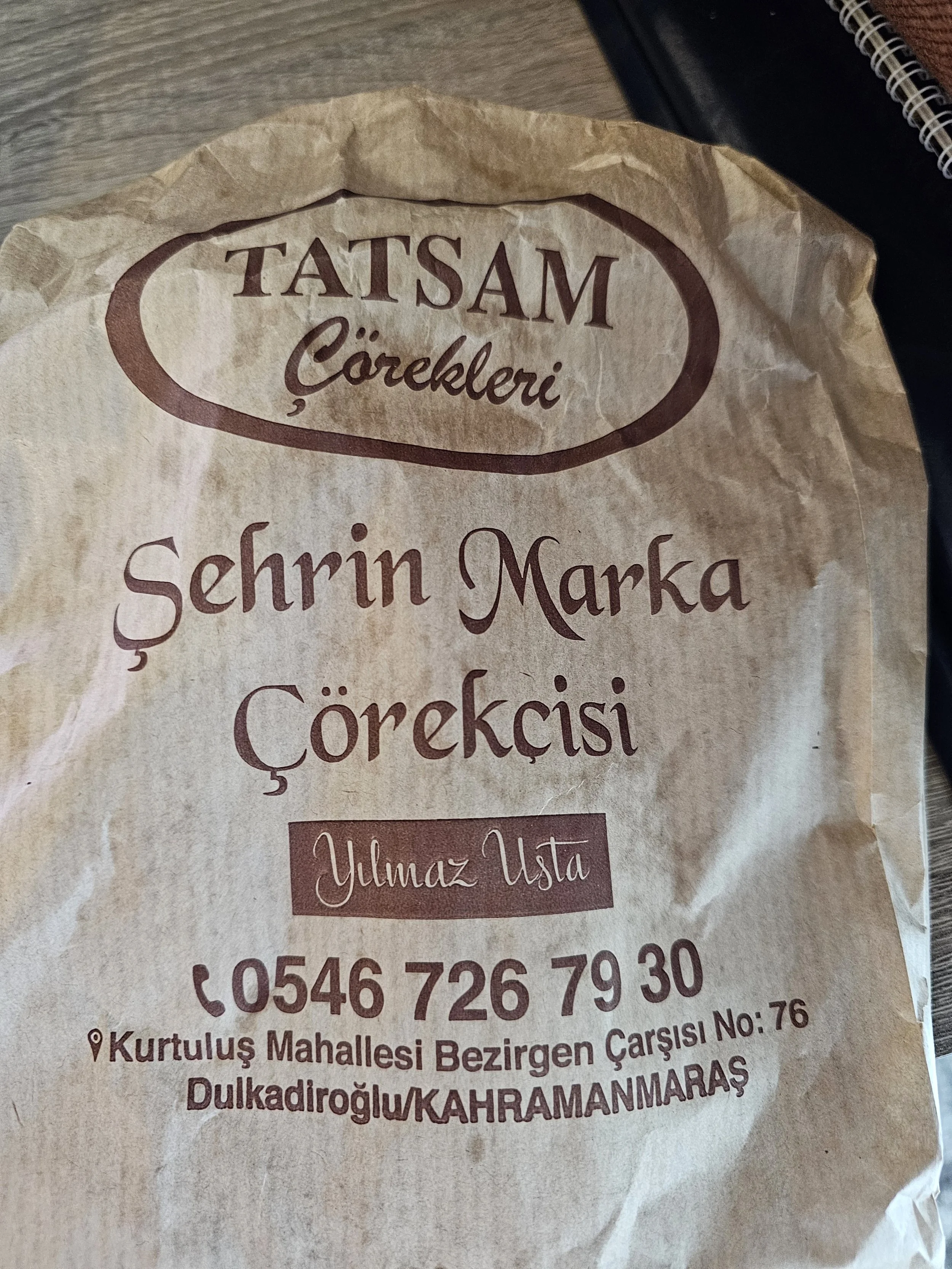
Tatsum Corekcisi (Sehrin Marka Corekcisi) is a bustling bakery in city of Kahramanmaras. Located in the largest Souk with a newly-installed roof. A generational business. Greeting a guest, the owner presents his famed pastries (choice of sweet or savory). Then, the story: The owner shares his father, mother, brother, nephew, and niece and other family members died on 6 February 2023. Inside the bakery is a portrait of the father- baking proudly the pastries he made famous.
Kahramanmaras is also home to Mado, whose goat ice cream has since 1850 become a global brand, including a retail store in Miami, Florida.
Within each impacted province in Turkiye, there is a before, there is an after, and there is an after the after.
The imagery of before is non-descript. Typical small and medium-sized villages, towns, and cities. The imagery of after reflects in areas moonscape- flat and cold, or mounds of rubble. The imagery of after the after is vibrancy, colors, sustainability, openness, and possibilities. Yet, the journey remains far from its end.
During a briefing in the city of Kahramanmaras, H.E. Murat Kurum, Minister of Environment, Urbanisation and Climate Change of the Republic of Turkiye, defined the moment he would know the process of reclaiming, reconstruction, renewal, and resettling residents in the eleven provinces impacted by the earthquakes was completed.
He was confident that by the end of 2026, the last key to the last door to the last residence and business would be in the hands of their new owners- more than 455,000 of them. Later that day, Minister Kurum visited the largest Souk in Kahramanmaras to continue to present keys to the previous owners of their now rebuilt shops- many in the same family for generations.
A metaphor could refine his answer. In Turkish, “toz duman dağıldığında” meaning “when the dust settles” which is a phrase first suggested in the nineteenth century.
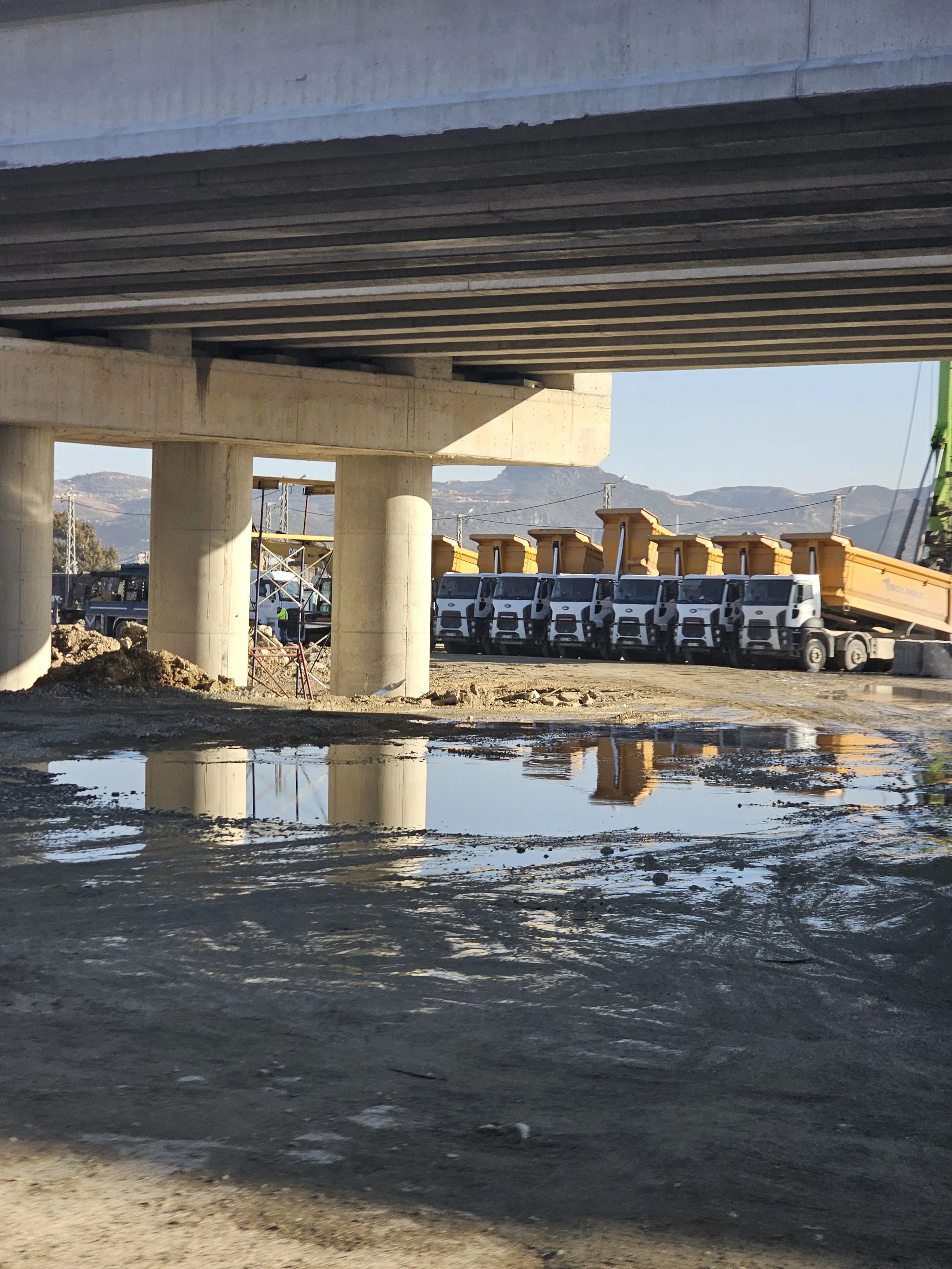
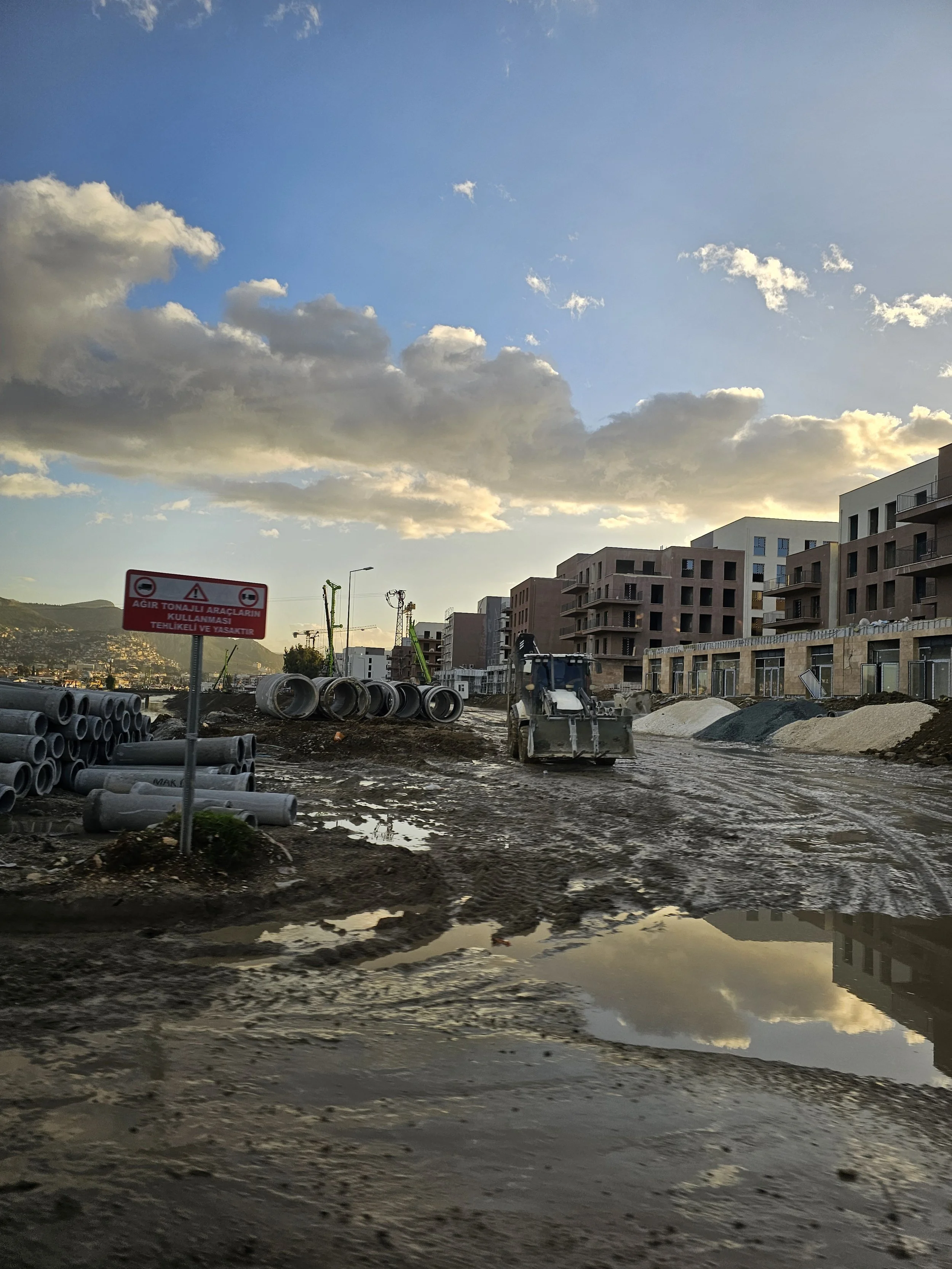
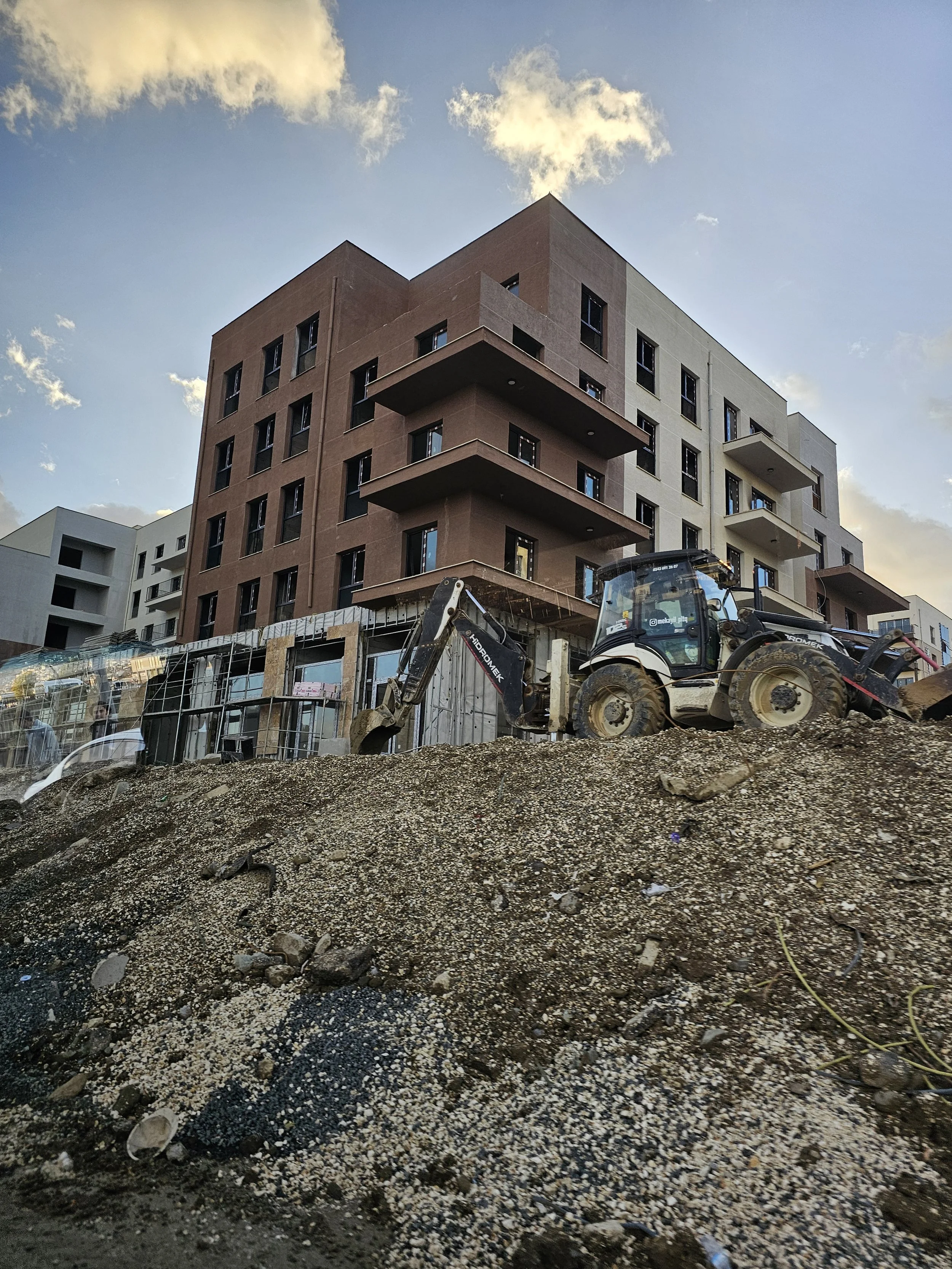
For three years, the omnipresent trucks traveling throughout the provinces- to and from villages, towns, and cities transporting workers, building supplies, cement, concrete, steel, and debris- millions of tons of debris that needed to be removed before rebuilding could begin and then excavation of new areas for new structures. One of the most complex multi-year staging processes undertaken by a government.
The trucks are mobile dust bowls. Dust in the air. Dust on the ground. Dust on buildings. Dust on buses. Dust on people. Dust in people. Wheels covered with dirt and mud creating dust and depositing more dust with each rotation. When the dust is gone, the work is completed.
The residents of the cities of Hatay, Osmaniye, and Kahramanmaras embrace and reflect conservative- politically, religiously, and socially. Due to the earthquake prone locations, they have practice in rebuilding places of worship.
Observers have described the province-impacting events of 6 February 2023 as an act of God. In business and political terms, force majeure which means no one is at fault.
One head of a large family shared he is a proud Muslim. Reads the Koran. Accepts Allah. Prays multiple times each day. Visits his Mosque. Yet, he asks, “What lunatic would deliver this upon his followers?” Christians debate the same question when they confront death- why would God do this? And then clergy attempts to explain the spiritually divined rationale for thousands, tens of thousands of dead.
The earthquakes in Turkiye created a commercial, economic, financial, and political reckoning in terms of unmasking civil and criminal negligence, building code enforcement issues, and violations in the building permitting process. The issues were not a commercial pandemic, but they did not need to be to deserve attention.
Issues in the construction sector were not secret. The earthquakes were a very public unmasking. It is impossible today for politicians to ignore.
Unfortunately, that unmasking of problems- even though construction issues were not the primary cause of the death, destruction, and injuries, came at an enormous cost. 50,000 citizens of Turkiye died, more than one hundred thousand citizens of Turkiye were injured, and taxpayers in Turkiye remain impacted by direct and indirect costs and losses of what could be US$200 billion. During the last three years that is annually approximately 3% of the Gross Domestic Product (GDP) of Turkiye- the 16th largest economy in the world. GDP was approximately US$1.5 trillion in 2025.
For some of those whose residences were destroyed, their reaction to replacement residences was a rational concern the new residences would arrive with the same or similar issues that inhabited secretly the old residences.
“You never want a serious crisis to go to waste. And what I mean by that is an opportunity to do things that you think you could not do before.” Rahm Emanuel, 2008 from incoming Chief of Staff, Obama-Biden Administration (2009-2017)
In February 2023, Recep Tayyip Erdogan, President of the Republic of Turkiye (2014-2028), declared, not suggested, or hoped, that hundreds of thousands of residences would be constructed. There was skepticism from outside of Turkiye about his aggressive timeline. Within Turkiye too.
However, there was an equally-weighted expectation that if it were possible he could marshal the considerable executive authorities of his office and his political party to accomplish the goal while simultaneously addressing construction sector issues. Think of the online prediction markets Kalshi or Polymarket. Would there be many betting against President Erdogan?
He is nearing completion of his promise- which required an unmasking of problems, creation of solutions, implementing those solutions, and then hold accountable at least some of those individuals and companies whose decisions directly or indirectly contributed to the ruinous outcomes from the earthquakes.
If he can “end the dust” the effort will be an important legacy as his presidential term ends in 2028.
While the phrase “Build Back Better” embraced during the Biden-Harris Administration (2021-2025) has been maligned, it does have resonance today for the government of Turkiye.
Visiting Hatay, Osmaniye, and Kahramanmaras does provide the landscape for a hypothetical political question: What if Donald Trump, President of the United States (2017-2021 and 2025-2029) had been president of Turkiye on 6 February 2023? Or, what if the magnitude of the earthquakes impacting Turkiye had instead impacted the United States? In Blue (Democrat) states, Red (Republican) states, or both?
President Trump was during his first term and continues into the second year of his second and final term to publicly embrace his first responsibility is to those who voted for him. His second responsibility is to those who did not vote for him, but believes can be persuaded to support him. His third responsibility is towards those who he believes should have voted for him. His fourth responsibility is to ignore and/or punish those who did not vote for him.
Would only those residents of impacted areas in Turkiye who had voted for him receive assistance? Would only villages, towns, cities, and states whose political structures were controlled by members of the Republican Party receive assistance? If those who did not vote for him agreed to publicly support him and publicly thank him, would assistance be forthcoming?
When a politician begins noting that an event is not about politics and the remarks are not political, that is, in the game of poker, a tell. That means the event is all about politics and the remarks are all political. The verbal confirmation last week in the city of Osmaniye was the “earthquake is not about politics.”
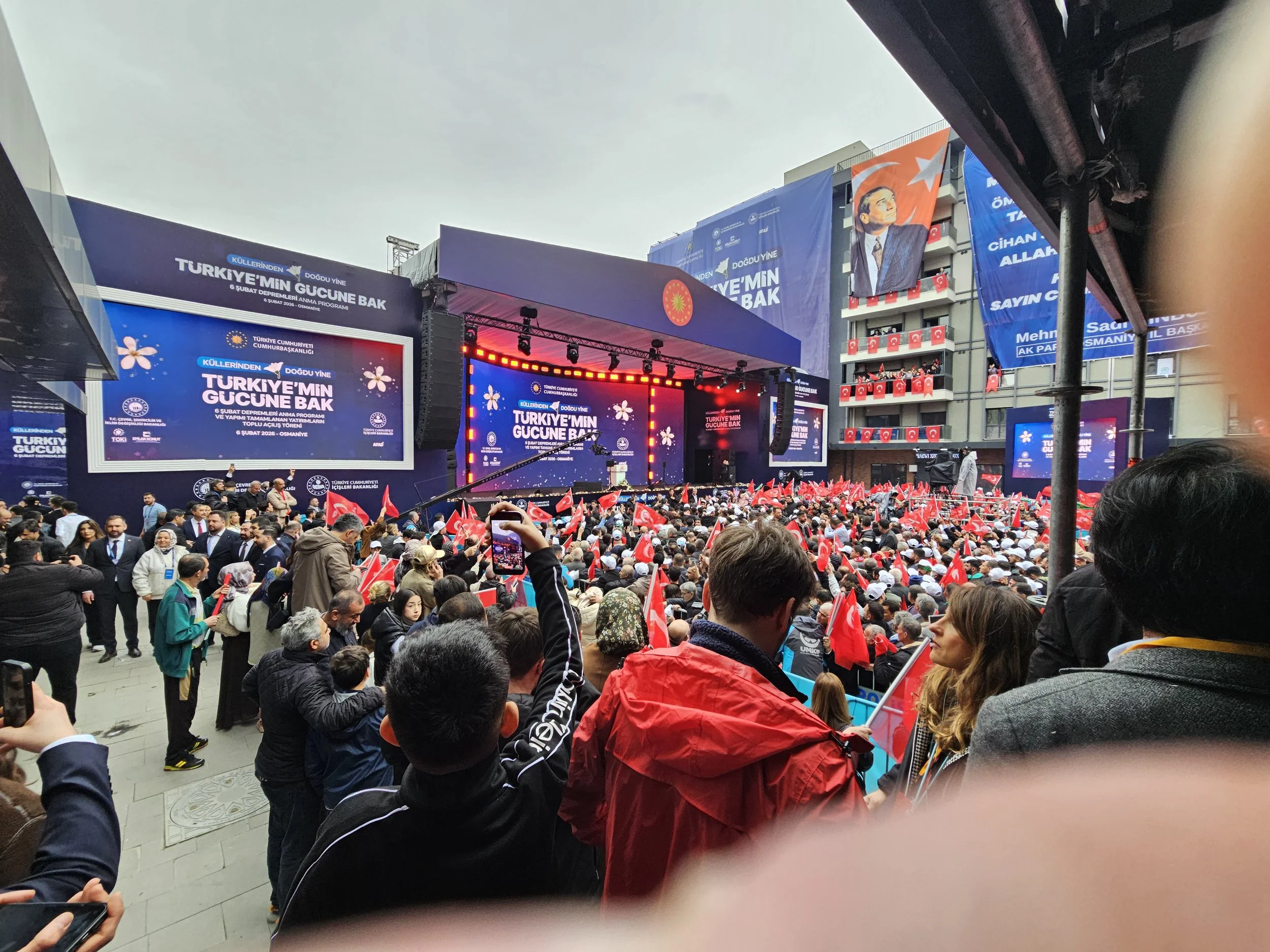
So went portions of the event in the city of Osmaniye on the third anniversary of the earthquake, one of the three cities most heavily impacted by the earthquakes. The headliner was President Erdogan. He was preceded by politically robust warm-up acts.
He was accompanied by members of the cabinet and leadership of the Justice and Development Party (AK) which he leads.
One female minister was featured. H.E. Mahinur Özdemir Göktaş, Minister of Family and Social Services. Increasing the number of women in the cabinet and in political parties would more appropriately reflect Turkiye’s demographics and, most importantly provide incentives for youth to engage politically.
It was the speaker before President Erdogan who resembled an onslaught of verbal thunder. The earlier speakers had progressively increased the political tenor. The nearly constant rain added to the performative nature of the outdoor gathering with nearly everyone was awaiting the main event.
But before that main event, there was seventy-eight-year-old Devlet Mahceli, leader of the Nationalist Movement Party (MHP), who is from Osmaniye. He had home field advantage and was playing to the home crowd.
Barack Obama, President of the United States (2009-2017), used the phrase, “fired up, ready to go” at his events.
Mr. Mahceli was preparing for liftoff- commanding the entirety of the stage with well-timed hand gestures and speaking at a decibel level that did not really require a microphone. His style recalled wartime orators from the mid-20th century. There is only one politician in Turkiye who had the gravitas to follow Mr. Mahceli…. President Erdogan.
Mr. Mahceli was the most strident. He along with most of the speakers excoriated members and supporters of opposition political parties, intimating- some more explicitly than others, that members of the opposition political parties wanted not only the earthquakes reconstruction process to fail, but they wanted the economy to fail, and they wanted Turkiye to fail. An unnecessary foray in a remarkable, but not surprisingly well-managed production by the Presidential Complex in the capital, Ankara.
Leading to the arrival of President Erdogan there were multiple sing-along renditions of a song about him… With refrains “Erdogan, Erdogan….”
President Erdogan reinforced his political skills honed from terms as mayor of Istanbul, Prime Minister of Turkey, and President of Turkey/Turkiye. He marshalled the familiar style of speaking words and phrases loudly and then drifted softly lower.
He presented small wooden boxes to families brought to the front of the stage. The boxes were opened to reveal keys to their new residences. He also presented two hundred Turkish Lira, approximately US$4.00, to a young boy, which he often does at appearances with children.
President Erdogan then did what only a confident politician does- he shared. Rather than present each box, he distributed the boxes, one by one, to his ministers and party leaders so they could then present- and be photographed presenting the boxes to the families. By sharing he also created additional accountability and responsibility to his collective.
As residents of those cities and other communities in Turkiye continue their journey to reclaim, each has connectivity with man-made conflicts to the north and to the south.
To the south, the territory of Gaza where beginning on 7 October 2023, the government of the State of Israel instructed the Israel Defense Forces (IDF) to commence its cleansing and clearing operations which continue today. The 2.3 million inhabitants of the territory of Gaza continue to suffer daily earthquakes in the form of projectiles delivered by the IDF. More than 74,000 dead. Images from the earthquake in Turkiye compared with images of the territory of Gaza are not dissimilar. However, approximately 90% of structures in the territory of Gaza have been damaged or destroyed by choice- the decision of men, not women. Compare the current circumstances imposed upon 2.3 million inhabitants of the territory of Gaza to how the government of Turkiye managed:
“According to the Disaster and Emergency Management Authority (AFAD) [of Turkiye], over 1 million tents were deployed for temporary housing in the affected areas. Approximately 2.5 million disaster victims were accommodated in 645,000 tents within 350 tent cities. By September 2023, disaster victims were relocated from tent cities to container homes and permanent housing.”
The government of Turkiye and the private sector within Turkiye have a three-year-learned skill set of value to efforts to reconstruct the territory of Gaza. The earthquake reconstruction efforts have thus far employed more than 200,000 contract workers. However, that experience could be deployed only after taxpayers in the State of Israel agree to pay for the reconstruction of the territory of Gaza, as they should- and as heads of state and heads of government from Muslim-majority countries must require from the Trump-Vance Administration (2025-2029).
To the north, the internationally-recognized territory of Ukraine. Similarities not due to the depth of destruction from the earthquake that impacted Turkiye, but the results from displacement of residents- as they move from one city to another- and then may not return, which creates population imbalances, tax base imbalances, employment imbalances, and real estate imbalances.
In Turkiye, some families will remain where they moved after the earthquake and retain, rent, or sell the residence the government of Turkiye is providing to them (at a cost, with multi-year repayment terms, which is appropriate rather than gifting which lessens responsibility of and pride in ownership). Touring in Turkiye newly constructed five-story and six-story residential structures there are already “For Sale” and “For Rent” signs in windows of occupied and unoccupied residences. There is also the long-term financial cost distributed among all taxpayers in Turkiye for the billions of United States dollars borrowed from by international financial institutions.
For Ukraine, village, town, and city populations have in some instances not only shifted east to west, but departed the country- taking their incomes and tax contributions with them. Some are unlikely to return to Ukraine. The fewer residents in Ukraine equates to the government of Ukraine having fewer financial resources from which to repay the funds it has borrowed since 24 February 2022 when the armed forces of the Russian Federation invaded further into the internationally-recognized territory of Ukraine.
Link: 11/30/25- Idea? Shift The Territorial Goalposts. Ukraine Oblast Boundaries Of Donetsk, Kherson, Luhansk, And Zaporizhzhia Move Eastward To Line Of Contact
Think of the beat-cop, the police officer who walks the streets of a neighborhood and visits a crime scene where a crowd begins to gather. The officer in a loud and authoritative voice commands, “move along, move along, nothing to see here” when the reason a crowd forms is to see what happened, to see what is happening, or to prepare for what may happen.
For Turkye, the delivery of the last key, the disappearance of the dust… when the crowd in Hatay, Osmaniye, and Kahramanmaras along with other impacted locations move onward… not to a finish line, but to a next chapter. The title might be The Summit Is In View.