Can NATO Convince Taxpayers/Voters There’s No Post Russia-Ukraine War “Peace Dividend” To Spend Less? Projecting Reluctance. Trojan Horse Without Soldiers? UK Spending Possible? The Moldova Problem
When The Armed Forces Of The Russian Federation Cease Military Operations In Ukraine, EU And NATO Taxpayers Voters Will Increase Political Pressure To Spend Less On Military
Can EU And NATO Convince Taxpayers And Voters There Can Be No “Peace Dividend” Because Stomach Of Russian Bear Always Growls And May Be Hungry?
Will Already Stressed United Kingdom Taxpayers Agree? “We need to dig deeper into our pockets [to support Ukraine]” shared John Healy, Minister of Defense for the United Kingdom, Scotland, Wales, and Northern Ireland (2024- )
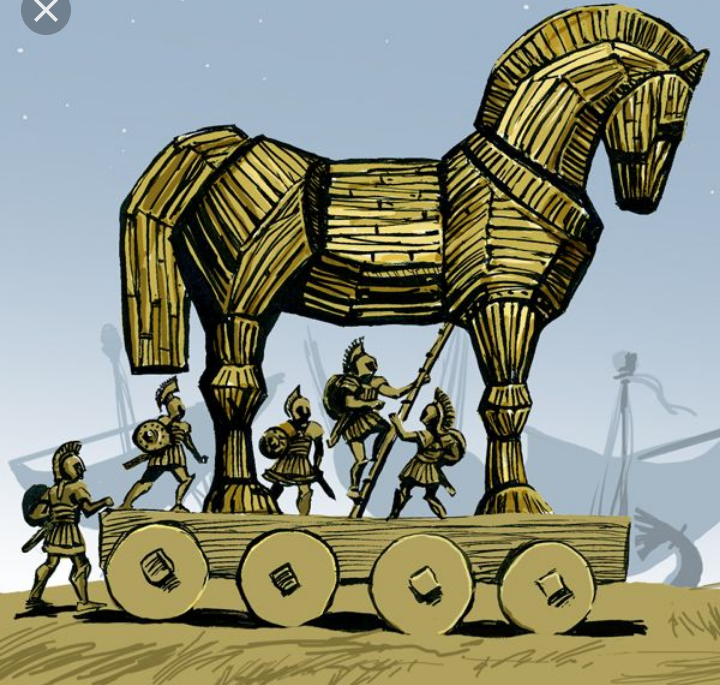
Does NATO Risk Being A Trojan Horse Without Soldiers Inside It?
NATO Needs To Get Ahead, Rather Than Embrace The Behind
NATO’s Rutte Must Project Reluctance Rather Than Big-Spending Circus Barker
Almost Orgasmic Excitedness About Spending Not Flattering Attire
During His Fourteen Year Tenure As Prime Minister Of Netherlands, Military Spending Ranged From 1.1% To 1.9% Of GDP; In 2025 Was 2%
NATO Decision-Making Requires Consensus, Unanimity. There Is Increasingly Less Of It- And That Is Unlikely To Do Anything Other Than Accelerate
The United States Government Will Continue A Transition From NATO Partner To NATO Supplier. NATO Must Decide If It Has A Dependable Supplier. In 2025, United States-Based Military Equipment Companies Exported US$120 Billion- This Provides NATO Members With Leverage To Choose European-Based Companies
Time For NATO Leadership And Members To Read Again Article Five Of The Charter And Appreciate Its Realities Rather Than Hallucinating About What They Want It To Mean
President Zelensky Remains Responsible For Some Delays In Arrivals Of Military Equipment To Ukraine- Consequence Of Scare Tactics
Moldova (With Russia-Occupied PMR) Merges With Romania (EU, NATO). How Would That Work?
Mark Rutte, Secretary-General (2024- ) of the thirty-two-member-country Brussels, Belgium-based North Atlantic Treaty Organization (NATO), and his predecessor, Jens Stoltenberg, Secretary General (2014-2024) of NATO, share instructive, and for some heads of state and heads of government, destructive traits.
NATO: United States, United Kingdom, Belgium, Canada, Denmark, Finland, France, Iceland, Italy, Luxembourg, Netherlands, Norway, Portugal, Albania, Lithuania, Bulgaria, Montenegro, Croatia, Czech Republic, Poland, Estonia, Romania, Germany, Slovakia, Greece, Slovenia, Hungary, Spain, Turkiye, Latvia, and North Macedonia, Sweden.
The challenge for NATO, the organization, its leadership, and its individual members, is to convince their sources of capital- taxpayers and voters, that the commercial, economic, financial, military, political, and social threat to NATO members from the government of the Russian Federation and potentially from the government of the People’s Republic of China is real for them today, will continue to be real to them tomorrow, and will continue to become worse (and more expensive) with time.
This is a heavy political lift considering taxpayers continue to find their lives confronted with spending more and receiving less. They continue to be taxed more, endure increases in government-imposed fees, are frustrated at levels of inflation, interest rates, and unemployment, and endure an increasingly incompetent elected and appointed political class who want to be social media stars rather than responsible caretakers of the public purse. Taxpayers and voters want scarce resources targeted toward education, healthcare, and infrastructure.
At present, the threat from the government of the Russian Federation is militarily directly real to the residents of Ukraine. For other countries on the European Continent and in North America (Canada, United States), the threat felt by taxpayers and voters is scaled- with some feeling little to no impact.
For the further-down-scale, they may not like Russians, but they are not scared of them- nor have Russians done anything directly impacting their lives. Paying the balance of a credit card, mortgage, or rent are more important to them.
Absent a Russian Federation-Ukraine War, the scaling becomes elongated- greater the distance between those impacted and those less so.
Taxpayers and voters also ask what the more than 4,000 nationals (civilian and military) from thirty-two countries do at the US$1 billion-plus NATO Headquarters in Brussels, Belgium? It has a barber shop, gift shop, coffee shop, supermarket, cafeteria, high-level dining room, many meeting rooms. What has it done to prevent a war? Stop a war? That is a messaging issue.
Can NATO convince a war-funding-weary population there will be no twenty-first century version of the peace dividend (as many in country political leadership proclaimed at the dissolution of the U.S.S.R. on 26 December 1991) when concludes the military component of the Russian Federation-Ukraine War?
In fact, NATO must convince a war-funding-weary population that the peace dividend accepted in 1991 was a mistaken belief which is why military expenditures must quickly make-up for thirty-two years of stagnation (1992-2022).
NATO argues embracing the peace dividend contributed in part to the confidence by the armed forces of the Russian Federation to invade Georgia (2008), Ukraine (2014), and again Ukraine (2022).
From 2008, governments did not have the will to deploy their individual or collective muscularity in defense of the rules-based-order, but leadership pontificated about its importance during annual addresses at the annual United Nations General Assembly (UNGA) in New York City, New York. However, if the problem was not in their backyard- meaning at their property line, then it was someone else’s problem- or opportunity. The governments feared more a potential outcome from responding to a threat than confidence in delivering on a threat which would unquestionably serve as a deterrent.
NATO neither prevented nor stopped what happened in 2008, 2014, or 2022. Which returns to the question- what does NATO do in the twenty-first century? And here lies the often-referenced question- if NATO only serves as a deterrent for its members, who protects everyone else? NATO has thirty-two members. There are one hundred ninety-three members of the United Nations (UN). That leaves one hundred sixty-one countries potentially exposed, less the number of aggressors.
If the military component of the Russian Federation-Ukraine War ends and there is no official recognition by the twenty-seven-member Brussels, Belgium-based European Union (EU) and NATO and other countries that the internationally-recognized territory of Ukraine controlled by the armed forces of the Russian Federation is no longer within the internationally-recognized territory of Ukraine, then defacto the armed forces of the Russian Federation will control real estate within the internationally-recognized territory of Ukraine- a likely EU member and potentially NATO member. That is a challenging Cyprus-like optic.
EU: Austria, Belgium, Bulgaria, Croatia, Cyprus, Czech Republic, Denmark, Estonia, Finland, France, Germany, Greece, Hungary, Ireland, Italy, Latvia, Lithuania, Luxembourg, Malta, Netherlands, Poland, Portugal, Romania, Slovakia, Slovenia, Spain, Sweden.
Twenty-three members of NATO are also members of the EU: Belgium, Bulgaria, Croatia, Czechia, Denmark, Estonia, Finland, France, Germany, Greece, Hungary, Italy, Latvia, Lithuania, Luxembourg, Netherlands, Poland, Portugal, Romania, Slovakia, Slovenia, Spain, and Sweden
The same conundrum could result if Moldova were to merge with Romania (EU member and NATO member). The internationally-recognized territory of Moldova would become subject to the EU and NATO. What happens to the Pridnestrovian Moldavian Republic (PMR) which lies adjacent to the Republic of Moldova along its border with Ukraine, but is the internationally-recognized territory of Moldova? The armed forces of the Russian Federation have military assets in the PMR. Could the armed forces of the Russian Federation then occupy real estate within the internationally-recognized territory of a member of the EU and NATO?
NATO continues to be encumbered by statements from and on behalf of its members which oratorically may be commended, but in practice are crafted for escaping requirement, escaping obligation, and subject to interpretation. Each of which remain anathema to a government of Ukraine that wants guarantees- which it will not receive and knows it will not receive. More accurately, the government of Ukraine will not receive what it wants to define as guarantees.
“As long as it takes” from Joseph Biden, President of the United States (2021-2025); “as long as is necessary” from Olaf Scholz, Chancellor of the Federal Republic of Germany (2021-2024); “until you are victorious” from James Cleverly, Secretary of State of the United Kingdom (England, Scotland, Wales, Northern Ireland) for Foreign, Commonwealth and Development Affairs (2022-2023); and from a senior Biden-Harris Administration official (2021-2015) “we will continue to try to impress upon them [government of Ukraine] that we can’t do anything and everything forever” with “very strong view” that maintaining funding levels will be challenging with the 118th United States Congress [3 January 2023 to 3 January 2025]. “’As long as it takes’ pertains to the amount of conflict. It doesn’t pertain to the amount of assistance.” And in 2025, Donald Trump, President of the United States (2017-2021 and 2025-2029), declared no further United States taxpayer funds would be used in support of the government of Ukraine and the residents of Ukraine- but governments could continue to purchase military equipment from United States-based companies and then redirect them, at their expense, for the benefit of the government of Ukraine.
For a head of state or head of government, particularly those from EU-member countries where they need to maintain two budgets- that of their country and that of the collective EU- an easy choice among proposing to their taxpayers, meaning their voters, to increase military-related spending or increase spending on education, healthcare, and infrastructure. The choice is the latter. An additionally easy choice is among proposing to increase military-related spending and decreasing fees, decreasing income taxes, and decreasing spending. Taxpayers and voters always want more in their billfolds and purses.
Neither Messrs. Rutte nor Stoltenberg, in their role as Secretary-Generals, did never not embrace NATO members increasing their taxpayer-funded commitments to military-related spending, despite their respective tenures in elective office not measuring-up to their instructions to others.
Mr. Stoltenberg is former prime minister of Norway (2000 to 2001 and 2005 to 2013). During these years, military-related spending in Norway as a percentage of GDP ranged from a low of 1.4% to a high of 2.1%. When Mr. Stolenberg became prime minister, military-related spending was 1.7% of GDP, decreased to 1.6% of GDP, and further decreased to 1.4% of GDP, before increasing to approximately 2.2% of GDP in 2025. Post World War II (1939-1945), in 1968, military-related spending was highest at 3.6% of GDP.
Mr. Rutte is a former prime minister of Netherlands (2010 to 2024). During these years, military-related spending in Netherlands as a percentage of GDP ranged from a low of 1.1% to a high of 1.9%. When Mr. Rutte became prime minister, military-related spending was 1.4% of GDP, decreased in 2015 to 1.1% of GDP, and increased to 1.9% of GDP in 2024 and approximately 2% in 2025. Post World War II (1939-1945), in 1962, military-related spending was highest at 4.1% of GDP.
During the Trump-Pence Administration (2017-2021), President Trump advocated for each NATO member to budget at least 2% of their Gross Domestic Product (GDP) on military-related spending.
During the Trump-Vance Administration (2021-2025), President Trump is advocating for each NATO member to budget at least 5% of their Gross Domestic Product (GDP) on military-related spending. Not all NATO members have agreed to this goal.
From 2017 through 2025, United States government military-related spending ranged from 3.3% of GDP to 3% of GDP. Post World War II (1939-1945), in 1967, United States government military-related spending was highest 9.4% of GDP and decreased to 3.1% in 1999.
Messrs. Rutte and Stoltenberg have displayed political genuflection toward President Trump, with both maintaining the strategy and words were and remain necessary to preserve not only NATO as a trans-Atlantic Ocean organization, but preserve in NATO the role of the United States government. Mr. Rutte’s 2025 comment “Daddy has to sometimes use strong language to get them to stop” when referring to President Trump remains the most cringe-worthy comment by a NATO Secretary-General.
Surprised By Results?
Volodymyr Zelensky, President of Ukraine (2019-2024; term extended due to imposition of martial law in 2022), has maintained since 24 February 2022 that if the armed forces of the Russian Federation prevail in Ukraine, then their journey will continue onward through the European Continent, and beyond.
One result of that warning was some of the twenty-seven-member countries of the EU and some of the thirty-two-member countries of NATO slowed, paused, and, in some instances, ceased deliveries of military equipment to the government of Ukraine so as to have at the ready resources should the expectations of President Zelensky come to fruition.
One result of that result was President Zelensky then complaining about the lack of support from EU member countries and NATO member countries. What did he expect would happen first when his intention to scare heads of state and heads of government succeeded? These governments needed first to show their taxpayers and voters that protecting the homeland was most important.
President Zelensky also believed that by shaming publicly governments, they would simultaneously provide for Ukraine, provide for themselves, and increase provisioning for both Ukraine and themselves. Budgets have limitations.
Today, President Zelensky, EU member countries, and NATO member countries maintain publicly that Vladimir Putin, President of the Russian Federation (2000-2008 and 2012-2030), failed during the first months of 2022 in his goal to conquer all of the internationally-recognized territory of Ukraine and will fail in his continued quest to conquer more than the 20% of the internationally-recognized territory of Ukraine occupied by the armed forces of the Russian Federation. The governments also posit the failure has resulted in the commercial, diplomatic, economic, and financial ruin of the Russian Federation. The Russian Federation is too weak to prevail and, critically, does not have remaining the military bandwidth to recapitalize and rearm to embark on additional special military operations, particularly in EU member countries and NATO member countries.
Which is why taxpayers and voters in EU member countries and in NATO member countries will be asking political leadership this question:
If the Russian Federation has so many problems, is so weak economically, has lost population, has lost export markets, has lost diplomatic influence, has lost legitimacy, why must taxpayers in EU member countries and in NATO member countries increasingly spend more on the military? No EU member country or NATO member country has been invaded by the armed forces of the Russian Federation. If the Russian Bear has been economically and financially and militarily declawed and disemboweled, where lies the 5% of annual GDP threat? Other than to benefit financially United States-based companies producing military equipment for export.
The Russian Federation could reconstitute in years, or it could not- the value of the resources (oil, gas, minerals) it has today may be less valuable tomorrow as the location, quantity, and type of resources desired in the global marketplace continues to change with an increasing multiplier. It does have approximately 140 million consumers.
President Zelensky continues to advocate for a “just and lasting peace” along with some heads of state and heads of government in EU member countries and in NATO member countries. That advocacy is confronting a more likely reality for focusing first upon a cessation of military operations. Seeking peace requires a change in mindset in both Moscow and Kyiv, which is unlikely in the short-term.
During his remarks at the Munich Security Conference in Germany, President Zelensky returned to a familiar theme- criticizing governments for not doing enough for Ukraine. Specifically, he insulted the Biden-Harris Administration. Conveniently dismissing the approximately US$200 billion provided by United States taxpayers to the government of Ukraine, the armed forces of Ukraine, and to citizens of Ukraine from 24 February 2022 to 20 January 2025 with lesser values since 20 January 2025.
For the Trump-Vance Administration, when Dr. Ursula von der Leyen is president (2019-2029) of the European Commission, consistently maintains Ukraine is a part of Europe and Europe is responsible for Ukraine, there is little resistance to support Dr. von der Leyen and permit taxpayers in the EU to provide funding for Ukraine.
The 2026 NATO Leaders’ Summit is scheduled for 7 July 2026 and 8 July 2026 in Ankara, Turkiye. Hosted by Recep Tayyip Erdogan, President of the Republic of Turkiye (2014-2028), the heads of state and heads of government will meet at the Presidential Complex.
NATO Article Five
War Timeline
In the early morning of 24 February 2026, citizens of Ukraine and the armed forces of Ukraine will begin their fifth year of engaged in an expanded war with the armed forces of the Russian Federation.
On 24 February 2022, the armed forces of the Russian Federation invaded and further invaded the territory of Ukraine in what President Putin defined first as a Special Military Operation (SMO) and on 22 December 2022 defined as a war. The initial invasion of Ukraine by the armed forces of the Russian Federation was in part from the territory of Belarus.
The war between the Russian Federation and Ukraine did not commence on 24 February 2022. The roots began their trajectories on 20 February 2014 when the armed forces of the Russian Federation invaded the Crimean Peninsula and the area known as the Donbas Region (Donetsk Oblast and Luhansk Oblast).
As of 1 January 2026, the armed forces of the Russian Federation control approximately 19.5% of the internationally-recognized territory of Ukraine. 100% of the Crimean Peninsula. Approximately 99% of Luhansk Oblast. Approximately 83% of Donetsk Oblast. Approximately 75% of Kherson Oblast. Approximately 75% of Zaporizhzhia Oblast. Very small portions (less than 1%) within Kharkiv Oblast, Mykolaiv Oblast, Dnipropetrovsk Oblast, and Sumy Oblast.
Territorial Deal?