President Zelensky Should Rid Himself And Ukraine Of Podolyk Menace. Brilliance Describing President Trump’s Envoy To Belarus As “A Sucker”
President Zelensky Should Rid Himself And Ukraine Of Podolyk Menace
Brilliance Describing President Trump’s Envoy To Belarus As “A Sucker”
The government of Ukraine continues colliding with the government of United States relating to the Republic of Belarus. The strategy from Minsk is to hurl insults at Washington DC while ignoring an offer from Belarus… and then asking Washington DC for unqualified and unending support.
“It is a great pleasure to be in this country once again. We held lengthy discussions. These talks will continue. In my view, we have made a great progress, and we will continue our joint work.” John Coale, Deputy Assistant to the President, United States Special Envoy to Belarus, Deputy Special Envoy for Ukraine (15 September 2026)
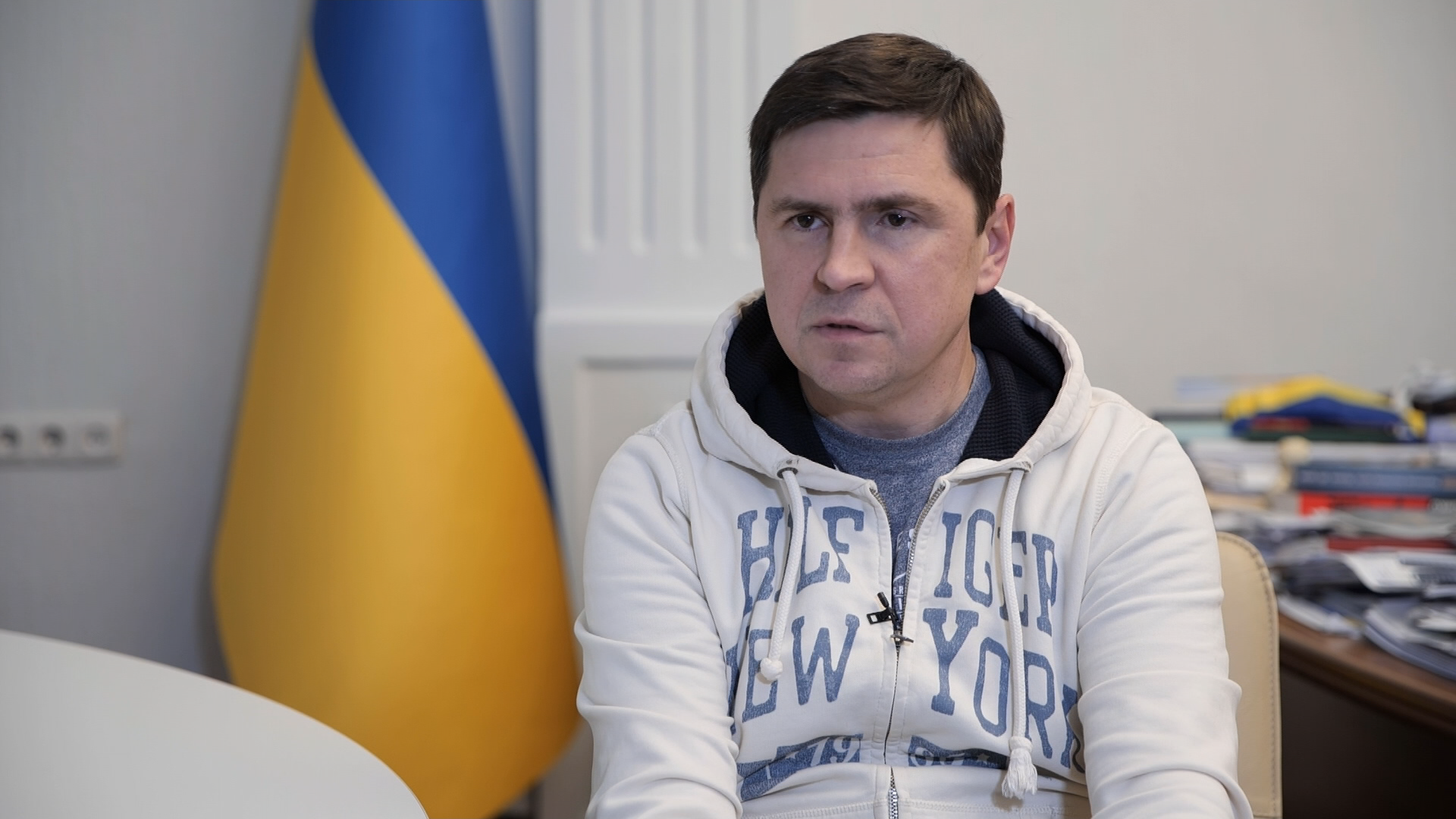
“The main thing here is to understand that this person is always lying. It's just that these are synonyms- Lukashenka and a lie. And if someone wants to agree on something with him, it means a person- I’m sorry... a sucker. You know, there is such a song “A sucker is fate.’ Here is the one who believes that it is possible to negotiate with Lukashenka, so he wants to put himself in this category.” Mikhail Podolyk, Advisor to the Head of the Office of the President of Ukraine (18 September 2026)
Mr. Podolyk has a history of insulting governments and those within governments. The same taxpayers the government of Ukraine depend upon for its financial survival.
He is not in a position requiring confirmation by the Verkhovna Rada, the parliament. He is not an advisor to Volodymyr Zelensky, President of Ukraine (2019-2024; term extended due to imposition of martial law in 2022), he is an Advisor to Kyrylo Budanov, Head of the Office of the President of Ukraine. Mr. Podolyk served in the same capacity while Andrii Yermak was Head of the Office of the President of Ukraine. He has survival skills. He is also a wrecking ball.
President Zelensky, and presumably Mr. Podolyk, also want an invitation to the State of Florida. When President Zelensky does not receive that invitation, expect Mr. Podolyk to insult the current occupant of the Oval Office at The White House.
Donald Trump, President of the United States (2017-2021 and 2025-2029) has invited Vladimir Putin, President of the Russian Federation (2000-2008 and 2012-2030) to the 2026 G20 Leaders’ Summit in December at his 643-room (and two presidential suites) Trump National Doral Miami Golf Resort in the State Florida. NOTE: The Russian Federation is a member of the G20, which is based upon the Gross Domestic Product (GDP) of a country, so no invitation is required.
2026 G20: Argentina, Australia, Brazil, Canada, China, France, Germany, India, Indonesia, Italy, Japan, Mexico, Poland, Republic of Korea, Russian Federation, Saudi Arabia, Turkiye, United Kingdom, United States, European Commission (president) and European Council (president), and African Union (since 2023) representing its fifty-five (55) member states.
President Zelensky is not invited to the G20 Leaders’ Summit. Ukraine is not a member of the G20.
President Zelensky would only be invited to the 2026 G20 Leaders’ Summit if President Putin is attending- and President Putin agrees in advance to a meeting with President Zelensky. President Trump is more likely to extend an invitation to Alexander Lukashenko, President of Republic of Belarus (1994-2030).
John Coale Interview With Radio Free Europe (RFE)/Radio Liberty (RL) on 17 September 2026
RFE/RL: In March, 250 people, political prisoners, were released, but last week there were only 25. It's great news that 25 people were released from the prison, but why did the number decrease?
John Coale: All told, it's between 800 and 900 prisoners that have been released, and sometimes you would get 150, sometimes you would get 14. So whatever I can come out with at the present time, I come out with. I do believe in my latest negotiations that are still ongoing that in the very near future I think we can get another 100, over 100 people out, and we'll do that...probably in a month or so.
RFE/RL: What questions should be resolved before this can turn into reality?
Coale: Things like we lifted some sanctions in the past to get people out, and we have to make sure the banks and businesses in the United States understand what lifting sanctions mean, that it is basically OK to do business in this area. So we have to go back and clean some of that up. We were unaware that the United States' businesses and banks and other things didn't understand what it meant. So we have to do that, then we'll be going back.
RFE/RL: [Exiled Belarusian opposition leader] Svyatlana Tsikhanouskaya claims that Aleksandr Lukashenko sells prisoners in order to lift sanctions. So do these deals incentivize Lukashenko to get more political prisoners in order to have something to trade with?
Coale: I'm not sure... Everybody I talk to has a different number of people being arrested now. So I don't know what a real number is. But if Lukashenko is trading prisoners for sanctions relief, that's fine with me because I'm the one who looks in the eyes of the released prisoners and sees what freedom means to them. To me, that's so much more important than some political issues that somebody outside may have. My issue and the United States' issue is humanitarian, to help people. If I can get 25 out, that's great. If I can get 200 out, that's great. So that's the way we look at it. And you know, Svyatlana can have her opinion; I can have mine. I think that the United States would someday like to have more economic ties with Belarus. I think the West would like that to be the normal situation.
RFE/RL:Lukashenko denies that these released people are political prisoners. How did you respond to him?
Coale: I call them prisoners if he wants me to do it, I'll call them rabbits if he wants me to get them out, I don't care. So if he believes that they're not political prisoners, let him believe that. I just know people. So to me, the semantics of it are really not important to me. They may be important to other people, but to me they're not.
RFE/RL: Are there any other intentions of your visits to Belarus besides releasing political prisoners?
Coale: Oh yes. There have been the prisoners, but there's also to have the Belarusian government behave more in a better way than I think they behaved to some of their neighbors, so we can get them back in the family of nations. And they agree with that. We have been going inch by inch in the last year and a half, and I think we're making progress, but of course Lukashenko has a country to run, he has an ally, [Russian President Vladimir] Putin, out there, so it's complicated. But I think that the world would be a better place if Belarus was in communication with the rest of the world in a good way. And I think they're trying.
RFE/RL: What makes you sure that Belarus can be successfully reintegrated in the family of nations?
Coale: They're trying, and it's moving in that direction. I'm not that sure, but we're making progress, they're making progress. So I think we're going in the right direction. I don't think that it happens overnight. It's a real process. And his biggest ally is Russia, and Belarus is one of the few allies that Russia has. So they have to work that out, not me. […] I think that the United States would someday like to have more economic ties with Belarus. I think the West would like that to be the normal situation. It's not now. It's something that has to grow.
RFE/RL: So is it possible to institutionalize future relationships of the United States and Belarus, or it will be based on simple balance of power?
Coale: No, I think we can institutionalize it. I think that we have to open our embassy again. [Editor's note: The United States suspended operations at its embassy in Minsk in February 2022, shortly after Russia launched its full-scale invasion of Ukraine, with some attacks launched from Belarusian territory.] There's lots of steps to be taken. But what I've learned is it's a gradual thing. It's a very complex world. This is a gradual thing. But to me, it's moving in the right direction, which is much better than the wrong direction.
RFE/RL: You mentioned earlier that you want to resolve Belarus before turning to Russia. So how are you planning to approach the Kremlin?
Coale: Well, I can do both. I can maintain what I'm doing with Belarus. And I've been talking to people, and [US Special Envoy] Steve Witkoff would have to be involved, and [US special peace envoy] Jared [Kushner], to do some kind of civilian prisoner exchange. So I've talked to them, and we're making progress.
RFE/RL: Have you made any progress on American citizens who are currently in Russia?
Coale: Well, American citizens, but also I would like to get some of the Russians and Ukrainians back to their countries.
RFE/RL: Lukashenko mentioned in his interviews that he's offering Donald Trump and other leaders himself as intermediary with the Kremlin. Does Trump see Lukashenko as a potential intermediary?
Coale: Potentially, yes, because there's an over 30-year relationship between Putin and Lukashenko. They're friends. One's a big brother, one's a smaller brother, but they're friends and they talk. They talk all the time. And Lukashenko visits Moscow a good bit. So it would be helpful. He could be helpful as a mediator between the wars, with the war.
RFE/RL: But currently, when we're watching the news about the prisoners' exchange, there's always something about sanctions that are being lifted. Who chooses what sort of sanctions go to the table before the prisoners are released?
Coale: In Belarus, I do, and then I talk to the secretary of state or the president himself, and we go through a process. Well, John Coale thinks we should lift sanctions on this, this, and this. And it's either approved or, well, you can't do this one, but you can do this one.
RFE/RL: How do you measure success?
Coale: By getting people out of the prisons. Getting them out, seeing them reunited with their families. We come out of them, and sometimes families have been notified, or ambassadors from countries come greet them, we give them telephones to call their family; the family has no idea they're free, it's a joyous occasion. So that's how I measure it.
RFE/RL: I would like to get back to the exchange of civilian prisoners between Russia and Ukraine. What is the current status and what are the perspectives of this process?
Coale: I think it's starting, I think the idea is there on the table, so to speak, and when I'm back in Washington I will push further for it because I think it's an important thing.
Links To Related Analyses